Loudspeakers
Best Stage Monitors for Churches
Quick answer
A church platform typically needs three to four separate monitor mixes: one for the worship leader, one shared across backing vocals, one for keys and one for drums. The JBL PRX412M is the most versatile wedge for that job at $699.00.
Monitors exist so musicians can hear themselves. They are also the single largest contributor to stage volume in most churches, and stage volume is what makes a room too loud, a mix muddy and a livestream unusable. So this page covers both the best wedges and the honest case for replacing them.
Start by counting mixes rather than speakers, using the monitor mix calculator, since the bus count on the console constrains the answer before the budget does. The format decision is in in-ear monitors against floor wedges.
On this page
Count mixes, not wedges
The number that drives the purchase is how many different things people need to hear, not how many bodies are on the platform. A worship leader needs their own voice and a little acoustic guitar. Backing vocalists usually share a mix. A keyboard player wants keys and the click. A drummer wants bass and click. That is four mixes for a typical band, and each one occupies a console bus.
That bus count is the binding constraint. A console with four aux sends supports four wedge mixes and nothing else, so adding a stream feed means one musician loses their mix. Check the console before the wedges, because this is the most common order of purchase that goes wrong.
The second question is whether wedges are the right answer at all. Every wedge puts energy into the room that the congregation hears as a second, delayed source, and that energy also enters every open microphone on the platform. A church struggling with stage volume should read reducing stage volume in church before buying more wedges.
Monitor mixes and the right format
Platform size against mix count, with the format that usually suits.
A typical four-piece worship band needs four separate monitor mixes, which is the point at which wedges start to dominate stage volume and in-ear monitoring becomes the better answer.
| Platform | People | Mixes needed | Usual best format | Buses required |
|---|---|---|---|---|
| Speaker and a soloist | 2 | 1 | One small wedge | 1 |
| Small worship team | 3 to 4 | 2 to 3 | Wedges, or in-ears for the drummer | 2 to 3 |
| Full band | 5 to 7 | 4 | Mixed wedges and in-ears | 4 to 8 |
| Full band with click and tracks | 5 to 8 | 5 to 6 | In-ear monitors throughout | 10 to 12 stereo |
| Band plus choir | 8 and up | 5 to 7 | In-ears for band, side fill for choir | 10 and up |
A stereo in-ear mix consumes two buses, so a band on stereo in-ears needs roughly twice the bus count of the same band on wedges. That constraint usually decides the console, which is why monitoring should be planned before the console is bought.
Small platform: one or two mixes
A speaker and a soloist need very little. A small powered wedge for one person, or a single in-ear pack fed from an aux send, covers the whole requirement without putting meaningful energy into the room.
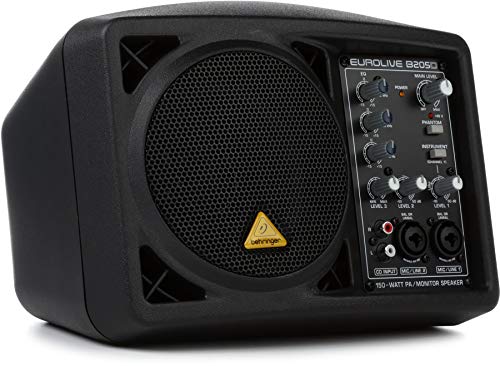
Behringer Eurolive B205D Active 150-Watt PA/Monitor Speaker System
$219.00 Specs and sizingA small powered wedge for one vocalist or a keyboard player who needs a little of themselves and nothing else, at {{price:behringer-b205d}}.
Best for: A single performer monitor, or a lectern foldback for a speaker who cannot hear themselves
Check price on Amazon
Behringer P2 Ultra-Compact Personal In-Ear Monitor Amplifier
$39.90A belt-pack headphone amplifier fed from an aux send, which gives one musician a personal mix while adding nothing at all to stage volume.
Best for: A drummer or a single musician where the platform is already too loud
Check price on AmazonWho should not buy this tier: Full bands, and any platform where several people need genuinely different mixes.
Full band on wedges
Where wedges remain the right answer, a passive 12 inch wedge driven from a rack amplifier is the most practical choice for a church. It keeps mains outlets off the platform, keeps the amplifiers in one lockable rack, and gives a spare cabinet that can serve as a main or side fill if the platform changes.

JBL Professional PRX412M Portable 2-way Passive Utility Stage Monitor and Loudspeaker System, 12-Inch
$699.00 Specs and sizingA 400 watt passive wedge with a proper monitor angle that also works as a main or side fill, so one spare cabinet covers several roles in the building.
Best for: Platforms where running mains power to each wedge is a problem
Check price on Amazon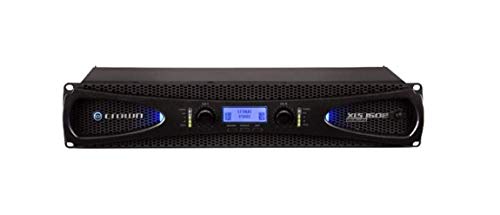
Crown XLS1502 2-Channel Class D DriveCore Professional Power Amplifier with DSP, Band Pass Filters & Peak Limiters. XLR/RCA Inputs, 525W at 4 Ohm, PureBand Crossover System. Black
$579.99 Specs and sizingTwo channels at 525 watts into 4 ohms with crossover and limiting in one rack unit, which drives a pair of passive wedges with headroom to spare.
Best for: Driving two passive wedges from a central rack
Check price on AmazonWho should not buy this tier: Churches whose main complaint is that the platform is too loud, since more wedges make that worse rather than better.
Large platform: flexible boxes and personal mixers
A large or frequently reconfigured platform benefits from cabinets that can change role, and from letting musicians control their own mixes. Personal mixers remove the most common monitoring complaint, which is that a busy operator cannot attend to five different requests during a rehearsal. The setup process is in setting up in-ear monitors in church.
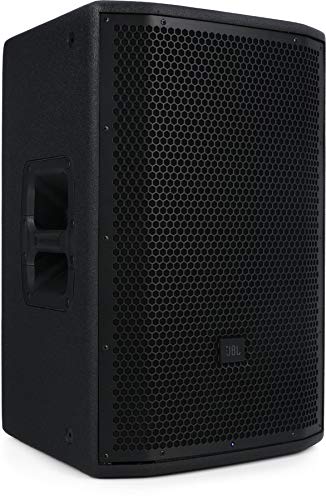
JBL Professional PRX812W Portable 2-Way Self Powered Full Range Main System/Floor Monitor with WiFi, 15-Inch, Previous Generation
$1,099.00 Specs and sizingA powered cabinet with a proper wedge angle on one face, so the same box serves as a main, a side fill or a floor wedge as the platform changes between services.
Best for: Churches that reconfigure the platform for different service styles
Check price on Amazon
Behringer POWERPLAY P16-M 16 Channel Digital Personal Mixer
$209.00A sixteen channel personal mixer at each position, so every musician builds their own mix without the operator adjusting anything during rehearsal.
Best for: Bands of four or more where monitor requests dominate the soundcheck
Check price on AmazonWho should not buy this tier: Do not buy this tier for a platform with two people and one mix. A flexible powered cabinet and a set of personal mixers solve coordination problems that a small platform does not have, and the money would be better spent on the main loudspeakers the congregation hears every week.
Why churches move to in-ear monitors
The usual reason is not sound quality, it is stage volume. Every wedge adds level in the room that the congregation hears slightly later than the main system, and that energy enters every open microphone, reducing gain before feedback and muddying the drum overheads. Removing the wedges typically drops room level several decibels and makes the front of house mix noticeably cleaner.
The second reason is consistency. A musician on in-ears hears the same mix regardless of where they stand, which matters in a church where the platform is rearranged for different services.
The honest counter-arguments are cost, the isolation that some musicians dislike, and the need for more console buses. A common middle path is to put the drummer and the leader on in-ears while the rest stay on wedges, which removes most of the stage volume for a fraction of the cost. The options are in the in-ear monitor roundup and the personal monitor mixer roundup.
How we chose
We did not test these products in person and we never claim to. Picks are researched from manufacturer specification sheets and operator manuals, FCC rules where spectrum is involved, published standards, warranty terms, and the recurring themes in verified owner reviews. Every pick is matched to a real room size, seat count or input list rather than to a price bracket, and it is placed in the tier where its capability actually belongs. Where a product is wrong for most churches we say so on the page.
Sources
- Manufacturer published specifications for each monitor and amplifier listed
- Consensus of verified owner reviews across major retailers
Frequently asked questions
How many stage monitors does a church need?
Count mixes rather than speakers. A typical worship band needs four: worship leader, backing vocals, keys and drums. Two musicians standing together who want the same balance can share one wedge fed by a single mix. The console bus count usually limits the answer before the budget does, so confirm available aux sends before ordering any wedges.
Are floor wedges or in-ear monitors better for church?
In-ears are usually better for the congregation, because they remove stage volume that otherwise leaks into the room and into open microphones. Wedges are simpler, cheaper, need no receivers or earpieces, and suit musicians who dislike isolation. Many churches land on a mix, putting the drummer and worship leader on in-ears while other positions keep wedges.
Can main speakers be used as stage monitors?
Poorly. A main loudspeaker aimed at the congregation gives musicians mostly reflected sound, and turning it up to help the platform makes the room too loud and invites feedback. A pole-mounted box laid on its side is not a wedge either, because its coverage pattern and voicing are designed for a listener much further away.
Should church wedges be powered or passive?
Passive wedges are often better in a church, because they keep mains outlets and power cables off the platform and put the amplifiers in one lockable rack where they can be serviced. Powered wedges are simpler for portable use and need no amplifier, at the cost of a mains outlet at each position and a heavier cabinet to move.
Why does our worship team keep asking for more monitor volume?
Usually because the mix in the wedge contains too much, so nothing is distinct and everyone asks for more of themselves. The fix is subtraction rather than addition: strip each mix to what that musician genuinely needs, typically their own source plus a timing reference. Escalating monitor volume is also a classic sign that the platform is acoustically too loud overall.
Do we need a separate amplifier for passive wedges?
Yes, one amplifier channel per wedge mix, though two wedges carrying the same mix can share a channel if the impedance allows it. A two-channel amplifier of around 500 watts per channel drives a pair of 400 watt wedges with sensible headroom. Keep it in the same rack as the rest of the system, with ventilation space above it.
Researched, not professional advice. This page is compiled from published manufacturer specifications, operator manuals, FCC rules, published standards and owner-review consensus, not hands-on testing. Sound system design, rigging loudspeakers overhead, and any electrical work are jobs for a qualified professional: have flown loudspeakers and their attachment points signed off by a structural engineer or a certified rigger, and have all wiring done by a licensed electrician to your local code. Wireless microphone rules change, so confirm the current FCC position before buying. As an Amazon Associate we earn from qualifying purchases.