System design
Church Sound System Cost Calculator
Quick answer
A complete church sound system costs roughly $55 to $90 per seat in equipment for a speech-led room and $90 to $160 per seat for a full band, so a 250 seat church lands around $18,000. Installation, rigging and electrical work add another 30 to 60 percent on top.
"What does a church sound system cost" has a wide honest answer, because the loudspeakers, the subwoofers, the console channel count and the monitoring all scale with the band rather than with the seats. A speech-only room can be equipped for well under half what a contemporary worship room costs at the same seat count.
This calculator gives a figure you can take to a meeting, split across the seven lines that actually appear on a quote. Everything it produces is anchored to the real priced system builds on this site, which are complete equipment lists rather than estimates.
Church sound system cost calculator
Estimated equipment cost
Gear in the range your budget allows
Top matches update when you change your numbers.
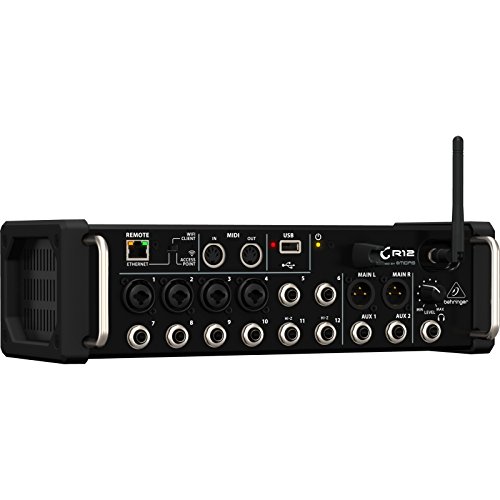
Behringer X Air XR12 Tablet-Controlled Digital Mixer
$369.00 Specs and sizingFour preamps in a single rack unit, with full digital processing and recall on every one. The cheapest way into scene recall, and the cheapest to outgrow.
Best for: A chapel, a portable setup or an overflow room with a handful of inputs
Check price on Amazon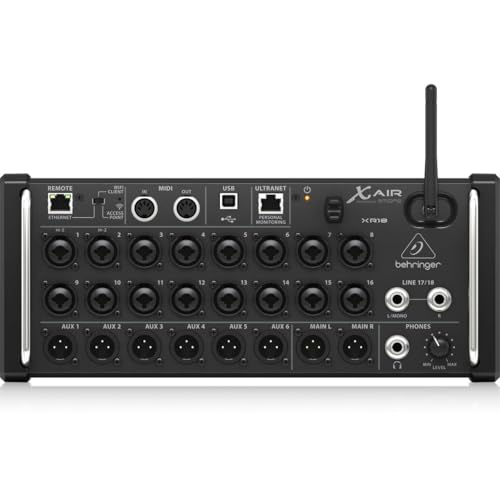
Behringer X AIR XR18 18-Channel, 12-Bus Digital Mixer for iPad/Android Tablets with 16 Programmable Midas Preamps, Integrated Wifi Module and Multi-Channel USB Audio Interface
$509.00 Specs and sizingSixteen programmable Midas preamps and six aux sends for monitors, controlled entirely from a tablet, with 18 track USB recording built in. No console surface at all, which is the trade.
Best for: A church plant or a 100 to 250 seat room where the mixer can stand in the congregation
Check price on Amazon
Allen & Heath CQ-18T Digital Mixer with 7" Touchscreen WiFi and Bluetooth Connectivity
$1,199.99 Specs and sizingSixteen preamps, a seven inch touchscreen on the unit itself and built-in Wi-Fi. The onboard screen matters more than it sounds: the service still runs when a volunteer forgets the tablet.
Best for: A 150 to 400 seat room that wants digital recall without depending on a tablet
Check price on Amazon
Behringer 32 40-Input 25-Bus Digital Mixing Console, Black (X32)
$1,999.00 Specs and sizingThe console most churches actually end up with, and for good reason: 32 Midas-designed preamps, 25 motorized faders, full scene recall and an AES50 port that carries a 32 channel stage box on one cable.
Best for: A 250 to 800 seat room with a band, where volunteers rotate weekly and scene recall saves the service
Check price on Amazon
Allen & Heath SQ-5 Digital Mixer, 48 Input Channels, 7" Capacitive Touchscreen, Automatic Mic Mixing, 32×32 USB Audio Interface
$3,999.00 Specs and sizingA 96 kHz console with under a millisecond of latency, 48 input channels and 36 buses, plus an automatic microphone mixer that is genuinely useful for a panel or a reading rota.
Best for: A 500 seat and up sanctuary with a paid or highly skilled operator, or a multi-campus standard
Check price on Amazon
QSC CP12 12-Inch Compact Powered Loudspeaker
$649.99 Specs and sizingA lighter, shallower 1,000 watt cabinet with QSC processing. Thirty pounds is the number that matters for a volunteer team that sets up and tears down every week.
Best for: Portable church plants and school or rented venues
Check price on Amazon
Electro-Voice ZLX-12P-G2 12in. 2-Way Powered Loudspeaker with Bluetooth
$549.00 Specs and sizingElectro-Voice horn design and a 1,000 watt amplifier at the bottom of the serious-speaker price range, with app control and a proper 90 by 60 waveguide rather than a nominal one.
Best for: The first real upgrade from consumer or unbranded PA speakers
Check price on Amazon
QSC K12.2 Active 12" Powered 2000 Watt Loudspeaker
$899.99 Specs and sizingThe default answer for a church main speaker, and the one most rental companies own. A 2,000 watt class D amplifier, a 75 degree conical pattern that throws evenly to the back, and preset voicings that get a volunteer close on the first try.
Best for: A 150 to 400 seat sanctuary on stands or flown, for almost any service style
Check price on Amazon
JBL Professional PRX912 Next-Generation 12-Inch Powered Portable 2-Way Loudspeaker with DSP, 12-band parametric EQ, and Built-in Effects
$999.00 Specs and sizingA 2,000 watt class D cabinet with a full DSP suite and fly points, built to be installed and left alone rather than moved weekly.
Best for: A permanent flown install in a 300 to 600 seat room
Check price on Amazon
RCF NX 912-A 2,100-watt 12-inch Powered Speaker
$1,449.00 Specs and sizingThe install and touring grade RCF 12, with a birch cabinet and a more capable DSP section than the ART.
Best for: A flagship room, or a church that buys once every fifteen years
Check price on Amazon
QSC KS112 Active 12" Subwoofer
$1,299.99 Specs and sizingA compact 12 inch subwoofer that fits under a platform or beside a riser, which is often the difference between a subwoofer existing and not.
Best for: Mid-size rooms with no floor space to spare
Check price on Amazon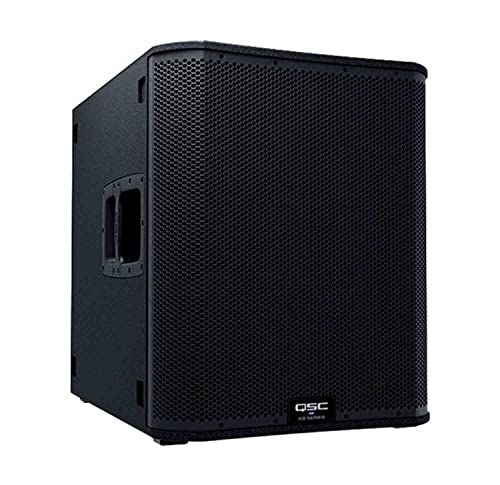
QSC KS118 Active 18" Subwoofer
$2,199.99 Specs and sizingAn 18 inch cardioid-capable subwoofer that reaches into the low thirties. The cardioid mode is the point in a church: it keeps low end off the platform and out of the open microphones.
Best for: Contemporary worship in a large room, especially where the platform booms
Check price on Amazon
Shure BLX24/SM58 Wireless Microphone System - 14-Hour Battery Life, 300 ft Range, UHF
$389.00 Specs and sizingThe SM58 capsule on a BLX transmitter, which is the wireless most churches settle on. Up to twelve compatible channels per band, and the capsule is the one every singer already knows how to use.
Best for: Worship vocals and a roaming handheld in a 100 to 500 seat room
Check price on Amazon
Shure SLXD24/SM58 Digital Wireless Microphone System - Includes SLXD2 Handheld Transmitter with SM58 Vocal Mic Capsule and SLXD4 Single Channel Rack Mount Receiver
$769.00 Specs and sizingDigital transmission with 24 bit audio and far tighter channel spacing than analog, so many more systems fit in the shrinking legal spectrum. That density is the reason to pay the difference.
Best for: Churches running more than about six wireless channels at once
Check price on AmazonWhat do the complete system builds actually cost?
These are not estimates. Each one is a full equipment list on this site with every item priced and linked, so you can click through and check the arithmetic yourself.
A complete 250 seat church sound system on this site costs $15,929 in equipment, before installation labor, rigging and electrical work.
| System build | Seats | Equipment total | Per seat | With installation |
|---|---|---|---|---|
| 100 Seat Church Sound System | 100 | $5,534 | $55 | $8,024 to $8,854 |
| 250 Seat Church Sound System | 250 | $15,929 | $64 | $23,097 to $25,486 |
| 500 Seat Church Sound System | 500 | $32,838 | $66 | $47,615 to $52,541 |
| 1,000 Seat Church Sound System | 1,000 | $41,605 | $42 | $60,327 to $66,568 |
The installation column applies the 45 to 60 percent uplift that is typical of an installed system with flown loudspeakers, conduit and dedicated circuits. A system on stands in a room that already has power costs far less to install and sometimes nothing at all.
Why service style matters more than seat count
The same room, specified for speech only and for a contemporary band. The difference is not a preference, it is a different quantity of equipment.
A 250 seat room needs about 460 watts of amplification and no subwoofer for speech, and roughly four times the power plus a subwoofer and four monitor mixes for a contemporary band.
| Seats | Inputs | Speech watts | Band watts | Subwoofers | Monitor mixes |
|---|---|---|---|---|---|
| 75 seats | 10 inputs | 10 W | 1,581 W | 1 sub | 2 mixes |
| 150 seats | 16 inputs | 19 W | 3,032 W | 1 sub | 4 mixes |
| 250 seats | 16 inputs | 30 W | 4,737 W | 1 sub | 4 mixes |
| 400 seats | 24 inputs | 74 W | 11,804 W | 2 subs | 6 mixes |
| 600 seats | 24 inputs | 112 W | 17,688 W | 2 subs | 6 mixes |
| 1,000 seats | 32 inputs | 223 W | 35,411 W | 2 subs | 8 mixes |
Monitor mixes and subwoofers are the lines that appear entirely because of the band, and they are also the two most commonly left out of a first budget.
Where the money goes
These proportions come from how the decisions constrain each other rather than from a survey. Loudspeakers set the ceiling on everything else, which is why they take the largest share and get bought first.
Loudspeakers and their amplification take about 44 percent of a church audio budget between them, which is the correct proportion because they set the ceiling on what the rest of the system can achieve.
| Budget line | Share | Why |
|---|---|---|
| Loudspeakers and subwoofers | 32% | The ceiling on everything else. Spend here first. |
| Amplification and processing | 12% | Sized to the speakers, not to the room. |
| Mixing console | 16% | Channel count and recall matter more than brand. |
| Wireless microphones and antennas | 15% | The recurring cost: batteries, and spectrum that keeps shrinking. |
| Wired microphones and direct boxes | 6% | Cheap, durable, and the thing most often missing. |
| Monitoring, wedges or in-ears | 9% | Skip at your peril: stage volume is a house-mix problem. |
| Cable, racks, power and rigging | 10% | Always under-budgeted, never optional. |
A beautiful console feeding inadequate loudspeakers is the single most common way a church wastes a building fund. Split your own total with the AV budget allocator.
How to phase the purchase
- Measure the room first. If the room rings, no equipment purchase fixes it. An acoustic measurement costs a fraction of the system and will change what you buy. Start with the acoustic treatment calculator to see whether it is likely to be a problem at all.
- Loudspeakers and amplification. These set the ceiling on everything else and are the hardest to change later, especially if they are flown. Buy the right coverage for the room even if it means waiting a season on the console.
- Console and stage box. The channel count decides how many inputs you can ever have, so buy for the input list you will have in five years rather than the one you have now.
- Microphones and wireless. Wired microphones are cheap, durable and the thing most often missing. Buy those first and add wireless channels only for positions that genuinely cannot be wired.
- Monitoring. Easy to postpone and expensive to skip, because stage volume is a house mix problem. A wired personal mixer system costs far less than wireless in-ears and uses no radio spectrum.
- Accessibility and infrastructure. Assistive listening, racks, power conditioning and cable. Unglamorous, always under-budgeted, and the reason a system either lasts or does not.
Frequently asked questions
How much does a church sound system cost?
Roughly $55 to $90 per seat in equipment for a speech-led room and $90 to $160 per seat for a full band, so a 250 seat church typically lands around $18,000 for equipment. Installation labor, rigging, conduit and electrical work commonly add another 30 to 60 percent. The complete priced builds on this site let you check those figures item by item.
Why is the range so wide?
Because the service style drives more of the cost than the seat count does. Loudspeakers, subwoofers, console channels and the entire monitoring system scale with the band, not the congregation. A 250 seat church with a lectern and a piano needs perhaps 40 percent of what a 250 seat church with a full band and in-ear monitoring needs.
What is the biggest mistake churches make with the budget?
Spending on the console at the expense of the loudspeakers. A console with more channels than the room will ever use, feeding speakers that cannot cover the back row, is the most common way a church wastes a building fund. Loudspeakers and amplification set the ceiling on everything else, so they take about a third of the budget and they get bought first.
Can we phase a sound system purchase over several years?
Yes, and the order matters more than the pace. Treat the room first if it needs it, then loudspeakers and amplification, then the console and stage box, then microphones, then monitoring, then infrastructure. Buying a console first and speakers later means living with the wrong speakers for years, which is the sequence most churches accidentally choose.
Should we get quotes from integrators as well?
For any permanent installation, and certainly for any room above roughly 500 seats, yes. Use the figure from this calculator to judge whether a quote is in the right range and to understand what is in it, not to replace the quote. Ask every integrator for a coverage prediction as a deliverable, which is the thing you are actually paying for.
How much should we budget for installation?
For an installed system with flown loudspeakers, conduit and dedicated circuits, budget 30 to 60 percent of the equipment cost on top, and toward the upper end in an older building or one with difficult access. A system on stands in a room that already has adequate power can cost almost nothing to install, which is one of the real financial advantages of a portable or semi-portable approach.
Researched, not professional advice. This page is compiled from published manufacturer specifications, operator manuals, FCC rules, published standards and owner-review consensus, not hands-on testing. Sound system design, rigging loudspeakers overhead, and any electrical work are jobs for a qualified professional: have flown loudspeakers and their attachment points signed off by a structural engineer or a certified rigger, and have all wiring done by a licensed electrician to your local code. Wireless microphone rules change, so confirm the current FCC position before buying. As an Amazon Associate we earn from qualifying purchases.