Loudspeakers
Best Powered Speakers for Small Churches
Quick answer
A small church under 150 seats needs two powered 12 inch speakers of about 1,000 watts each, and the QSC CP12 at $649.99 is the best of them at 30 pounds. A chapel under 75 seats with speech only can use 8 inch boxes instead.
Small church loudspeaker buying has one dominant variable that larger rooms do not share: weight. If a volunteer team lifts the boxes onto stands every week, a 30 pound cabinet gets used properly and a 60 pound cabinet gets left on the floor where it covers nobody. Published weight belongs in the decision alongside output.
The second variable is throw. A small sanctuary has a back row 25 to 45 feet away, which needs far less power than most committees assume. Check the real number in the SPL loss by distance calculator and the complete build in the 100 seat system.
On this page
How much speaker does a small sanctuary need?
Sound falls off by about 6 dB every time distance doubles. A speaker producing 100 dB at one metre delivers roughly 94 dB at two metres, 88 dB at four, and so on. In a room where the back row is 40 feet from the loudspeaker, a single 1,000 watt powered 12 has a large margin over the roughly 88 dBA a blended service needs.
That is why small church systems are so often over-specified. The honest requirement for a 100 seat room with a piano and three microphones is two modest powered boxes, correctly placed and aimed. The money saved belongs in microphones and in the room itself, both of which change intelligibility more than extra watts ever will.
Where small churches genuinely do need more is headroom for a band. Drums and bass guitar consume headroom quickly, and a speaker running near its limit sounds compressed and harsh. If there is a full kit on the platform, buy the larger option in each tier below.
Speaker size by seat count and throw
Realistic sizing for small rooms. Throw is the distance from the loudspeaker to the back row.
A 100 seat sanctuary with a 40 foot throw is comfortably served by two 1,000 watt powered 12 inch boxes, and a speech-only chapel under 75 seats can use 8 inch boxes.
| Seats | Throw to back row | Service style | Recommended box | Subwoofer |
|---|---|---|---|---|
| Under 50 | 20 to 25 feet | Speech and piano | 2 powered 8 inch | No |
| 50 to 75 | 25 to 30 feet | Speech and piano | 2 powered 8 or 12 inch | No |
| 50 to 75 | 25 to 30 feet | Small band | 2 powered 12 inch | Optional |
| 75 to 120 | 30 to 40 feet | Blended | 2 powered 12 inch | Optional |
| 75 to 120 | 30 to 40 feet | Contemporary with drums | 2 powered 12 or 15 inch | Yes, one |
| 120 to 150 | 40 to 50 feet | Blended | 2 powered 12 inch | Optional |
| 120 to 150 | 40 to 50 feet | Contemporary with drums | 2 powered 15 inch | Yes, one |
Assumes boxes on stands at roughly seven feet, aimed down into the seating. A room with hard parallel walls and a long reverberation time should choose the tighter pattern in each case rather than the larger box.
Smallest budget: a system that works this Sunday
These are the honest options for a church that needs to be heard now and has almost nothing to spend. None of them are sanctuary flagship speakers and this page will not pretend otherwise, but all three are a genuine improvement on an unbranded PA box or a domestic amplifier.

Behringer EUROLIVE B112D Active 2-Way 12" PA Speaker System with Wireless Option and Integrated Mixer
$299.00 Specs and sizingAn entry powered 12 at {{price:behringer-b112d}} for a fellowship hall or an overflow room. It is not a sanctuary main speaker, and it should not be sold as one.
Best for: Overflow rooms, fellowship halls and outreach events
Check price on Amazon
Mackie Thump215 15" 1400W Powered Loudspeaker with Heavy-Duty Drivers
$414.95 Specs and sizingA 15 inch cabinet with a 1,400 watt peak rating that goes loud for very little money, and is straightforward about being a budget box.
Best for: A church plant that needs volume now and will upgrade later
Check price on Amazon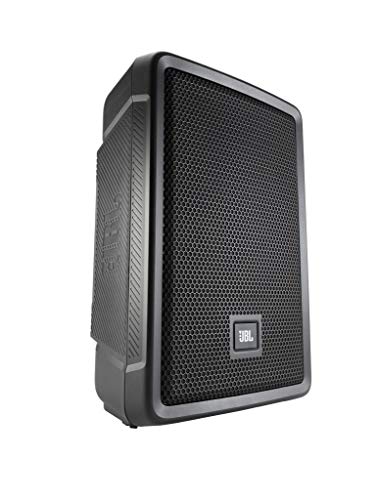
JBL Professional IRX108BT Powered PA Speaker, Portable Loudspeaker with Bluetooth, 8 Inch Woofer, 1300 Watt, Mobile DJ, Musicians, Small Venues, Ceremonies and Sports Events
$385.00 Specs and sizingA light powered 8 with JBL waveguide design and Bluetooth for walk-in music. A speech and small-group speaker rather than a worship main.
Best for: Youth rooms, classrooms, outdoor services and portable speech reinforcement
Check price on AmazonWho should not buy this tier: A main sanctuary system with a band, or any room over about 100 seats.
The sensible small church main
This tier is where most small churches should buy. All three have real processing and limiting, published coverage patterns, and enough headroom for a blended service. The step up from the beginner tier is audible immediately on a speaking voice, which is what a congregation listens to most.

Yamaha DBR Series DBR 12" Powered Speaker Cabinet
$390.99 Specs and sizingYamaha DSP in a 34 pound cabinet, neutral enough that an inexperienced mix still sounds acceptable. A good choice when several volunteers run sound.
Best for: Volunteer-run systems in a 75 to 150 seat room
Check price on Amazon
Electro-Voice ZLX-12P-G2 12in. 2-Way Powered Loudspeaker with Bluetooth
$549.00 Specs and sizingA real 90 by 60 waveguide, which keeps energy off the side walls and out of the microphones. In a small hard-surfaced room that is worth more than extra watts.
Best for: Reverberant small sanctuaries with hard floors and plaster walls
Check price on Amazon
QSC CP8 8" Compact Powered Loudspeaker
$549.99 Specs and sizingThe smallest QSC that keeps QSC processing, and honest about its limits: it will not carry a band in a large room and does not pretend to.
Best for: Chapels under 75 seats, foyers, nurseries and front fills
Check price on AmazonWho should not buy this tier: Contemporary services with a full drum kit in a room approaching 150 seats.
Small room, serious requirement
Some small churches have a demanding service in a small space: a full band, a livestream, and a congregation that fills every seat. These three give headroom and pattern control beyond what the room strictly needs, which keeps the system clean at level rather than merely loud. A portable church should also read the portable PA roundup before choosing.

QSC CP12 12-Inch Compact Powered Loudspeaker
$649.99 Specs and sizingA thousand watts and QSC processing at 30 pounds. The weight is the feature: it is the difference between speakers that get put on stands properly and speakers that stay on the floor.
Best for: A 75 to 150 seat room, especially one that sets up and tears down
Check price on Amazon
QSC K8.2 Active 8" Powered 2000 Watt Loudspeaker
$749.99 Specs and sizingA 105 degree pattern in a small box with a full 2,000 watt amplifier. It covers a very wide, shallow room from a short distance, and doubles as a front fill or side fill later.
Best for: Wide shallow rooms, and churches that want the box to have a second life
Check price on Amazon
JBL Professional EON712 Powered PA Speaker, 12 inch, 1300 Watt
$549.00 Specs and sizingA 1,300 watt waveguide-loaded 12 with app control and a 100 by 60 pattern that covers the front pews better than a narrow conical box.
Best for: A 120 to 200 seat room with a band, where the system must not run out of headroom
Check price on AmazonWho should not buy this tier: Do not buy this tier for a chapel with a lectern microphone and a piano. The additional headroom is inaudible at the levels a speech-led service uses, and the same money spent on a better preaching microphone and some absorption on the rear wall will change what the congregation hears far more.
What small churches should spend on instead
Once a room has two adequate powered boxes correctly placed, the next dollar rarely belongs in a bigger speaker. It belongs in one of three places. A better preaching microphone, because the spoken word is most of the service and a headset microphone gives eight to twelve decibels more gain before feedback than a lapel. Some absorption on the rear wall, which stops the slap echo that makes speech hard to follow. Or a front fill for the first two rows, which is usually a small box and solves a complaint that no amount of main speaker power can.
The fourth candidate is a subwoofer, but only for contemporary worship. In a speech-led small church a subwoofer adds energy the room cannot control, and the subwoofer roundup sets out when it is genuinely warranted. Placement guidance for all of this is in how to aim and place church speakers.
How we chose
We did not test these products in person and we never claim to. Picks are researched from manufacturer specification sheets and operator manuals, FCC rules where spectrum is involved, published standards, warranty terms, and the recurring themes in verified owner reviews. Every pick is matched to a real room size, seat count or input list rather than to a price bracket, and it is placed in the tier where its capability actually belongs. Where a product is wrong for most churches we say so on the page.
Sources
- Manufacturer published specifications, including weight and maximum sound pressure level
- Consensus of verified owner reviews across major retailers
Frequently asked questions
Are two speakers enough for a small church?
For almost every room under 150 seats, yes, provided they are placed above head height and aimed into the seating. The exception is a very wide, shallow room where two boxes leave the outer seats uncovered, or a room whose first two rows sit under the coverage and hear only the platform. Both are solved with a small fill speaker rather than larger mains.
Is a 15 inch speaker better than a 12 for a small church?
Only if there is a band and no subwoofer. A 15 inch woofer gives more low end, which helps bass guitar and kick drum, at the cost of a slightly less controlled pattern and more weight. For a speech-led or blended service, a 12 inch box is easier to place, easier to lift and usually clearer on the spoken word.
How much should a small church spend on loudspeakers?
Loudspeakers and amplification usually deserve around 40 percent of a system budget, which is the largest single line. In a small church that often means a pair of powered boxes in the range of the CP12 at $649.99 each. Spending less is possible and sometimes right, but cutting this line to fund a larger console is the most common small church mistake.
Do small churches need a subwoofer?
Only for contemporary worship with drums and bass guitar. A subwoofer adds weight to music that a 12 inch box cannot produce, but in a small reverberant room it also excites the space in ways that hurt speech intelligibility. If the service is speech-led or traditional, skip it and spend the money on microphones or acoustic treatment.
Can we use home or studio speakers in a small chapel?
It is not advisable. Domestic and studio monitors are designed for a listener a few feet away, so they have neither the output nor the pattern control to cover a congregation, and they have no protective limiting. Pushed to fill a room they distort and eventually fail. A modest professional powered box is more robust and will cover far more seats cleanly.
What weight can volunteers reasonably lift onto stands?
Around 30 to 35 pounds is a sensible ceiling for one person lifting to shoulder height, which is why published weight belongs in the specification for any church that sets up weekly. Above that, plan for two people or use stands with a wind-up crank. A speaker that is too heavy to place properly ends up on the floor, where it covers almost nobody.
Researched, not professional advice. This page is compiled from published manufacturer specifications, operator manuals, FCC rules, published standards and owner-review consensus, not hands-on testing. Sound system design, rigging loudspeakers overhead, and any electrical work are jobs for a qualified professional: have flown loudspeakers and their attachment points signed off by a structural engineer or a certified rigger, and have all wiring done by a licensed electrician to your local code. Wireless microphone rules change, so confirm the current FCC position before buying. As an Amazon Associate we earn from qualifying purchases.