Stage monitoring
In-Ear Monitors vs Floor Wedges
Quick answer
These solve stage volume in opposite directions. Wedges add level to the platform that then leaks into every open microphone. In-ears remove it, and earphones with about 37 dB of isolation let the whole platform get quieter, at the cost of one properly built mix per musician.

Shure PSM300 P3TRA215CL Pro Wireless in-Ear Personal Monitoring System with SE215-CL Earphones
$989.00 Specs and sizingA wireless transmitter, bodypack and SE215 earphones whose roughly 37 dB of isolation is the actual point: the musician hears the mix instead of the room.
Best for: A musician who needs real isolation, especially the drummer
Check price on Amazon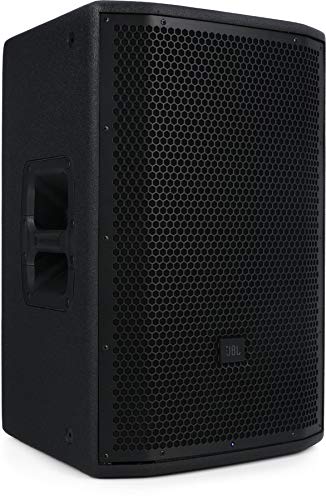
JBL Professional PRX812W Portable 2-Way Self Powered Full Range Main System/Floor Monitor with WiFi, 15-Inch, Previous Generation
$1,099.00 Specs and sizingA powered cabinet with a proper monitor wedge angle on one face, which can also serve as a main or a side fill as the platform changes.
Best for: Churches that reconfigure the platform for different services
Check price on AmazonDo not treat this as good against better. A floor wedge puts a loudspeaker on the platform pointing at a singer, which means it also points at their microphone and at everyone else's. An in-ear system takes the monitor path off the platform entirely. Both let a musician hear themselves. Only one of them makes the room quieter, and only one of them lets a musician hear the room.
Choose by the problem you actually have. If the complaint is that the platform is too loud, that the vocal microphones have no gain left, or that the livestream picks up a wash of monitor bleed, in-ears are the fix. If the complaint is that musicians cannot hear themselves and the platform is not especially loud, wedges are cheaper and simpler. Work out how many mixes you need first on the monitor mix calculator.
Side by side
| Model | Price | Frequency band | Personal mixes | Wired | Battery life | Rated range | Isolation |
|---|---|---|---|---|---|---|---|
| Shure PSM300 P3TRA215CL Pro Wireless in-Ear Personal Monitoring System with SE215-CL Earphones | $989.00 | UHF | 1 | No | 8 hours | 300 ft | 37 dB |
| JBL Professional PRX812W Portable 2-Way Self Powered Full Range Main System/Floor Monitor with WiFi, 15-Inch, Previous Generation | $1,099.00 | - | - | - | - | - | - |
What each one does to the platform and to the house mix
This is the comparison that decides it, and it is about the room rather than about the musician.
Wedges commonly put 95 dBA or more at the musician and all of it leaks into every open microphone, while in-ears remove that level entirely at the cost of one properly built mix per musician.
| Effect | Floor wedges | In-ear monitors |
|---|---|---|
| Stage sound level | Adds, commonly 95 dBA or more at the musician | Removes, the platform can fall close to acoustic level |
| Bleed into open vocal microphones | Significant, and it eats gain before feedback | None from the monitor path |
| Bleed into the livestream | Yes, through every open microphone | None |
| What the musician hears | Themselves, the room and everyone else | Only what is in their mix |
| Hearing exposure | Set by whoever reaches the knob | Limited by the bodypack limiter, if it is used |
| Mix time required | One send per wedge, quick to set | One mix per musician, and they notice everything |
| Feel of the room | Natural, the musician is in the space | Isolated, and it takes weeks to adjust |
| Cost per position | About $1,099.00 for this powered wedge | About $989.00 for a pack and earphones |
The isolation figure that matters is on the earphones, not the radio. Shure publishes roughly 37 dB for the SE215. Cheap earbuds with no seal provide almost none, which is why an in-ear system bought without proper earphones fails to reduce stage volume at all.
Choose in-ears when stage volume is the actual problem
The reason to spend the money is not that musicians will hear better. It is that the platform gets quieter, and everything downstream improves at once. Vocal microphones recover gain before feedback because there is no wedge firing into them. The livestream stops carrying a wash of monitor bleed. The congregation in the front three rows stops hearing the platform directly. That chain is why in-ears are the single biggest improvement available to a church with a loud band, and it is covered in reducing stage volume.
Start with one channel, usually the worship leader, and grow. The PSM300 with SE112 earphones at $799.00 is the cheapest complete entry, and the SE215 version at $989.00 is the one to buy if the goal is genuine isolation. The Twin Pack at $1,539.00 puts two musicians on one shared mix, which is how most churches add backing vocalists cheaply.
Budget for the work, not just the boxes. Every musician on in-ears needs their own mix built and maintained, and a musician who has been given a bad in-ear mix will ask for the wedges back within a month. Read setting up in-ears in church before buying anything, and plan an ambient microphone so the platform does not feel sealed off from the congregation.
Choose wedges when the platform is quiet and the team rotates
Wedges remain the right answer for a great many churches. A traditional service with a piano, a lectern and two vocals does not have a stage volume problem, so the thing in-ears fix is not broken. A wedge is set once, works for whoever stands in front of it, and needs no bodypack, no earphones, no battery and no explanation.
That last point carries real weight with a rotating volunteer team. A visiting musician steps onto a platform with wedges and starts playing. The same musician on in-ears needs a pack, a set of earphones, a mix built for them, and five minutes nobody has before a service. A passive PRX412M at $699.00 keeps mains power off the platform if amplifier channels are spare, and a small B205D at $219.00 covers a single vocalist or a lectern foldback.
Be honest about what wedges cost you. Every decibel a wedge produces arrives at the vocal microphones in front of it, so wedges and gain before feedback are in direct competition. If your lead vocal is already fighting the room, adding wedge level makes it worse, not better. Aim wedges into the microphone nulls, which depends on the capsule pattern and is covered in SM58 against Beta 58A.
Sources
- Shure published PSM300 and SE215 specifications
- JBL Professional published PRX800 series specifications
- NIOSH recommended exposure limits for occupational noise
Frequently asked questions
Will in-ear monitors fix our feedback problem?
They will help more than any processor, because they remove the loudspeakers that were pointing at your microphones. Gain before feedback improves immediately once the wedges are off. They will not fix a microphone placed in front of a main loudspeaker, or a room whose reverberation is the real problem, so treat them as part of the answer rather than all of it.
Do musicians really need their own mix each?
The drummer and the worship leader almost always do, because they need opposite things. Backing vocalists frequently share one mix happily, which is what a twin pack system is for. Start by counting how many genuinely different mixes your platform needs rather than how many people are on it, and the monitor mix calculator does exactly that.
Why do our singers say in-ears feel unnatural?
Because isolation removes the room, so they lose the sense of the congregation and of their own voice in the space. The standard fix is an ambient microphone or a pair of them at the front of the platform, mixed quietly into everyone in-ear feed. It costs one channel and it is the difference between musicians accepting in-ears and rejecting them.
Can we run wedges and in-ears at the same time?
Yes, and a hybrid is what most churches actually end up with. Put the drummer and the worship leader on in-ears where isolation matters most, and leave a wedge for the guest musician who turns up without warning. The one thing to avoid is a loud wedge next to somebody on in-ears, because it defeats their isolation.
What is the cheapest honest way to try in-ear monitoring?
A wired personal monitor amplifier fed from a spare aux send. A belt-clip unit of that kind costs under fifty dollars, works with earphones the musician already owns, and proves whether your musicians will accept in-ears before you spend a thousand dollars per position on wireless. Our personal mixer comparison covers where that path leads.
Researched, not professional advice. This page is compiled from published manufacturer specifications, operator manuals, FCC rules, published standards and owner-review consensus, not hands-on testing. Sound system design, rigging loudspeakers overhead, and any electrical work are jobs for a qualified professional: have flown loudspeakers and their attachment points signed off by a structural engineer or a certified rigger, and have all wiring done by a licensed electrician to your local code. Wireless microphone rules change, so confirm the current FCC position before buying. As an Amazon Associate we earn from qualifying purchases.