Wireless and monitors
Monitor Mix Calculator
Quick answer
Monitor mixes are counted by ear, not by musician. A full band with five players, four vocalists and a drummer needs about 8 mixes and therefore 8 aux sends. Wired personal mixers cost less than wireless in-ears at every mix count, so the choice is about mobility and spectrum rather than money.
The count that matters is mixes, not people. Two backing vocalists who want essentially the same thing can share one mix. A drummer never can, because what a drummer needs bears no resemblance to what anybody else on the platform wants. The worship leader always needs their own.
The second decision is the delivery method, and it is mostly an arithmetic question about spectrum and cost rather than a taste question. Enter your platform below.
Monitor mix calculator
Monitor mixes needed
Monitoring that suits your platform
Top matches update when you change your numbers.

Behringer P2 Ultra-Compact Personal In-Ear Monitor Amplifier
$39.90A belt-clip headphone amplifier that takes an aux send on XLR and drives in-ear earphones. Forty dollars turns a spare aux into a wired in-ear mix.
Best for: The cheapest possible way to try in-ear monitoring before committing
Check price on Amazon
Behringer POWERPLAY P1 Personal In-Ear Monitor Amplifier
$55.90A wired personal monitor amplifier with a stereo or mono switch and a limiter, for a fixed position such as the drum stool or the keyboard.
Best for: A fixed position that never moves and does not need to be wireless
Check price on Amazon
Shure SE215 PRO Wired Earbuds - Professional Sound Isolating Earphones, Clear Sound & Deep Bass, Single Dynamic MicroDriver, Secure Fit In Ear Monitor, plus Carrying Case & Fit Kit - Clear (SE215-CL)
$119.00The standard first pair of real in-ear monitors. The roughly 37 dB of isolation is why they work: the musician hears the mix instead of the room.
Best for: Every musician moving from wedges to in-ears
Check price on Amazon
Behringer POWERPLAY P16-M 16 Channel Digital Personal Mixer
$209.00Sixteen channels of personal mix control at each musician’s position, fed over one Cat5 cable. Past about six mixes this is far cheaper than wireless in-ears and it uses no radio spectrum at all.
Best for: A band of six or more where everyone wants their own mix
Check price on Amazon
Behringer Powerplay P16-HQ 16-Channel Digital Personal Monitoring Mixer
$203.99The current revision of the P16-M with a better headphone amplifier, which is the part of a personal mixer musicians actually complain about.
Best for: A new personal-mixer system, over the older P16-M
Check price on Amazon
Behringer POWERPLAY P16-D 16 Channel Digital ULTRANET Distributor
$139.00The distribution hub that splits one ULTRANET feed to eight personal mixers and powers them down the same cable. One box, eight musicians, no power at any position.
Best for: Any personal-mixer system with more than two positions
Check price on Amazon
Shure PSM300 P3TR112GR Wireless in-Ear Personal Monitoring System with SE112 Earphones - G20 Band
$799.00 Specs and sizingThe cheapest full Shure in-ear system: transmitter, bodypack receiver and SE112 earphones in one box, so a church can start in-ears with one purchase.
Best for: The first in-ear channel, usually the worship leader
Check price on Amazon
Shure PSM300 P3TRA215CL Pro Wireless in-Ear Personal Monitoring System with SE215-CL Earphones
$989.00 Specs and sizingThe same system with SE215 earphones, whose roughly 37 dB of isolation is the actual point of in-ears: it lets the whole platform get quieter.
Best for: A musician who needs real isolation, especially the drummer
Check price on Amazon
Shure PSM300 Twin Pack Pro Wireless in-Ear Monitor System - G20
$1,539.00 Specs and sizingOne transmitter feeding two bodypacks on the same mix, which is the cheap way to put two vocalists who want the same thing on in-ears.
Best for: Two backing vocalists who share a mix
Check price on Amazon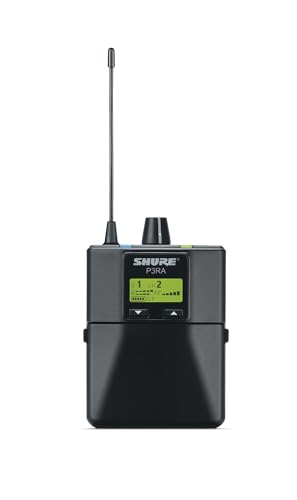
Shure P3RA Premium Wireless Bodypack Receiver for PSM300 Personal Monitoring Systems - G20 Band
$499.00A metal-bodied PSM300 bodypack receiver on its own, for adding a musician to an existing transmitter or replacing the plastic pack that got stood on.
Best for: Growing an in-ear system one musician at a time
Check price on Amazon
Shure P3T Wireless Transmitter for PSM300 Personal Monitoring Systems
$399.00A PSM300 transmitter on its own, which is what you buy when the band needs a second distinct mix rather than another pair of ears on the first.
Best for: Adding a second independent monitor mix
Check price on Amazon
Sennheiser Pro Audio Sennheiser ew IEM G4-A1 In Ear Monitor system Range (470-516Mhz), Single
$1,249.00 Specs and sizingA 42 to 46 MHz tuning range with up to 20 compatible channels, plus a proper limiter in the bodypack. That limiter is a hearing-protection feature, not a convenience.
Best for: Bands large enough that in-ear channels compete with the microphones for spectrum
Check price on Amazon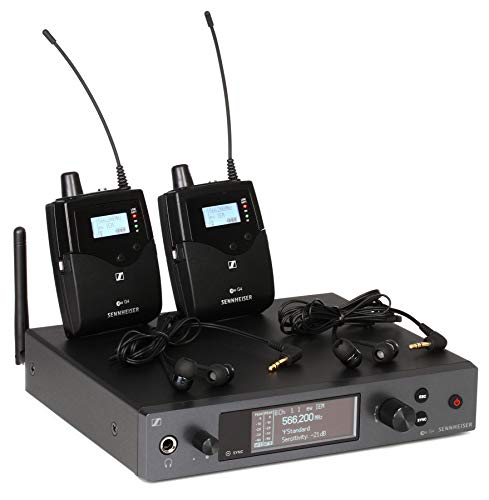
Sennheiser Pro Audio Sennheiser ew IEM G4-Twin-G in Ear Monitor System w/ 2 Belt Packs Range (566-608Mhz), Dual Beltpack
$1,649.00 Specs and sizingOne transmitter and two bodypacks, the efficient way to add a pair of musicians on a shared mix without another rack unit or another frequency.
Best for: Two musicians on one mix in an already crowded RF plan
Check price on Amazon
Galaxy Audio AS-1400 Wireless In-Ear Personal Monitor System, Code M (516 MHz - 558 MHz)
$449.99 Specs and sizingA budget UHF in-ear system with a real metal bodypack. Honest caveat: earphones are not included, and cheap earphones waste the whole purchase.
Best for: Adding in-ear channels cheaply for musicians who own their own earphones
Check price on Amazon
Galaxy Audio AS-950R Wireless in-Ear Monitor Receiver (518-542 MHz)
$159.99A spare receiver for the Galaxy system, cheap enough to keep two in the drawer.
Best for: Spares for a volunteer band where packs get dropped
Check price on Amazon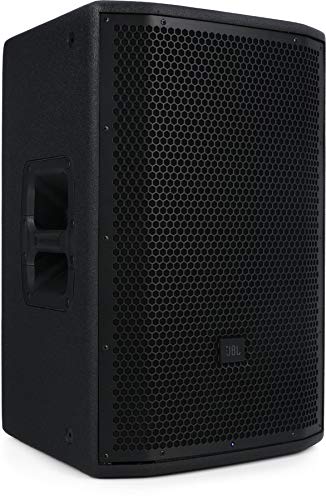
JBL Professional PRX812W Portable 2-Way Self Powered Full Range Main System/Floor Monitor with WiFi, 15-Inch, Previous Generation
$1,099.00 Specs and sizingA powered cabinet with a proper monitor wedge angle on one face, so the same box can be a main, a side fill or a floor wedge as the platform changes.
Best for: Churches that reconfigure the platform for different services
Check price on Amazon
JBL Professional PRX412M Portable 2-way Passive Utility Stage Monitor and Loudspeaker System, 12-Inch
$699.00 Specs and sizingA passive wedge for a system with amplifier channels to spare, which keeps the platform free of power outlets and one more thing to fail.
Best for: Platforms where running mains power to each wedge is a problem
Check price on Amazon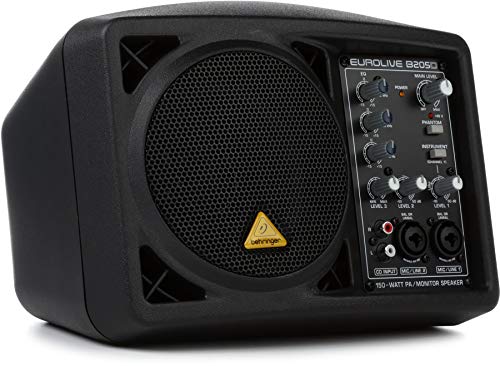
Behringer Eurolive B205D Active 150-Watt PA/Monitor Speaker System
$219.00 Specs and sizingA tiny powered wedge for one vocalist or a keyboard player who needs a little of themselves and nothing else.
Best for: A single performer monitor, or a lectern foldback
Check price on Amazon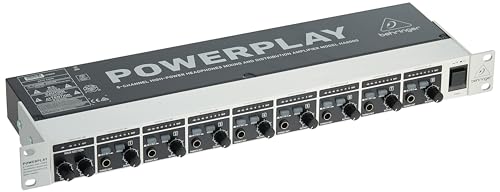
Behringer HA8000 V2 8-Channel High-Power Headphone Mixing and Distribution Amplifier
$189.00Eight independently level-controlled headphone outputs in one rack unit, for a choir rehearsal room or a wired in-ear system without personal mixers.
Best for: Distributing one mix to many wired listeners
Check price on Amazon
Behringer POWERPLAY HA4700 4 Channel High-Power Headphones Mixing and Distribution Amplifier
$259.00Four channels with per-channel EQ and a stereo or mono switch, so each listener can shape their own feed a little.
Best for: Four wired in-ear positions that each want something different
Check price on AmazonHow many monitor mixes does a church platform need?
Five common platform sizes, counted by ear rather than by head. The aux send column is what the console has to provide.
A full band with five musicians, four vocalists and a drummer needs about 8 monitor mixes and 8 aux sends, which is beyond what most small consoles provide.
| Platform | People | Mixes needed | Recommended delivery | Aux sends |
|---|---|---|---|---|
| Speaker and one vocalist | 1 | 1 | Wireless in-ears workable | 1 |
| Piano and two vocalists | 3 | 2 | Wireless in-ears workable | 2 |
| Small band, three vocalists | 7 | 6 | Wireless in-ears workable | 6 |
| Full band, four vocalists | 10 | 8 | Wired personal mixers | 8 |
| Band plus a small orchestra | 14 | 12 | Wired personal mixers | 12 |
Aux sends for monitors are on top of the sends leaving the room for the livestream, the overflow, the nursery and the hearing assist system. Check the bus count on a console data sheet as carefully as the channel count.
Wedges, wireless in-ears or wired personal mixers?
All three work. Which is right is decided by how many mixes you need, how much radio spectrum you have left after the microphones, and who actually has to move.
Wired personal mixers cost less per position than wireless in-ears at every mix count, from one upward, and use no radio spectrum at all, which is what the wireless microphones need.
| Option | Advantage | Trade-off | Best for |
|---|---|---|---|
| Floor wedges | Cheapest per position | Puts more sound into the congregation than into the musician. The house mix fights it every week. | A single speaker position, or a room where the platform is well separated |
| Wired personal mixers | Cheaper than wireless at every mix count | The musician is tethered to a position, which suits a drummer and not a worship leader. | Any fixed position, at any number of mixes |
| Wireless in-ear systems | Total freedom of movement | Competes with your wireless microphones for the same shrinking spectrum, and every pack is a battery. | The worship leader and anybody who genuinely must move |
| Wired belt-pack amplifiers | Cheapest way to try in-ears at all | One fixed mix from an aux send, with no personal control. | Trying in-ear monitoring before committing to a system |
Why stage volume is a house mix problem
This is the reason monitoring matters far more than its share of the budget suggests. Whatever the platform produces acoustically, the congregation hears, and the console cannot subtract it.
Contemporary worship commonly runs 92 to 98 dBA, and NIOSH allows about one hour of exposure at 94 dBA and about fifteen minutes at 100 dBA.
| Setting | Typical level | Exposure guidance |
|---|---|---|
| Spoken word only | 70 to 78 dBA | No exposure concern |
| Traditional service, hymns and organ | 78 to 85 dBA | No exposure concern |
| Blended service, piano and small band | 85 to 90 dBA | NIOSH: 8 hours at 85 dBA |
| Contemporary worship | 92 to 98 dBA | NIOSH: about 1 hour at 94 dBA |
| Modern, full band | 98 to 102 dBA | NIOSH: about 15 minutes at 100 dBA |
| Youth or student service | 95 to 100 dBA | Offer ear protection at the door |
These are levels rooms actually run at, not targets to reach. Offer hearing protection at the door above about 95 dBA and take a complaint about volume seriously.
The spectrum arithmetic nobody does first
Wireless in-ear transmitters use the same UHF television spectrum as your wireless microphones, and they are transmitters rather than receivers, so they consume it the same way. A church running six wireless microphones and six wireless in-ear channels needs twelve coordinated frequencies, not six, and in most US markets that is a genuine coordination exercise rather than a setting.
Wired personal mixers such as the Behringer Powerplay P16-HQ 16-Channel Digital Personal Monitoring Mixer sidestep the problem entirely. They run over one network cable from a hub like the Behringer POWERPLAY P16-D 16 Channel Digital ULTRANET Distributor, cost less per position, never drop out, and leave the whole spectrum for the microphones that have no alternative. The trade is real: the musician is tethered to a position.
So the practical answer for most churches is a hybrid. Put the worship leader, who genuinely must move, on a wireless system such as the Shure PSM300 P3TRA215CL Pro Wireless in-Ear Personal Monitoring System with SE215-CL Earphones, and put everybody else on wired personal mixers. Check what your spectrum will actually carry with the wireless channel calculator before committing.
Frequently asked questions
How many monitor mixes does a church need?
Count by ear rather than by person. A full band with five musicians, four vocalists and a drummer needs about eight mixes: the drummer alone, the worship leader alone, and the rest grouped where people genuinely want the same thing. A small church with a piano and two vocalists needs three. Each mix consumes one aux send on the console.
Are in-ear monitors better than floor wedges?
For the congregation, almost always, because a wedge puts more sound into the room than into the musician and the house mix has to fight it every week. For the musician it is a bigger adjustment: in-ears isolate, which feels disconnected at first and takes several weeks to get used to. Start with one or two positions rather than converting the whole platform at once.
Should we use wireless in-ears or wired personal mixers?
Wired, for almost everybody. At catalog prices a wired position runs a few hundred dollars against roughly a thousand for a wireless one, and that gap holds at every mix count rather than appearing only above some threshold. Wired also uses no radio spectrum, which your microphones need. What wireless buys is mobility, so put the worship leader on it and everybody else on cable.
Can two singers share a monitor mix?
Yes, if they genuinely want the same thing, and two backing vocalists standing together usually do. What cannot be shared is a drummer with anybody, because a drummer needs a completely different balance, or the worship leader with anybody, because they are cueing the service. Sharing where it is reasonable is how a church gets a workable monitor system out of a small console.
How many aux sends do I need for monitors?
One per mix, plus the sends leaving the room for the livestream, overflow, nursery and hearing assist system. A church with eight monitor mixes and three room feeds needs eleven outputs, which is beyond most small consoles. This is the specification that catches churches out, because everyone checks the input count and few check the bus count.
Are in-ear monitors bad for hearing?
They can be, precisely because they work. Isolating around 37 dB means the musician has no reference to room level and can run them far louder than they realise, with a sealed ear canal. Use systems with a limiter in the bodypack, set it deliberately, and explain to the team why it is there. Used properly they are considerably safer than wedges, because the required level is much lower.
Researched, not professional advice. This page is compiled from published manufacturer specifications, operator manuals, FCC rules, published standards and owner-review consensus, not hands-on testing. Sound system design, rigging loudspeakers overhead, and any electrical work are jobs for a qualified professional: have flown loudspeakers and their attachment points signed off by a structural engineer or a certified rigger, and have all wiring done by a licensed electrician to your local code. Wireless microphone rules change, so confirm the current FCC position before buying. As an Amazon Associate we earn from qualifying purchases.