Projection
Best Projectors for Small Churches
Quick answer
A small church with a 120 inch screen needs about 1,360 ANSI lumens under normal service lighting, which every projector here clears several times over. Buy the Epson Pro EX9270 at $999.99, mount it squarely, and spend what is left on the screen rather than on more brightness.
Small churches are sold projectors on lumens because lumens are easy to put on a shelf ticket, and a small church almost never needs more of them. A 120 inch screen under normal service lighting works out at roughly 1,360 lumens, and the entry projectors in this category deliver two to three times that. What a small church does need is a light engine that does not lie about color, a mount rigid enough to square the image without keystone correction, and a screen large enough for the back row. Work your own number with the projector lumens calculator and size the screen at screen size before you shortlist anything. Figures are researched from published manufacturer specifications.
On this page
What a small church screen actually demands
Two numbers decide the whole purchase, and neither of them is on the front of the box. The first is screen height, which comes from the six times rule: the furthest seat should sit no more than six screen heights back for lyrics and sermon points to be comfortably readable. The second is brightness at that screen size. The table works both at once for the sizes a small building can physically fit.
A 120 inch screen serves a back row about 29 feet from the screen and needs roughly 1,360 lumens under normal service lighting.
| Screen diagonal | Image height | Furthest seat, six times rule | Lights down, 16 fL | Normal lighting, 35 fL |
|---|---|---|---|---|
| 80 in | 3 ft 3 in | 20 ft | 280 | 610 |
| 100 in | 4 ft 1 in | 25 ft | 430 | 950 |
| 120 in | 4 ft 11 in | 29 ft | 620 | 1,360 |
| 150 in | 6 ft 2 in | 37 ft | 970 | 2,130 |
The six times rule is for lyrics and large sermon points. Detailed text such as a printed order of service or small type in a document wants four screen heights instead, which halves the room a given screen can serve. Brightness is screen area times target foot-lamberts divided by a gain of 1.1.
Under 150 seats, a room you can darken: about $1,040 all in
This is the common small church case and it is a cheap problem to solve properly. A 100 to 120 inch screen, a projector with an honest light engine, and a mount that lets a volunteer square the image. The mount is genuinely not an optional extra: keystone correction fixes a crooked image by resampling it, which softens every character on every slide, and a $38 mount with proper adjustment removes the need entirely.

Epson Pro EX9270 Wireless 1080p 3-Chip 3LCD Business Projector
$999.99Full HD and a 3-chip 3LCD engine, so color and white brightness match. For a 120 inch screen in a room with some light control this is comfortably more projector than the arithmetic calls for.
Best for: A 100 to 120 inch screen in a sanctuary under 150 seats
Check price on Amazon
WALI Universal Projector Ceiling Wall Mount with Hidden Cable Management
$37.99Cable management and adjustment in all three axes for $37.99, which is what lets you square the projector mechanically instead of fixing it in software.
Best for: Most ceiling mounted projectors up to about 30 pounds
Check price on Amazon
VIVO Universal Ceiling Extending Projector Tray Mount, Height Adjustable Projection, No Hole Installation, Hidden Cable Routing, Black, MOUNT-VP08B
$39.99A tray mount that needs no holes drilled into the projector chassis, so the warranty survives and a projector whose mounting points do not match a universal bracket still goes up safely.
Best for: Projectors a universal arm bracket will not grip
Check price on AmazonWho should not buy this tier: A room with large uncovered windows, where 35 to 50 foot-lamberts is the target and a laser projector is the honest answer.
A small room with real daylight: $1,099 to $1,399
Plenty of small churches meet in buildings with beautiful windows and no way to cover them. That changes the target from 16 foot-lamberts to 35 or even 50, which triples the brightness requirement for the same screen. It is also the point where a laser light source stops being a luxury, because a brighter lamp projector run hard is a lamp you will be replacing.
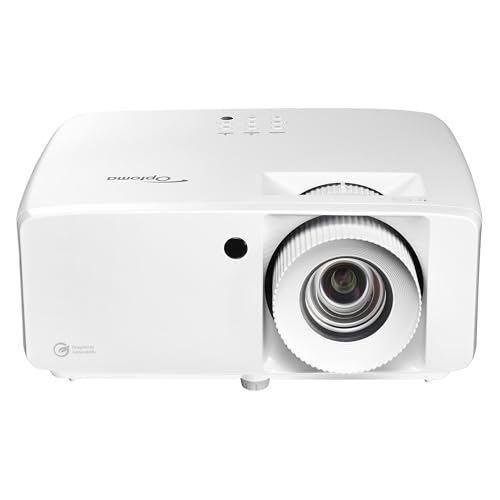
Optoma ZH451 - Full HD 1080p, 4,600 Lumens, Miracast Wireless Display, Laser, Compact, Business and Classroom Projector, Regular Throw 1080p Miracast
$1,099.00A 4,600 lumen laser rated at 30,000 hours for $1,099, which covers a 150 inch screen in a bright room with margin. Single chip DLP, so check the published color brightness rather than assuming the white figure applies to a colored background.
Best for: A small sanctuary with windows that will never be covered
Check price on Amazon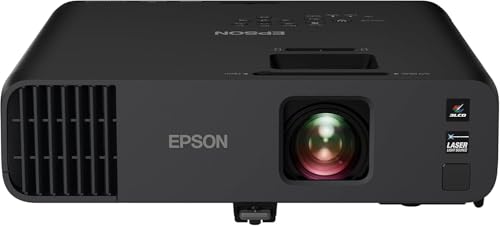
Epson Pro EX11000 3-Chip 3LCD Full HD 1080p Wireless Laser Projector
$1,399.99 Specs and sizingThe 3-chip 3LCD laser. Equal color and white brightness plus a 20,000 hour light source, and the projector most churches of any size should buy if the budget reaches it.
Best for: A church that wants to buy the projector once and stop thinking about it
Check price on Amazon
OPTOMA ZH450 Projector FHD 4500lm
$1,498.00The earlier version of the same basic design, often available for less. Same single chip caveat about color brightness, same 1080p laser advantages.
Best for: Stretching a projection budget in a moderately lit room
Check price on AmazonWho should not buy this tier: Churches whose screen is 100 inches in a darkened room, where this much light is money spent on a specification nobody in the pews can perceive.
The small room with an awkward shape: $2,494
Some small buildings are harder to project in than large ones. A low ceiling means a standard throw projector is either in the way or aimed through where people stand. A shallow room means there is no distance to get a large image from a normal lens. Both of those are solved by the lens rather than by the light source, and that is what pushes a small church into a projector priced for a big one.

Epson PowerLite 805F Ultra Short Throw 3LCD Projector - 16:9 - Wall Mountable, Tabletop
$2,494.31 Specs and sizingAn ultra short throw laser that sits a couple of feet from the wall. No long drop pole, no shadow when someone walks to the platform, and no lift needed to service it.
Best for: Low ceilinged rooms and platforms people walk across constantly
Check price on Amazon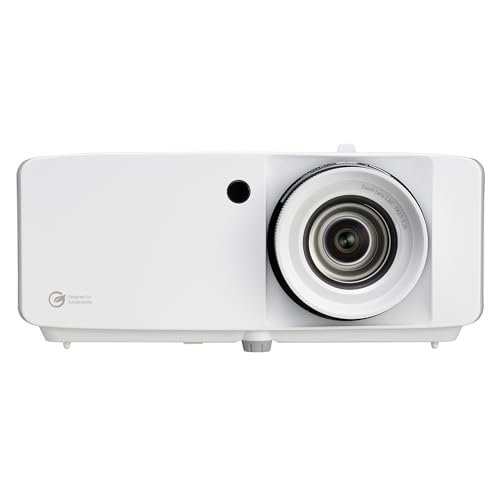
Optoma ZH551 - 1080p Full HD, 5600 Lumens, Laser, IP6X Dust Resistant, DuraCore 30,000 Hour Maintenance-Free, Miracast Wireless Screen Sharing Projector, 1080p
$1,499.00A 5,600 lumen laser with a dust-resistant optical engine, which is worth real money in an old building with an old air handling system and a projector that is awkward to reach.
Best for: A bright shared hall where cleaning the projector is a scheduling problem
Check price on AmazonWho should not buy this tier: An ordinary small sanctuary with a normal ceiling height and a 120 inch screen. The arithmetic asks for about 1,360 lumens and a $999 projector supplies it, so the extra $1,500 buys throw geometry you do not need. Put it toward a camera or a better screen surface instead.
Small church projectors compared
| Model | Price | Maximum resolution | Light source | Light source life |
|---|---|---|---|---|
| Epson Pro EX9270 Wireless 1080p 3-Chip 3LCD Business Projector | $999.99 | 1920 x 1080 | Lamp | - |
| Optoma ZH451 - Full HD 1080p, 4,600 Lumens, Miracast Wireless Display, Laser, Compact, Business and Classroom Projector, Regular Throw 1080p Miracast | $1,099.00 | 1920 x 1080 | Laser | 30,000 hours |
| OPTOMA ZH450 Projector FHD 4500lm | $1,498.00 | 1920 x 1080 | Laser | - |
| Epson Pro EX11000 3-Chip 3LCD Full HD 1080p Wireless Laser Projector | $1,399.99 | 1920 x 1080 | Laser | 20,000 hours |
| Epson PowerLite 805F Ultra Short Throw 3LCD Projector - 16:9 - Wall Mountable, Tabletop | $2,494.31 | 1920 x 1080 | Laser | 20,000 hours |
What small churches consistently get wrong
Buying brightness instead of size. A congregation complains that they cannot read the words, the committee hears that as dim, and the church buys a brighter projector onto the same undersized screen. Nothing improves, because the problem was character height rather than light output. The six times rule is the check: measure from the screen to the back row and divide by six, and that is the minimum image height.
The second mistake is a white wall instead of a screen. A painted wall has texture, it is rarely the neutral white the projector assumes, and it has no border, so the edges of the image bleed into the room and the whole picture looks softer than it is. A black bordered surface costs about $292 and is one of the highest value purchases in church AV. The third is running the projector through a long HDMI cable with no plan: over about twenty five feet, budget for an active cable or a signal extender rather than discovering the problem at a rehearsal. For the whole install sequence see projector placement in a sanctuary and projection software and hardware, and for where projection sits against the rest of a first system, the church plant system.
How we chose
We did not test these products in person and we never claim to. Picks are researched from manufacturer specification sheets and operator manuals, FCC rules where spectrum is involved, published standards, warranty terms, and the recurring themes in verified owner reviews. Every pick is matched to a real room size, seat count or input list rather than to a price bracket, and it is placed in the tier where its capability actually belongs. Where a product is wrong for most churches we say so on the page.
Sources
- Epson published specifications for the Pro EX9270, Pro EX11000 and PowerLite 805F
- Optoma published specifications for the ZH450, ZH451 and ZH551
- Elite Screens published dimensions and gain figures for 16:9 screen sizes
- Foot-lambert targets and the six times viewing distance rule as used in projection design practice
Frequently asked questions
How many lumens does a small church projector need?
For a 120 inch screen under normal service lighting, about 1,360 ANSI lumens, and only around 620 if the lights come down properly. Almost every projector sold for churches clears that easily, which is why brightness is rarely the constraint in a small building. Screen size and mounting quality decide how the image actually looks far more than the lumen rating does.
What size screen does a small church need?
Measure from the screen to the furthest seat and divide by six. That gives the minimum image height for lyrics and large sermon points. A 120 inch 16:9 screen is 4 feet 11 inches high and serves a back row about 29 feet away, while a 150 inch screen is 6 feet 2 inches high and reaches about 37 feet. Detailed text wants four screen heights instead of six.
Can a small church project onto a painted wall?
It works, and it looks worse than people expect. A wall has surface texture, it is rarely neutral white, and it has no black border, so image edges bleed into the room and contrast drops. A pull-down screen with a proper border costs about $292 and is one of the cheapest visible improvements available. If a wall is the only option, use a dedicated projection paint on a skimmed flat surface.
Is a laser projector worth it for a small church?
If the projector runs more than about six hours a week, yes. A laser light source rated for 20,000 hours removes lamp replacement entirely, and lamp cost plus the ladder work adds up faster than most small churches budget for. A church using the projector only on Sunday morning can reasonably buy a lamp projector and save several hundred dollars up front.
Should we use keystone correction to square the image?
Only as a last resort. Keystone correction fixes a crooked image by resampling it, which throws away pixels and softens every letter on every slide. Square the projector mechanically instead using a mount with adjustment in all three axes, then leave keystone at zero. A good mount costs about $38, which is far less than the picture quality keystone gives away.
How far should a projector be from the screen?
That is set by the throw ratio of the specific lens, so check the manufacturer throw distance table for your screen width before choosing a mount position. A standard throw projector typically needs between 1.2 and 1.8 times the image width. If the room does not have that depth, a short throw or ultra short throw model solves it, which is the usual reason a small church buys one.
Researched, not professional advice. This page is compiled from published manufacturer specifications, operator manuals, FCC rules, published standards and owner-review consensus, not hands-on testing. Sound system design, rigging loudspeakers overhead, and any electrical work are jobs for a qualified professional: have flown loudspeakers and their attachment points signed off by a structural engineer or a certified rigger, and have all wiring done by a licensed electrician to your local code. Wireless microphone rules change, so confirm the current FCC position before buying. As an Amazon Associate we earn from qualifying purchases.