Infrastructure
Best Speaker Stands for Churches
Quick answer
A church speaker stand should put the high frequency driver above head height, about 6 to 7 feet, so the sound reaches the back rows rather than the first three. A TeleLock pair at $219.99 holds that height without a pin, which is the safety feature that matters.
A loudspeaker on a stand is a heavy object above people, and that single fact should drive the purchase. A 30 to 50 pound cabinet at seven feet is a serious hazard if a pin is left out or a leg is on a slope, and church stands are put up and taken down by different volunteers every week in poor light.
The audio reason for the height is just as important. A loudspeaker at chest height fires into the backs of the first three rows and reaches nobody beyond them. Getting the high frequency driver above head height and tilting it down is worth more than any upgrade to the cabinet, and it is covered in how to aim and place church speakers. Check your coverage first with the speaker coverage calculator.
On this page
Height, weight and what the stand has to hold
Published weights for the powered loudspeakers churches commonly put on stands, and what each one asks of the stand underneath it.
A typical powered 12 inch church main weighs 30 to 34 pounds, which any proper speaker stand handles, and the failure mode is almost never load rating but a missing pin or an uneven floor.
| Loudspeaker | Published weight | Stand height needed | Stand |
|---|---|---|---|
| CP12 | 30 lb | 6 to 7 feet | Any proper speaker stand |
| DBR12 | 34 lb | 6 to 7 feet | Any proper speaker stand |
| ZLX-12P G2 | Check the published figure | 6 to 7 feet | TS-90B pair |
| EON715, 15 inch | Heavier than a 12 | 6 to 7 feet | TS-90B pair |
| A single fill or monitor speaker | Light | 4 to 6 feet | TS-80B single |
| Main plus subwoofer | Combined | Top on a pole | Pole mount into the subwoofer |
Never exceed the published load rating of a stand, and never assume a stand sold for a small cabinet will take a larger one. Weights here are published manufacturer figures where the catalog lists them; check the figure for the exact model you own before ordering a stand.
Why height matters more than the cabinet
Sound leaving a loudspeaker travels in straight lines, and a human body is an effective absorber. A cabinet whose high frequency driver sits at chest height has its output absorbed by the first few rows of people, and the rows behind them hear a dull, distant version of the same thing. Raising the driver above head height, so it has a clear line to the back of the room, changes intelligibility more than any change of model.
The second part is angle. A speaker at seven feet firing straight ahead throws most of its energy at the back wall, which returns as reverberation and makes speech harder to follow. Tilting it down so the pattern lands across the seating, with the back row at the edge of the coverage, is free and it is the difference between a room that works and one that does not.
The third is that the stand is the cheapest part of this. A church that spends nine hundred dollars on a loudspeaker and puts it on a chair has spent nine hundred dollars on a problem it is about to describe as a coverage problem. The cabinets themselves are covered in powered speakers for churches.
Small church: one good stand per speaker
A small church needs two stands for the mains, and possibly a third for a fill or a monitor. Buying individually rather than in pairs makes sense when a stand breaks or when the room needs an odd number, and a lighter stand is perfectly adequate for a smaller cabinet. What is not adequate is a tripod sold for lighting, or a speaker balanced on furniture.

Ultimate Support TS-80B Speaker Stand
$109.99A single aluminium tripod speaker stand sold individually, so a church can buy exactly what it needs and replace one broken stand without buying a pair. Adequate for a smaller powered cabinet or a monitor on a pole.
Best for: A single fill speaker, or replacing one broken stand
Check price on AmazonWho should not buy this tier: Heavy 15 inch cabinets or anywhere a stand is being carried in and out weekly by a rotating team.
Mid-size: a pair that cannot drop
For a church putting the system up and down every week, the feature to pay for is a height lock that does not depend on a person remembering a pin. Friction locking stands hold their height by clamp rather than by a removable pin, so the common failure of a volunteer adjusting a stand and not replacing the pin simply cannot happen. That is the whole case for spending more here.
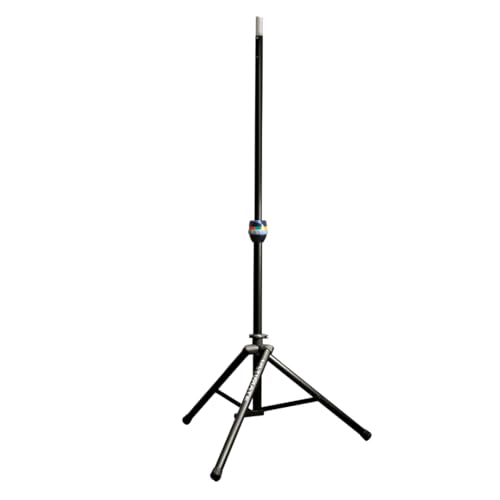
Ultimate Support TS-90B Telelock Tripod Speaker Stand Pair
$219.99A pair of TeleLock stands that hold height without a pin, which removes the failure mode that actually drops speakers on people. Sold as a pair, which is how mains are bought.
Best for: Any speaker on a stand near people
Check price on Amazon Ultimate Support TS-80B Speaker Stand
$109.99A single stand for the fill speaker or the monitor position that a pair does not cover. Most churches end up needing an odd number somewhere, and buying one is cheaper than buying two.
Best for: A third position, or a spare in the store cupboard
Check price on AmazonWho should not buy this tier: Permanent installations, where a wall bracket or a flown cabinet is safer, tidier and out of reach.
Large room: stop using stands
In a permanent installation a stand is the wrong answer. A cabinet on a wall bracket or flown from structure is higher, aimed properly, out of reach of children and impossible to knock over. Where the system stays portable but grows, the practical move is to carry the top box on a pole socket in the subwoofer, which removes a tripod from the floor and puts the top exactly where the sub already is. Flying is covered in how to fly loudspeakers safely, and it is not a volunteer task.

Electro-Voice ELX200-12P 12" 1200W 2-Way Powered Loudspeaker
$811.80 Specs and sizingInstall-grade DSP and real M10 fly points, which is what allows a cabinet to go on a wall bracket permanently rather than living on a tripod. Higher, aimed once, and out of reach.
Best for: A permanent wall or bracket mounted install in a mid-size room
Check price on Amazon
QSC KS112 Active 12" Subwoofer
$1,299.99 Specs and sizingA compact subwoofer that fits under a platform or beside a riser and is designed to carry a top box on a pole. Check the published pole socket and the combined weight for your exact cabinets before ordering the pole.
Best for: Portable systems that want low end and one less tripod
Check price on Amazon
Electro-Voice ELX200-18SP 18" 1200W Powered Subwoofer
$1,099.00 Specs and sizingAn 18 inch powered subwoofer with cardioid presets and fly points, at roughly half the price of the flagship options. In a portable rig it serves as both the low end and the base for the top box.
Best for: The first subwoofer a growing contemporary church buys
Check price on AmazonWho should not buy this tier: Do not buy this tier for a church plant meeting in a school hall. Wall brackets need a wall you own, flying needs structure and a rigger, and a subwoofer carrying a top box is a two person lift every single week. A pair of friction locking tripods is the right answer for a team that packs the system into a van.
Setting the height and angle in five minutes
- Raise the high frequency driver above head height. Six to seven feet to the horn puts it clear of a standing congregation, which is what gives it a line of sight to the back rows.
- Stand at the back row and look at the speaker. If you cannot see the horn from the back row, neither can the sound get there. This is the whole test and it takes thirty seconds.
- Tilt the cabinet down so the pattern lands on seating. Aim the coverage so the far edge of the pattern reaches the back row. Energy that passes over the back row hits the rear wall and comes back as reverberation.
- Check the first three rows. If the front rows are dull and the system sounds fine at the back, the tilt is too shallow or the pattern is too narrow for the room shape.
- Mark the height and the leg positions. Tape on the floor and a mark on the stand column means the next volunteer sets up the same system rather than a different one.
How we chose
We did not test these products in person and we never claim to. Picks are researched from manufacturer specification sheets and operator manuals, FCC rules where spectrum is involved, published standards, warranty terms, and the recurring themes in verified owner reviews. Every pick is matched to a real room size, seat count or input list rather than to a price bracket, and it is placed in the tier where its capability actually belongs. Where a product is wrong for most churches we say so on the page.
Sources
- Manufacturer published load ratings and construction details for each stand listed
- Manufacturer published weights for the loudspeakers referenced
Frequently asked questions
How high should church speaker stands be?
High enough that the high frequency driver clears a standing congregation, which is usually six to seven feet to the horn. Lower than that and the first few rows absorb the output while the back rows hear a dull, distant version. Then tilt the cabinet down so the coverage pattern lands across the seating rather than passing over it into the rear wall.
What weight can a speaker stand hold?
Whatever the manufacturer publishes, and no more. Typical church powered 12 inch cabinets weigh 30 to 40 pounds, which any proper speaker stand handles comfortably. The failures that actually happen are not overload but a missing pin, an uneven floor or a leg on a riser edge, which is why a friction locking stand is worth the difference.
Are speaker stands safe over a congregation?
They are safe if they are used within their rating, on level ground, at a sensible height and out of reach. They become unsafe when a volunteer adjusts the height and forgets the pin, when a stand is placed on a sloping floor, or when a child can reach a cable. For a permanent installation, a wall bracket or a flown cabinet is safer than any stand.
Can a subwoofer carry the main speaker on a pole?
Yes, where the subwoofer publishes a pole socket and the combined weight is within the rating of the socket and the pole. It removes a tripod from the floor and puts the top box where it needs to be. Check the published figures for your specific cabinets, and be honest about the weekly lift a subwoofer represents for a portable team.
Do we need stands if the speakers are wall mounted?
Not for those speakers, but most churches keep a pair anyway. A portable pair covers outdoor services, the fellowship hall, an overflow room and the year the sanctuary is being refurbished. They are cheap, they store flat, and a church with wall mounted mains still needs something for the occasional event in another room.
Tripod or crank-up stands for a church?
Tripods for anything a volunteer team sets up weekly, because they fold flat and take seconds. Crank-up stands make a heavy cabinet manageable for one person and cost more, so they suit a church where the same heavy speakers go up and down every week and the team is small. Either way, buy the height lock that does not depend on a pin.
Researched, not professional advice. This page is compiled from published manufacturer specifications, operator manuals, FCC rules, published standards and owner-review consensus, not hands-on testing. Sound system design, rigging loudspeakers overhead, and any electrical work are jobs for a qualified professional: have flown loudspeakers and their attachment points signed off by a structural engineer or a certified rigger, and have all wiring done by a licensed electrician to your local code. Wireless microphone rules change, so confirm the current FCC position before buying. As an Amazon Associate we earn from qualifying purchases.