Loudspeakers
Best Portable PA Systems for Churches
Quick answer
A portable church system for 100 to 200 people is two powered 12 inch speakers, two stands, a rack mixer and a cable case, and it should set up in about 45 minutes with two volunteers. The QSC CP12 at 30 pounds is the best speaker for that job.
A portable system is specified against a different constraint from an installed one. The binding factor is not seat count, it is how much two volunteers can carry, unload and set up in the time a school or community centre gives you before the service.
That makes weight, case design and cable management genuine specifications rather than afterthoughts. The complete builds are laid out in the church plant portable system and the growing portable system, and the process is in portable church AV setup.
On this page
Design the system around setup time
A portable church lives or dies on the load-in. If the system takes ninety minutes and needs five people, volunteers burn out and the team shrinks. If it takes forty-five minutes and needs two, the rota survives. Every specification decision should be tested against that.
Three practices make the difference. Put everything except the speakers and stands into wheeled cases, so the number of trips falls. Keep every cable terminated and coiled in one case rather than loose in a crate, since untangling cable is where portable setups lose their time. And use a rack mixer with scene recall so the mix loads with the system rather than being rebuilt every week.
Power is the other constraint and it is frequently underestimated. A rented hall may offer one outlet near the platform, and a system with two powered speakers, a rack and a projector can exceed what one circuit safely carries. Calculate it with the power draw calculator before the first Sunday, not after a breaker trips mid-service.
Portable system by congregation size
What a portable church actually needs to carry, by the number of people in the room.
A portable system for 100 to 200 people is two powered 12 inch speakers, two stands, a rack mixer and a cable case, which two volunteers can set up in about 45 minutes.
| Congregation | Speakers | Mixer | Rack | Volunteers and time |
|---|---|---|---|---|
| Under 50 | 2 powered 8 or 12 inch | 4 to 8 channel | None, mixer in a bag | 1 person, 20 minutes |
| 50 to 100 | 2 powered 12 inch | 8 to 12 channel rack | Small wooden rack | 2 people, 30 minutes |
| 100 to 200 | 2 powered 12 inch | 16 to 18 channel rack | Wheeled rack case | 2 people, 45 minutes |
| 200 to 350 | 2 powered 12 or 15 inch plus a subwoofer | 32 channel rack | Wheeled rack with conditioner | 3 people, 60 minutes |
| Over 350 | Consider a permanent venue or a hired system | 32 channel and up | Multiple wheeled racks | 4 people, 90 minutes |
Times assume everything is cased, cables are pre-terminated and the mixer recalls its scene. A team that unpacks loose gear from crates should roughly double them. Subwoofers change the load-in significantly and should not be added without checking who will lift them.
Church plant: the first system
A new church plant needs to be heard, needs to spend as little as possible, and needs the system to fit in a car. These are the honest options at that stage, and none of them pretend to be a sanctuary system.

Behringer EUROLIVE B112D Active 2-Way 12" PA Speaker System with Wireless Option and Integrated Mixer
$299.00 Specs and sizingAn entry powered 12 for a fellowship hall or a small hired room at {{price:behringer-b112d}}. Enough to be heard by 50 to 75 people with a speaking voice and a guitar.
Best for: A brand new plant meeting in a small hired room
Check price on Amazon
Mackie Thump215 15" 1400W Powered Loudspeaker with Heavy-Duty Drivers
$414.95 Specs and sizingA 15 inch powered box with a 1,400 watt peak rating, loud enough for a band in a school hall, and straightforward about being a budget cabinet.
Best for: A plant with a band meeting in a school hall or community centre
Check price on Amazon
Ultimate Support TS-80B Speaker Stand
$109.99A speaker stand at {{price:ultimate-ts80b}}, which is what gets the box above head height. Speakers on the floor cover the first three rows and nobody else.
Best for: Any portable system, since height matters more than most churches expect
Check price on AmazonWho should not buy this tier: Congregations over about 150, and any group that needs consistent sound quality for a livestream.
Established portable church: 100 to 250 people
An established portable church should optimise for repeatability: the same system, set up the same way, recalling the same scene each week. That is when a portable rig stops feeling like a weekly emergency. Cases and stands matter as much as the electronics here.

QSC CP12 12-Inch Compact Powered Loudspeaker
$649.99 Specs and sizingThirty pounds with a 1,000 watt amplifier and QSC processing, which is the best balance of carryable weight and real capability in this catalog.
Best for: Portable church plants and rented venues with 100 to 250 people
Check price on Amazon
Yamaha DBR Series DBR 12" Powered Speaker Cabinet
$390.99 Specs and sizingYamaha processing in a 34 pound cabinet, neutral and forgiving of a mix put together in a hurry by whoever arrived first.
Best for: Rotating volunteer teams with limited setup time
Check price on Amazon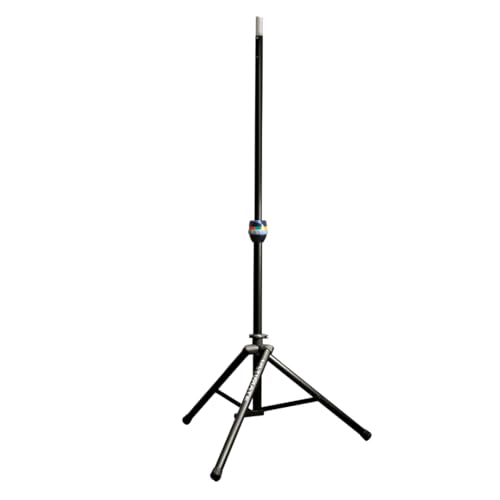
Ultimate Support TS-90B Telelock Tripod Speaker Stand Pair
$219.99Heavy duty tripod stands with a locking mechanism, which matters when speakers are raised repeatedly in a room full of people setting out chairs.
Best for: Weekly setup where stands are raised and lowered constantly
Check price on Amazon
Gator Cases Content Creator Series Wooden Studio Rack Case with 15.25" Rackable Depth, 12U (GR-STUDIO-12U)
$199.99A rack case so the mixer, any wireless receivers and the power conditioner travel as one unit rather than as loose boxes in a car boot.
Best for: Consolidating the electronics into a single carry
Check price on AmazonWho should not buy this tier: Congregations over about 300, or any portable church that needs subwoofers and a multi-camera stream.
Large portable church: 250 to 400 people
A large portable church is effectively moving an installed system every week, and the discipline required goes up sharply. Wheeled cases, a power conditioner and a documented setup order stop being optional. The full specification is in the full portable system build.

QSC K12.2 Active 12" Powered 2000 Watt Loudspeaker
$899.99 Specs and sizingA 2,000 watt box with a 132 dB published maximum that will cover 400 people in a school gymnasium, at the cost of more weight to carry each week.
Best for: Large portable congregations in acoustically difficult hired spaces
Check price on Amazon
QSC KS112 Active 12" Subwoofer
$1,299.99 Specs and sizingA compact 12 inch subwoofer that gives a band real weight without the two-person lift an 18 inch cabinet requires.
Best for: Portable contemporary worship that needs low end but has limited carrying capacity
Check price on Amazon
Gator Cases Pro Series 12U Rack Case, Standard 19" Depth (G-PRO-12U-19)
$329.99A shock-mounted rack case designed to be moved constantly, which is a different requirement from a rack that sits in a cupboard.
Best for: Weekly transport of a full electronics rack
Check price on Amazon
Furman PL-8C Classic 15A Power Conditioner, 9 Outlets & LED Rack Lights
$254.97A power conditioner with surge protection and rack lights, which matters when the building electrical supply is unknown and different every venue.
Best for: Hired venues where the quality of the power supply cannot be assumed
Check price on AmazonWho should not buy this tier: Do not buy this tier for a plant of 60 people meeting in a coffee shop. The weight, the case count and the setup time all rise sharply, and a small congregation will spend its volunteer energy moving equipment rather than running a service. Buy the intermediate tier and grow into this one.
The setup order that saves the most time
Portable churches that run smoothly nearly always follow a fixed order. Speakers and stands go up first, because they need the most floor space and the room is emptiest at the start. The rack goes to its position and gets power next, so the system can be switched on and tested while cabling continues. Microphones and stands go out third, then the platform is cabled, then the mix is recalled and line checked.
Two habits pay for themselves. Label both ends of every cable with the position it serves, so anyone can cable the platform. And run a line check every week, in the same order, even when nothing has changed, since a failed cable found at nine is a nuisance and the same cable found at ten is a problem.
Teardown deserves the same discipline. Cables coiled properly and returned to the same case survive years, and cables wound around an arm do not. The wider volunteer process is covered in the Sunday sound checklist, and the stands themselves in the speaker stand roundup.
How we chose
We did not test these products in person and we never claim to. Picks are researched from manufacturer specification sheets and operator manuals, FCC rules where spectrum is involved, published standards, warranty terms, and the recurring themes in verified owner reviews. Every pick is matched to a real room size, seat count or input list rather than to a price bracket, and it is placed in the tier where its capability actually belongs. Where a product is wrong for most churches we say so on the page.
Sources
- Manufacturer published specifications, including cabinet weights
- Consensus of verified owner reviews across major retailers
Frequently asked questions
What does a portable church sound system need?
For 100 to 200 people: two powered 12 inch speakers, two stands, a rack mixer with scene recall, a cased set of cables, microphones, and a power conditioner. Everything except speakers and stands should live in one wheeled case. That set covers speech and a band, and two volunteers can put it up in about 45 minutes once they know the order.
How long should a portable church setup take?
About 45 minutes with two people for a system serving 100 to 200, assuming cased gear, pre-terminated cables and a mixer that recalls its scene. Teams unpacking loose equipment from crates typically take twice that. If setup regularly runs over an hour, the fix is usually cases and cable management rather than fewer or different pieces of equipment.
Do portable churches need a subwoofer?
Only for contemporary worship with a full rhythm section, and only if someone can lift it every week. A compact 12 inch subwoofer is a reasonable compromise, since an 18 inch cabinet is usually a two-person carry. Many portable churches find a pair of 15 inch main speakers gives enough low end without adding another case to the load.
How do we deal with bad room acoustics in a school gym?
Aim for pattern control and less level rather than more. Get the speakers above head height, aim them down into the seating so less energy hits hard walls and ceilings, and keep the overall level modest. Portable churches in gymnasiums also benefit disproportionately from headset microphones on speakers, since those need far less gain than a lectern microphone.
Is it cheaper to rent a sound system than to buy one?
Renting can make sense for a plant meeting for a few months or for an occasional large event. For a weekly service, buying is normally cheaper within a year, and it removes the recurring collection and return. The middle path many plants take is to buy speakers, stands and a mixer, then rent specialist items such as extra wireless channels when needed.
What is the most common portable system failure?
Cables, by a wide margin. Cables wound around an arm, stored loose in a crate or trodden on during setup fail at the connector, and they fail intermittently, which is hard to diagnose during a service. Terminated, labelled, properly coiled cables in a dedicated case, plus a spare of every type, prevent most portable church sound emergencies.
Researched, not professional advice. This page is compiled from published manufacturer specifications, operator manuals, FCC rules, published standards and owner-review consensus, not hands-on testing. Sound system design, rigging loudspeakers overhead, and any electrical work are jobs for a qualified professional: have flown loudspeakers and their attachment points signed off by a structural engineer or a certified rigger, and have all wiring done by a licensed electrician to your local code. Wireless microphone rules change, so confirm the current FCC position before buying. As an Amazon Associate we earn from qualifying purchases.