Mixing consoles
Best Mixers for Small Churches
Quick answer
A small church needs 16 to 18 input channels, and the Behringer XR18 at $509.00 covers it with 16 preamps and six monitor sends. A speech-led chapel with four microphones can stop at 12 channels. Below eight preamps, a drum kit will not fit.
Small church buying goes wrong in one specific way: the console is sized by budget rather than by the input list, and the church outgrows it in two years. Eight preamps sounds generous until a drum kit arrives and uses four of them. Start with the list of what plugs in, add a quarter for growth, and the answer usually comes out at 16 preamps rather than eight. The mixer channel calculator will do it with your own numbers.
The second small church trap is spending on the console what should have gone on loudspeakers. In a room under 150 seats the congregation hears the speakers, not the desk, and the 100 seat system build shows the proportions that work.
On this page
Build the input list before you look at prices
A 120 seat blended service is more demanding than most committees expect. A realistic list reads: pastor lapel, lectern microphone, two worship vocals, acoustic guitar, keyboard in stereo, cajon or a small kit, a bass, a talkback for the booth and a stereo playback feed from the media computer. That is 12 to 14 inputs on an ordinary Sunday, before the youth band plays or a guest speaker brings a second microphone.
Now apply the growth rule. Small churches add inputs in predictable steps: a second vocal, a full drum kit replacing the cajon, and a stream feed. Each of those is one to five more channels. Sixteen preamps absorbs all three. Eight does not, and the usual outcome is a submixer bolted on later, which loses recall on those channels and makes the system harder for a volunteer to run, not easier.
If the service is genuinely speech-led with a piano, this all collapses to four to six inputs and the money is better spent elsewhere. Honest sizing is what separates a system that lasts from one that gets replaced.
What fits in a small church input list
Two input lists, one speech-led and one blended, with the console size each one needs.
A blended service in a 120 seat church runs 14 inputs on an ordinary Sunday, which is why 16 preamps and not eight is the right small church target.
| Source | Speech-led inputs | Blended inputs | Notes |
|---|---|---|---|
| Pastor lapel or headset | 1 | 1 | Headset gives 8 to 12 dB more gain before feedback |
| Lectern or pulpit microphone | 1 | 1 | Gooseneck, cardioid or supercardioid |
| Worship vocals | 0 | 2 to 3 | One channel each, never shared |
| Piano or keyboard | 1 | 2 | Stereo keyboard needs two channels |
| Acoustic guitar | 0 | 1 | Direct box, not a microphone, in a small room |
| Bass | 0 | 1 | Direct box |
| Cajon or drum kit | 0 | 1 to 5 | A full kit is where small consoles run out |
| Playback and talkback | 2 | 3 | Stereo media feed plus a booth talkback |
| Working total | 5 | 12 to 17 | Add 25 percent for growth before buying |
Counts assume one channel per microphone and two per stereo source. A church that plans to add in-ear monitors should also count one bus per mix, which is a separate limit from channel count.
Chapel or plant: four to eight inputs
At this size simplicity beats capability. A service with a lapel, a lectern microphone and a piano does not need recall, buses or a tablet. It needs a board that a volunteer can read in one glance and that works the moment it is switched on. The analog roundup goes deeper on why that is still a defensible choice.
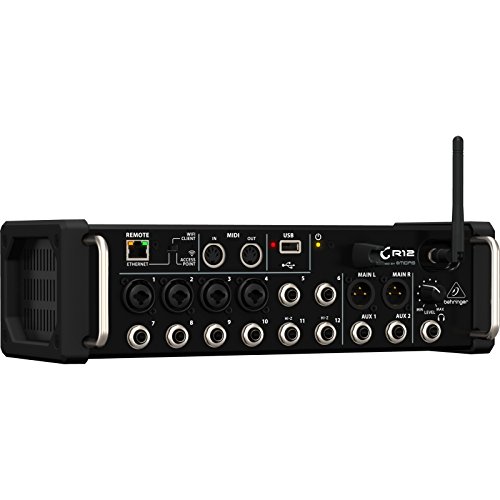
Behringer X Air XR12 Tablet-Controlled Digital Mixer
$369.00 Specs and sizingFour preamps in a single rack unit with full digital processing and scene recall on every one. The cheapest console here that saves its settings, and the cheapest to outgrow.
Best for: A chapel, an overflow room or a portable setup with four or fewer microphones
Check price on Amazon
YAMAHA MG10XU 10-Input Stereo Mixer with Effects
$290.00 Specs and sizingFour preamps, onboard effects and a USB feed for the stream, with nothing to boot and nothing to connect to. A new volunteer can be shown it in five minutes.
Best for: A fellowship hall or chapel where a different person runs sound each week
Check price on Amazon
Mackie ProFX12v3 12-channel Mixer with USB and Effects
$379.99 Specs and sizingSeven preamps with built-in effects and USB streaming out at {{price:mackie-profx12v3}}, which a small church can approve without a special meeting.
Best for: A first sound system, or a second board for the youth room
Check price on AmazonWho should not buy this tier: Any church with a drum kit, or one where volunteers rotate weekly and need last week settings back.
Small church with a band: 12 to 18 inputs
This is the tier most small churches should buy. Sixteen preamps holds a full band and the speaking microphones, scene recall carries the settings between volunteers, and the aux sends feed wedges or in-ears. All three of these are rack boxes, so they need no booth furniture at all.
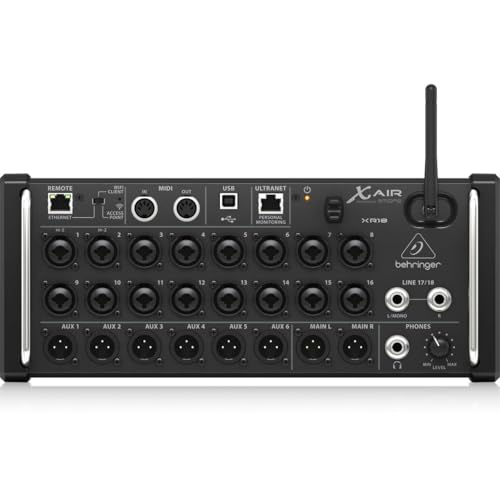
Behringer X AIR XR18 18-Channel, 12-Bus Digital Mixer for iPad/Android Tablets with 16 Programmable Midas Preamps, Integrated Wifi Module and Multi-Channel USB Audio Interface
$509.00 Specs and sizingSixteen preamps and six aux sends with 18 track recording, driven from a tablet. It holds a full band with drums and still has channels left for a guest speaker.
Best for: A 100 to 250 seat room with a band and a mixer who can stand in the congregation
Check price on Amazon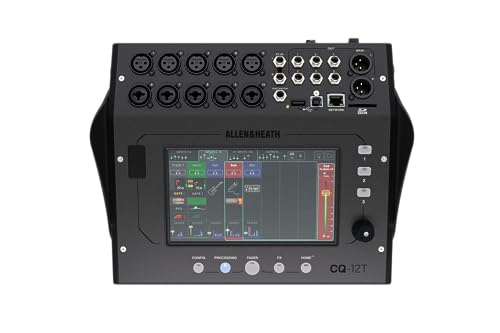
Allen & Heath CQ-12T Digital Mixer with 7-inch Touchscreen and Bluetooth
$899.99 Specs and sizingEight preamps and a seven inch touchscreen on the unit, so the service runs even when the tablet is flat or the network is down. The automatic gain tools help an inexperienced volunteer set a starting point.
Best for: Small sanctuaries that want digital recall without depending on a tablet
Check price on Amazon
Soundcraft Ui12 Remote-Controlled 12-Input Digital Mixer
$399.00 Specs and sizingEight preamps controlled from a browser with no app to install or update, which removes the single most common failure on a volunteer team with mixed devices.
Best for: Teams where everyone brings their own phone or tablet
Check price on AmazonWho should not buy this tier: Churches with no reliable wireless coverage at the mix position, unless the unit has an onboard screen.
Growing fast: the small church that will not be small for long
Some small churches are small only for now. A church plant meeting in a school with 120 people and a plan to be in a 400 seat building in three years should buy for the building, not the school hall. These three all scale past the small church ceiling, and the first two accept a stage box that doubles the input count without replacing the mixer. The comparison in CQ-18T against XR18 is the one most churches at this step are actually weighing.

Allen & Heath CQ-18T Digital Mixer with 7" Touchscreen WiFi and Bluetooth Connectivity
$1,199.99 Specs and sizingSixteen preamps, an onboard touchscreen and built-in Wi-Fi in three rack units, with processing that holds up in a much larger room than its price suggests.
Best for: A 150 to 400 seat room, or a plant that expects to be that size soon
Check price on Amazon
Behringer X32 Rack Digital Mixer
$979.99 Specs and sizingThe full X32 engine in three rack units with 16 preamps on the box, and an AES50 port that adds 16 more from a stage box whenever the platform grows.
Best for: Churches that want one mixer to cover the next ten years of growth
Check price on Amazon
PreSonus StudioLive Series III 16R Digital Rack Mixer with Studio One Pro Software
$949.99 Specs and sizingSixteen recallable preamps with 18 by 18 USB recording, so multitrack archives of every service come free with the mixer rather than as a separate purchase.
Best for: Small churches that publish a podcast or train volunteers on real service audio
Check price on AmazonWho should not buy this tier: Do not buy this tier for a chapel with four microphones and no growth plan. The extra preamps, buses and menu depth are all cost and complexity that a five input service will never recover, and a simpler board will get handed over to a new volunteer far faster.
The mistakes small churches make most often
The first is buying four preamps because today there are four microphones. Inputs only ever go up. The second is buying a tablet-only mixer in a building with no usable wireless network, which turns a dead router into a silent service. If the mixer has no screen of its own, budget for a dedicated access point at the mix position and keep it off the guest network.
The third is treating channels and monitor mixes as the same number. Two wedges and a stream feed are three buses, and a console with four aux sends has one left. Anyone planning in-ear monitors should read the church plant sound system guide, which sizes buses alongside channels.
The fourth is buying the cheapest board and the cheapest speakers together. If the budget will only stretch one way, put it into loudspeakers and microphones and run a simple mixer. A clean signal through good speakers beats a capable console feeding poor ones, every week. The budget digital mixer roundup covers how far a small console budget honestly goes.
How we chose
We did not test these products in person and we never claim to. Picks are researched from manufacturer specification sheets and operator manuals, FCC rules where spectrum is involved, published standards, warranty terms, and the recurring themes in verified owner reviews. Every pick is matched to a real room size, seat count or input list rather than to a price bracket, and it is placed in the tier where its capability actually belongs. Where a product is wrong for most churches we say so on the page.
Sources
- Manufacturer published specifications for each mixer listed
- Consensus of verified owner reviews across major retailers
Frequently asked questions
How many channels does a 100 seat church need?
A speech-led service with a lapel, a lectern microphone, a piano and a playback feed needs five or six inputs, so a 12 channel mixer is genuinely enough. Add a worship band with two vocals, guitar, bass, keys and even a cajon and the list jumps to 14 or more. Buy 16 preamps if a band is anywhere in the plan, because eight runs out the first time a drum kit appears.
Is a tablet mixer safe for a volunteer team?
It is, with two conditions. The mixer needs a dedicated wireless access point that nothing else uses, and the team needs a written recovery step for when a tablet fails, usually a second tablet kept charged in the booth. Mixers with an onboard screen remove the risk entirely because the service can be run from the unit itself while somebody sorts out the network.
Can we run a livestream from a small church mixer?
Yes. Most digital mixers in this class carry a USB audio feed to a computer, which is all a stream needs. The important part is giving the stream its own mix rather than sending the room mix, because the room mix leans on acoustic sound the microphones never capture. Budget one spare stereo bus for the stream, and check that the mixer can send it independently of the mains.
Should a small church buy analog or digital?
Digital wins when volunteers rotate, because scene recall restores every gain and fader from last Sunday. Analog wins when one or two people run sound, the input list never changes, and the church values a board that works the instant it is switched on with nothing to boot. For a traditional service with a fixed input list, a good analog console remains a defensible purchase.
What is the minimum we can spend on a church mixer?
A usable digital mixer with recall starts around the price of the XR12 at $369.00, and a simple analog board starts lower. The real minimum is set by preamp count, not price: buy fewer preamps than the input list and the saving disappears into a submixer within a year. Spending a little more for 16 preamps is usually the cheapest decision over five years.
Do we need aux sends if we use in-ear monitors?
Yes, and more than most churches expect. Every separate in-ear mix consumes one bus, or two for a stereo mix. Four musicians on stereo in-ears is eight buses before the stream feed. A mixer with six aux sends supports about three stereo mixes in practice. If in-ears are planned, count buses first, because that limit usually bites before the channel count does.
Researched, not professional advice. This page is compiled from published manufacturer specifications, operator manuals, FCC rules, published standards and owner-review consensus, not hands-on testing. Sound system design, rigging loudspeakers overhead, and any electrical work are jobs for a qualified professional: have flown loudspeakers and their attachment points signed off by a structural engineer or a certified rigger, and have all wiring done by a licensed electrician to your local code. Wireless microphone rules change, so confirm the current FCC position before buying. As an Amazon Associate we earn from qualifying purchases.