Mixing consoles
Best Digital Mixers for Churches
Quick answer
Most churches land on a 32 channel digital console, and the Behringer X32 at $1,999.00 is the one they land on. Under about 16 inputs a rack mixer such as the XR18 is enough. Above 32 inputs, a 48 channel desk earns its price in a 700 seat room.
A console is bought on input count, not on seat count, and the two are only loosely related. A 200 seat church with a full band and in-ear monitors needs more channels than a 600 seat church with a lectern, a piano and a choir. Build the input list first, then buy the console that holds it with room to grow. The mixer channel calculator does that arithmetic and shows which consoles fit the answer.
The recommendations below are researched from published manufacturer specifications and the recurring themes in verified owner reviews. Prices are catalog figures and move.
On this page
- How many channels does your church actually need?
- Console size by input list and service style
- Small church: under about 150 seats and 16 inputs
- Mid-size: 150 to 600 seats, a band, and volunteers who rotate
- Large room or multi-campus: 600 seats and up
- The four consoles side by side
- What a digital console does not fix
How many channels does your church actually need?
Write down every source that has to reach the loudspeakers on a normal Sunday. A contemporary service usually reads something like this: three or four vocal microphones, an acoustic guitar, an electric guitar, a bass, a stereo keyboard pair, four to seven drum microphones, a talkback microphone, a stereo playback feed, a lectern microphone and a lapel for the pastor. That is 20 to 28 inputs before anything unusual happens.
Now add the things that arrive later: a second campus feed, a video playback pair, a choir pair at Christmas, a guest speaker on a second lapel. Buying at exactly the current count means buying again in three years. A useful rule is to add 25 percent headroom to the list and buy the next console size up from that figure.
Seat count matters for a different reason. It drives the loudspeaker and amplifier budget, and in a smaller room the console is a larger share of the total. The 250 seat system build shows where the console sits against the rest of the budget, and how to choose a church mixing console walks the whole decision including bus count and monitor sends.
Console size by input list and service style
This is the table to take to the committee. Find your service style, read across to the console size, and check the input count against your own list.
A full band with drums, three vocals and a stereo keyboard lands at 24 to 28 inputs, which is why a 32 channel console is the default church answer.
| Service style | Typical inputs | Console size to buy | Example | Price |
|---|---|---|---|---|
| Speech only, lectern and a lapel | 4 to 6 | 12 channel rack mixer | XR12 | $369.00 |
| Traditional, piano, organ, choir pair | 8 to 12 | 16 channel | XR16 | $429.00 |
| Blended, small band, three vocals | 14 to 18 | 18 channel | XR18 | $509.00 |
| Contemporary, full band with drums | 20 to 28 | 32 channel | X32 | $1,999.00 |
| Contemporary with in-ears and stream feeds | 28 to 40 | 32 to 48 channel, 16 buses | SQ-5 | $3,999.00 |
| Multi-campus standard, many stereo sources | 40 and up | 48 stereo channel | WING | $3,499.00 |
Input counts assume one channel per microphone, two per stereo source, plus a talkback and a playback pair. Bus count matters as much as channel count once in-ear monitors arrive: budget one bus per monitor mix plus two for the stream.
Small church: under about 150 seats and 16 inputs
At this size the honest choice is a rack mixer driven from a tablet. There is no booth to lose, the mixer can stand in the congregation and hear what the congregation hears, and scene recall means a volunteer who has never run a service can load last Sunday and be 90 percent right. The trade is that a tablet is now a single point of failure, which is covered in the rack mixer roundup.
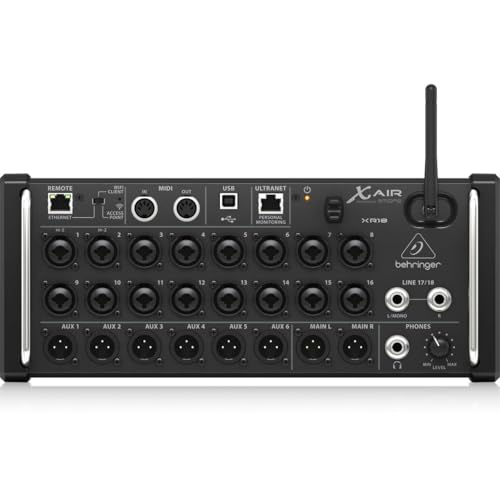
Behringer X AIR XR18 18-Channel, 12-Bus Digital Mixer for iPad/Android Tablets with 16 Programmable Midas Preamps, Integrated Wifi Module and Multi-Channel USB Audio Interface
$509.00 Specs and sizingSixteen programmable preamps and six aux sends for monitors, with 18 track USB recording built in, for {{price:behringer-xr18}}. Nothing else in the catalog puts that many preamps at that price.
Best for: A 100 to 250 seat room with a band, where the operator can stand in the room
Check price on Amazon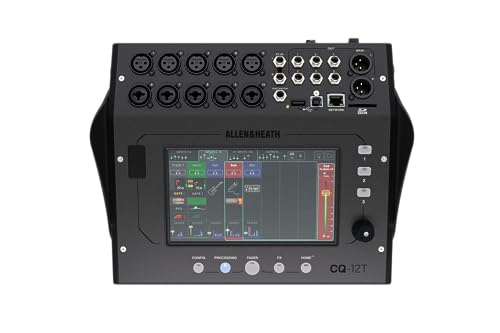
Allen & Heath CQ-12T Digital Mixer with 7-inch Touchscreen and Bluetooth
$899.99 Specs and sizingEight preamps and a seven inch touchscreen on the box itself, so the service still runs when the tablet will not connect. The automatic gain and feedback tools are genuinely useful to a volunteer.
Best for: Small sanctuaries and portable church plants that set up weekly
Check price on Amazon
Soundcraft Ui12 Remote-Controlled 12-Input Digital Mixer
$399.00 Specs and sizingControlled from any web browser, which removes the most common volunteer failure mode: the tablet that will not update or the app version that no longer matches the firmware.
Best for: Volunteer teams with mixed personal devices and nobody to manage software
Check price on AmazonWho should not buy this tier: A church that already runs more than 16 inputs, or one with no reliable wireless network in the room.
Mid-size: 150 to 600 seats, a band, and volunteers who rotate
This is where scene recall stops being a convenience and becomes the reason the service works. When four different volunteers run the board across a month, a saved scene per service type is what keeps Sunday sounding the same. All three of these recall every preamp gain, every fader and every effect.

Behringer 32 40-Input 25-Bus Digital Mixing Console, Black (X32)
$1,999.00 Specs and sizingThirty-two preamps, 25 motorized faders and an AES50 port for a stage box. The install base is the hidden feature: a visiting engineer, a conference speaker or a new volunteer has probably used one.
Best for: A 250 to 800 seat room with a band and a rotating volunteer team
Check price on Amazon
Allen & Heath CQ-18T Digital Mixer with 7" Touchscreen WiFi and Bluetooth Connectivity
$1,199.99 Specs and sizingSixteen preamps and an onboard screen in three rack units. It gives most of the channel count of the X32 without a booth large enough to hold a full console.
Best for: A 150 to 400 seat room with no room for a desk
Check price on Amazon
PreSonus StudioLive Series III 24R Digital Rack Mixer with Studio One Pro Software
$1,069.00 Specs and sizingTwenty-four recallable preamps with multitrack USB recording built in, so the service records for the podcast and for training volunteers without a separate interface in the rack.
Best for: Churches that publish audio and want a multitrack archive to rehearse mixes against
Check price on AmazonWho should not buy this tier: A church with fewer than 16 inputs, where the extra channels are paid for and never used.
Large room or multi-campus: 600 seats and up
At this size the console is a standard, not a purchase. It gets specified once and repeated at every campus so that volunteers and staff can move between buildings without relearning anything. Preamp quality, bus count and latency start to matter because the console is now feeding in-ear mixes, a broadcast feed and an overflow room at the same time. The head to head on the two most common choices is in X32 against SQ-5.

Allen & Heath SQ-5 Digital Mixer, 48 Input Channels, 7" Capacitive Touchscreen, Automatic Mic Mixing, 32×32 USB Audio Interface
$3,999.00 Specs and sizingA 96 kHz console with under a millisecond of latency, 48 input channels and 36 buses, plus automatic microphone mixing that is genuinely useful for a panel, a reading rota or a drama team.
Best for: A 500 seat and up sanctuary with a skilled or paid operator
Check price on Amazon
Behringer WING 48-Channel, 28-Bus Full Stereo Digital Mixing Console
$3,499.00 Specs and sizingForty-eight stereo input channels and 28 buses. The stereo channel architecture is the real difference: a stereo keyboard, a playback pair and a stereo campus feed each cost one channel rather than two.
Best for: Input lists that have outgrown 32 mono channels, especially with many stereo sources
Check price on Amazon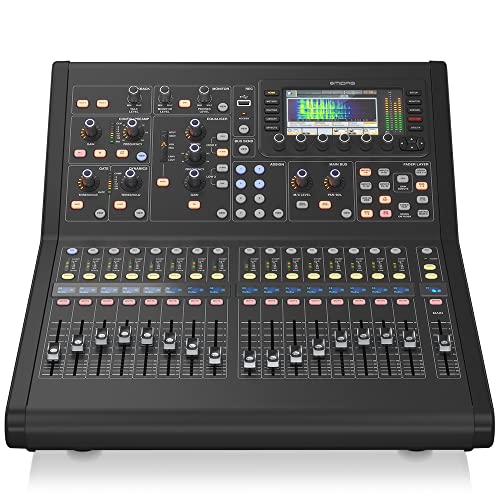
Midas M32 LIVE Digital Console for Live and Studio with 40 Input Channels, 32 Midas PRO Microphone Preamplifiers and 25 Mix Buses and Live Multitrack Recording
$2,499.00 Specs and sizingThe X32 workflow with Midas PRO preamps and a heavier chassis. You are paying for the front end and the build, not for extra channels, which is the right trade on a console that must last fifteen years.
Best for: A church that buys once and expects the desk to outlive the building committee
Check price on AmazonWho should not buy this tier: Do not buy this tier for a room under about 400 seats or an input list under 32. The extra buses and preamps only pay for themselves when there are monitor mixes, a broadcast feed and an overflow feed all running at once, and a volunteer team will find the deeper menus slower, not better.
The four consoles side by side
| Model | Price | Input channels | Mic preamps | Mix buses | Digital | Scene recall | Faders |
|---|---|---|---|---|---|---|---|
| Behringer X AIR XR18 18-Channel, 12-Bus Digital Mixer for iPad/Android Tablets with 16 Programmable Midas Preamps, Integrated Wifi Module and Multi-Channel USB Audio Interface | $509.00 | 18 | 16 | 12 | Yes | Yes | - |
| Behringer 32 40-Input 25-Bus Digital Mixing Console, Black (X32) | $1,999.00 | 32 | 32 | 25 | Yes | Yes | 25 |
| Allen & Heath SQ-5 Digital Mixer, 48 Input Channels, 7" Capacitive Touchscreen, Automatic Mic Mixing, 32×32 USB Audio Interface | $3,999.00 | 48 | 16 | 36 | Yes | Yes | 17 |
| Behringer WING 48-Channel, 28-Bus Full Stereo Digital Mixing Console | $3,499.00 | 48 | 8 | 28 | Yes | Yes | 24 |
What a digital console does not fix
A new console will not make a reverberant room intelligible, will not stop a lapel microphone from feeding back, and will not fix a platform that is too loud acoustically. Those are room, microphone and arrangement problems, and a console sits downstream of all three. Churches regularly spend their whole budget on a desk and hear no improvement because the actual fault was a microphone aimed into a loudspeaker, which is covered in eliminating feedback in a church.
The other common misallocation is buying a large console and leaving the loudspeakers alone. If the back rows cannot hear, the fix is coverage and amplifier power, not channels. Run the numbers in the amplifier power calculator before the console order is signed, because the loudspeaker line is usually the larger of the two and the one the congregation actually hears.
Finally, if the input list runs past the preamps on the console, the answer is a digital stage box rather than a bigger desk. Sixteen more preamps on the platform, carried on one shielded network cable, is almost always cheaper than moving up a console size.
How we chose
We did not test these products in person and we never claim to. Picks are researched from manufacturer specification sheets and operator manuals, FCC rules where spectrum is involved, published standards, warranty terms, and the recurring themes in verified owner reviews. Every pick is matched to a real room size, seat count or input list rather than to a price bracket, and it is placed in the tier where its capability actually belongs. Where a product is wrong for most churches we say so on the page.
Sources
- Manufacturer published specifications for each console listed
- Recurring themes in verified owner reviews across major retailers
Frequently asked questions
Is a 32 channel console overkill for a 200 seat church?
Not if there is a band. A drum kit alone can take four to seven channels, and three vocals, two guitars, a bass and a stereo keyboard add nine more. That is 20 or more before the lectern microphone. A 32 channel console leaves room for the Christmas choir pair and a guest speaker. If the service is speech and a piano, 12 to 16 channels is genuinely enough and the money belongs in loudspeakers.
Do we need motorized faders, or is a tablet enough?
Tablets work well when one or two people mix and they know the app. Motorized faders matter when volunteers rotate, because a physical fader shows its position without anyone reading a screen, and a new volunteer can see the whole mix at a glance. The usual compromise is a rack mixer with a small onboard screen, so the service can still run when a tablet refuses to connect to the network.
How long should a church digital console last?
Ten to fifteen years is realistic for a well-treated console in a dry, ventilated booth, and the limiting factor is usually the manufacturer ending firmware support rather than hardware failure. Faders and encoders are the parts that wear. Choosing a platform with a large install base helps, because parts, used spares and volunteers who already know the desk stay available far longer than for a niche model.
Can one console run both the room mix and the livestream mix?
Yes, and it should, but it needs spare buses. The stream needs its own stereo mix because the room mix relies on acoustic sound from the platform that a microphone feed never captures, so drums and acoustic instruments are always too quiet online. Budget two buses for the stream, and prefer a console with enough processing to run separate compression on that feed.
What is AES50 and does our church need it?
AES50 is the network protocol the X32 and M32 families use to carry up to 48 channels of audio between a console and a stage box on one shielded Cat5e cable. A church needs it when the platform is more than about 30 feet from the booth, because it replaces a heavy multi-pair copper snake with a single cable and puts remote-controlled preamps on the platform instead.
Should we buy a used console to save money?
A used console from a church or a rental company is often a sound buy, because these desks live indoors and are rarely abused. Check that firmware updates are still published, test every preamp with a microphone, move every fader through its full travel, and confirm the power supply is original. Avoid anything with a discontinued control app, since a tablet-only mixer with no current app is effectively scrap.
Researched, not professional advice. This page is compiled from published manufacturer specifications, operator manuals, FCC rules, published standards and owner-review consensus, not hands-on testing. Sound system design, rigging loudspeakers overhead, and any electrical work are jobs for a qualified professional: have flown loudspeakers and their attachment points signed off by a structural engineer or a certified rigger, and have all wiring done by a licensed electrician to your local code. Wireless microphone rules change, so confirm the current FCC position before buying. As an Amazon Associate we earn from qualifying purchases.