Console and signal
Mixer Channel Count Calculator
Quick answer
A typical church input list of preaching, lectern, worship vocals, a band, drums and a choir comes to about 22 channels. Adding the standard 25 percent growth margin puts that at 28, so the console to buy is a 32 channel one.
Two rules decide console size and both are routinely missed. Stereo sources take two channels, so a stereo keyboard, a drum overhead pair and a playback laptop quietly consume six channels between them. And a console with no spare channels is a console you replace in two years, because church input lists only ever grow.
Build your list below. The calculator adds a growth margin and rounds to a size that is actually sold, and the grid underneath shows the consoles that fit.
Mixer channel count calculator
Console size to buy
Consoles that fit your input list
Top matches update when you change your numbers.

YAMAHA MG10XU 10-Input Stereo Mixer with Effects
$290.00 Specs and sizingFour preamps, onboard effects and USB audio out for the livestream, in a box small enough to live in a cupboard between services.
Best for: A chapel, a fellowship hall or a portable setup with four or fewer microphones
Check price on Amazon
Mackie ProFX12v3 12-channel Mixer with USB and Effects
$379.99 Specs and sizingSeven Onyx preamps with built-in effects and USB streaming out, at a price a small church can approve without a meeting.
Best for: A first sound system, or a second board for the youth room
Check price on Amazon
Yamaha MG12XU 12-Input 4-Bus Mixer with Effects
$425.00 Specs and sizingSix discrete class-A preamps, one-knob compressors on the mono channels and a genuinely reliable build. Nothing to boot, nothing to recall, nothing to go wrong before a service.
Best for: Churches that want a board a new volunteer can read in one glance
Check price on Amazon
Soundcraft Signature Plus 12 Analog Mixer, 12 Channel, Lexicon FX, USB-C
$807.94 Specs and sizingGhost preamps and Soundcraft British EQ with Lexicon effects, over USB-C. The EQ is the reason to choose it: it is forgiving on voices in a difficult room.
Best for: Rooms where the preaching microphone fights the acoustics every week
Check price on Amazon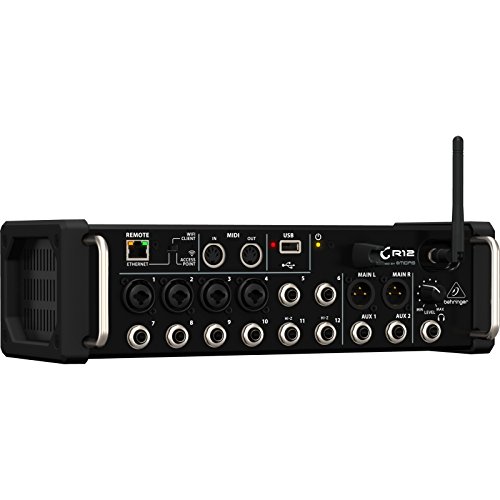
Behringer X Air XR12 Tablet-Controlled Digital Mixer
$369.00 Specs and sizingFour preamps in a single rack unit, with full digital processing and recall on every one. The cheapest way into scene recall, and the cheapest to outgrow.
Best for: A chapel, a portable setup or an overflow room with a handful of inputs
Check price on Amazon
Midas MR12 12-Input Digital Mixer for iPad/Android Tablets with 4 Midas PRO Preamps, 8 Line Inputs, Integrated Wifi Module and USB Stereo Recorder
$589.00 Specs and sizingFour Midas PRO preamps in one rack unit with tablet control. The preamps are the reason to pick this over the cheaper alternatives at the same channel count.
Best for: A small room where the few channels there are need to sound right
Check price on Amazon
Soundcraft Ui12 Remote-Controlled 12-Input Digital Mixer
$399.00 Specs and sizingControlled from any browser with no app to install, which removes the single most common volunteer failure: the tablet that will not update.
Best for: Volunteer teams with mixed devices and nobody to manage app versions
Check price on Amazon
Behringer X AIR XR16 16-Input Digital Mixer for iPad/Android Tablets with 8 Programmable Midas Preamps, 8 Line Inputs, Integrated Wifi Module and USB Stereo Recorder
$429.00 Specs and sizingEight Midas preamps and eight line inputs in two rack units. The honest limit is those eight preamps: a band with drums will use them all before the vocals are plugged in.
Best for: Speech-led services with a piano and two or three microphones
Check price on Amazon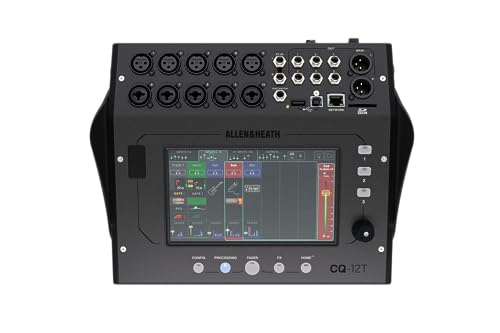
Allen & Heath CQ-12T Digital Mixer with 7-inch Touchscreen and Bluetooth
$899.99 Specs and sizingEight preamps and a touchscreen in a desktop box, with the same automatic gain and feedback tools as its larger siblings.
Best for: Small sanctuaries and portable church plants that set up and tear down weekly
Check price on Amazon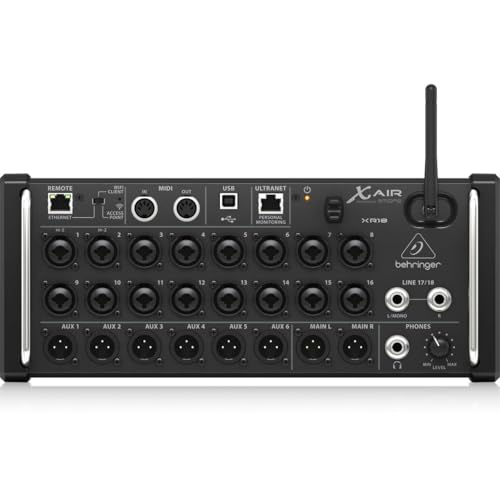
Behringer X AIR XR18 18-Channel, 12-Bus Digital Mixer for iPad/Android Tablets with 16 Programmable Midas Preamps, Integrated Wifi Module and Multi-Channel USB Audio Interface
$509.00 Specs and sizingSixteen programmable Midas preamps and six aux sends for monitors, controlled entirely from a tablet, with 18 track USB recording built in. No console surface at all, which is the trade.
Best for: A church plant or a 100 to 250 seat room where the mixer can stand in the congregation
Check price on Amazon
Allen & Heath CQ-18T Digital Mixer with 7" Touchscreen WiFi and Bluetooth Connectivity
$1,199.99 Specs and sizingSixteen preamps, a seven inch touchscreen on the unit itself and built-in Wi-Fi. The onboard screen matters more than it sounds: the service still runs when a volunteer forgets the tablet.
Best for: A 150 to 400 seat room that wants digital recall without depending on a tablet
Check price on Amazon
Allen & Heath CQ-20B Digital Mixer with WiFi and Bluetooth Connectivity
$999.99 Specs and sizingA rack version of the CQ with 16 preamps and no surface at all, driven from Wi-Fi or a wired network. It disappears into the rack and is controlled from the room.
Best for: Installed systems where nobody should be able to reach the knobs
Check price on Amazon
Allen & Heath QU-SB Portable 18-In/14-Out Digital Mixer with Remote Wireless Control (AH
$999.99 Specs and sizingEighteen inputs and fourteen outputs in two rack units, with Allen and Heath preamps and the Qu processing set. A mature platform with years of firmware behind it.
Best for: A church that wants Allen and Heath sound quality at a rack-mixer price
Check price on Amazon
PreSonus StudioLive Series III 16R Digital Rack Mixer with Studio One Pro Software
$949.99 Specs and sizingSixteen recallable preamps, AVB networking and 18 by 18 USB recording, so the service records multitrack without a separate interface.
Best for: Churches that want to record every service in multitrack for the podcast or for training volunteers
Check price on Amazon
Soundcraft Signature Plus 16 Analog Mixer, 16 Channel, Lexicon FX, USB-C
$899.00 Specs and sizingTwelve preamps of the same Ghost design, which covers a small band and the speaking microphones without a submixer.
Best for: A blended service with a piano, a couple of instruments and several microphones
Check price on Amazon
Yamaha MG20 20-Input 6-Bus Mixer
$657.89 Specs and sizingSixteen preamps and six buses with no digital layer at all. For a traditional service with a choir, an organ and a lectern, that is the entire requirement.
Best for: Traditional services where the input list never changes and recall is not needed
Check price on Amazon
PreSonus StudioLive Series III 24R Digital Rack Mixer with Studio One Pro Software
$1,069.00 Specs and sizingThe 16R with eight more preamps, which is usually the difference between fitting the drum kit and not.
Best for: A full band input list that will not fit in sixteen channels
Check price on Amazon
Behringer X32 Rack Digital Mixer
$979.99 Specs and sizingThe same X32 engine and the same 32 channel mix capability in three rack units, driven from a tablet. Sixteen preamps are on the box itself and the rest arrive over AES50 from a stage box.
Best for: Churches with no booth space, or a mixer who wants to walk the room while setting the mix
Check price on Amazon
Behringer X32 Producer Digital Mixer
$1,499.00 Specs and sizingA rack-mountable X32 with 17 motorized faders and 16 onboard preamps. It keeps physical faders, which volunteers find far easier than a tablet, in a much smaller footprint than the full console.
Best for: A tight booth that still needs real faders in front of the operator
Check price on Amazon
Behringer 32 40-Input 25-Bus Digital Mixing Console, Black (X32)
$1,999.00 Specs and sizingThe console most churches actually end up with, and for good reason: 32 Midas-designed preamps, 25 motorized faders, full scene recall and an AES50 port that carries a 32 channel stage box on one cable.
Best for: A 250 to 800 seat room with a band, where volunteers rotate weekly and scene recall saves the service
Check price on Amazon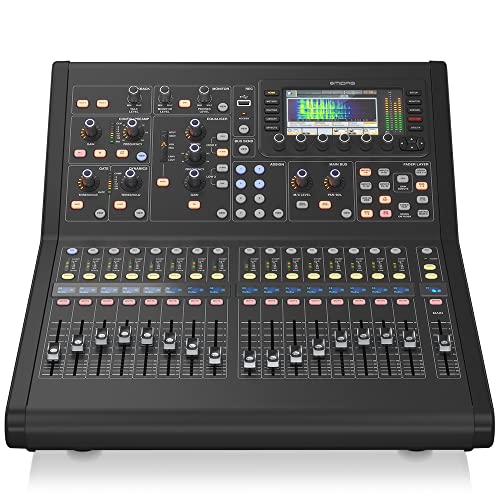
Midas M32 LIVE Digital Console for Live and Studio with 40 Input Channels, 32 Midas PRO Microphone Preamplifiers and 25 Mix Buses and Live Multitrack Recording
$2,499.00 Specs and sizingThe X32 platform with Midas PRO preamps and a heavier build. What you are paying for is the preamp stage and the chassis, not extra channels.
Best for: Churches that want the X32 workflow with a longer service life and better front end
Check price on Amazon
Midas M32C Digital Rack Mixer for Installed and Live Sound Applications with 40 Input Channels and 25 Mix Buses
$1,299.00 Specs and sizingA single rack unit M32 engine with no preamps of its own: every input arrives over AES50 from a stage box. That is a feature in an installed system where the inputs are all on the platform anyway.
Best for: Installed systems built around a stage box, where the rack lives in a closet
Check price on Amazon
Allen & Heath SQ-5 Digital Mixer, 48 Input Channels, 7" Capacitive Touchscreen, Automatic Mic Mixing, 32×32 USB Audio Interface
$3,999.00 Specs and sizingA 96 kHz console with under a millisecond of latency, 48 input channels and 36 buses, plus an automatic microphone mixer that is genuinely useful for a panel or a reading rota.
Best for: A 500 seat and up sanctuary with a paid or highly skilled operator, or a multi-campus standard
Check price on Amazon
Allen & Heath SQ-6 Digital Mixer, 48 Input Channels, 7" Colour Touchscreen, 24 Onboard Preamps, 25 Faders, 16 SoftKeys AES Digital Output
$4,999.00 Specs and sizingThe SQ-5 engine with 24 onboard preamps and 25 faders, so more of the input list lands on the surface without a stage box and more of the mix stays under the hand.
Best for: A large room where the whole band needs to be reachable without paging through layers
Check price on Amazon
Behringer WING 48-Channel, 28-Bus Full Stereo Digital Mixing Console
$3,499.00 Specs and sizingForty-eight stereo input channels, a large multi-touch screen and a custom control section. The stereo channel architecture is the real difference: a stereo keyboard costs one channel, not two.
Best for: Large multi-campus rooms and anywhere the input list has outgrown 32 mono channels
Check price on Amazon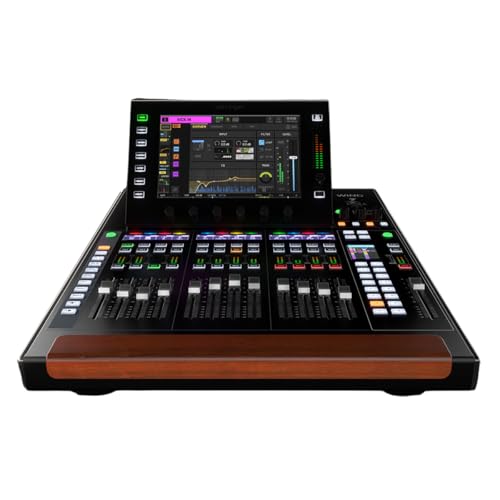
Behringer WING Compact 48-channel Digital Mixer
$2,799.00 Specs and sizingThe full WING engine and channel count on a narrower surface with 16 faders, which fits booths that cannot take the full console.
Best for: Large-room capability in a booth built for a smaller desk
Check price on AmazonWhat does a typical church input list look like?
A mid-size church with a band, drums and a choir. Count yours the same way: every position on its own channel, and stereo sources counted twice.
A typical church input list of preaching, lectern, vocals, a band, a full drum kit and a choir uses about 24 console channels once stereo sources are counted properly.
| Source | Quantity | Mono or stereo | Channels used | Note |
|---|---|---|---|---|
| Preaching microphone | 1 | Mono | 1 | Headworn or lapel wireless |
| Lectern microphone | 1 | Mono | 1 | Gooseneck, often left up permanently |
| Roaming handheld | 1 | Mono | 1 | Announcements, testimony, guests |
| Lead vocal | 1 | Mono | 1 | Worship leader |
| Backing vocals | 2 | Mono | 2 | One channel each, never shared |
| Acoustic guitar | 1 | Mono | 1 | Direct box |
| Electric guitar | 1 | Mono | 1 | Microphone on the cabinet, or direct |
| Bass guitar | 1 | Mono | 1 | Direct box |
| Keyboard | 1 | Stereo | 2 | Stereo, so two channels |
| Kick drum | 1 | Mono | 1 | |
| Snare drum | 1 | Mono | 1 | |
| Toms | 2 | Mono | 2 | Rack and floor |
| Drum overheads | 1 | Stereo | 2 | Stereo pair, two channels |
| Choir microphones | 3 | Mono | 3 | Hanging condensers |
| Playback or tracks | 1 | Stereo | 2 | Stereo from a laptop |
| Video or computer audio | 1 | Stereo | 2 | Stereo, for sermon clips |
Backing vocals never share a channel. Two singers on one microphone means neither can be adjusted without affecting the other, which is the single most common reason a church mix cannot be fixed.
How many console channels by church size?
Typical input counts by seat count and service style, with the growth margin applied and rounded to a size that is sold.
A 250 seat church typically runs about 16 inputs today, which means buying a 24 channel console so there is room to grow, plus four monitor mixes.
| Church size | Inputs today | With 25% growth | Console to buy | Monitor mixes |
|---|---|---|---|---|
| 75 seats | 10 | 13 | 16 | 2 |
| 150 seats | 16 | 20 | 24 | 4 |
| 250 seats | 16 | 20 | 24 | 4 |
| 400 seats | 24 | 30 | 32 | 6 |
| 600 seats | 24 | 30 | 32 | 6 |
| 1,000 seats | 32 | 40 | 40 | 8 |
Monitor mixes are counted by ear rather than by musician: two singers who want the same thing can share a mix, and a drummer never can.
Why buy more channels than you need today?
Because church input lists only grow, and a console is the piece of equipment hardest to replace incrementally. Adding a channel to a 32 channel console is free. Adding a channel to a full 16 channel console means a new console, a new stage box, re-patching everything and retraining the volunteer team.
Twenty-five percent is the working margin. Less than that and a single new instrument or a second campus feed fills it. Much more than that and you are paying for faders nobody will touch, which is real money that should have gone to the loudspeakers.
The other thing to count is aux sends, not just inputs. Every monitor mix needs one, and so does every feed leaving the room: the livestream, the overflow room, the nursery, the hearing loop and the recording. A console with 32 inputs and four aux sends will run out of outputs long before it runs out of inputs, which is why the bus count on a data sheet matters as much as the channel count.
Which console fits your input list?
The grid below filters to consoles with enough channels for your answer. Broadly: under 12 channels an analog board such as the Yamaha MG12XU 12-Input 4-Bus Mixer with Effects is simpler and has nothing to boot; from 12 to 18 channels the Behringer X AIR XR18 18-Channel, 12-Bus Digital Mixer for iPad/Android Tablets with 16 Programmable Midas Preamps, Integrated Wifi Module and Multi-Channel USB Audio Interface or Allen & Heath CQ-18T Digital Mixer with 7" Touchscreen WiFi and Bluetooth Connectivity bring scene recall, which matters enormously on a rotating volunteer team; and from 24 channels upward the Behringer 32 40-Input 25-Bus Digital Mixing Console, Black (X32) and Allen & Heath SQ-5 Digital Mixer, 48 Input Channels, 7" Capacitive Touchscreen, Automatic Mic Mixing, 32×32 USB Audio Interface are where most churches land.
One consideration that is not on any data sheet: whether the console has a screen on the box itself. A tablet-only mixer is cheaper and smaller, and it also means the service does not start when somebody forgets the tablet or the app will not update. For a volunteer team that is a real operational risk, and it is why the Allen & Heath CQ-18T Digital Mixer with 7" Touchscreen WiFi and Bluetooth Connectivity and the fader-equipped Behringer X32 Producer Digital Mixer are worth their premium over a bare rack unit.
Frequently asked questions
How many channels does a church mixer need?
Count every source separately, count stereo sources twice, then add about 25 percent for growth and round up to a size that is sold. A typical church with a band, drums and a choir uses about 22 channels, which means buying a 32 channel console. A speech-led church with a piano may only need 8 to 12.
Do stereo sources really need two channels?
Yes. A stereo keyboard, a stereo drum overhead pair and a playback laptop each occupy two console channels, and between them that is six channels a church routinely forgets to count. Some consoles let you link two channels into a stereo pair controlled by one fader, which is convenient but does not reduce the number of inputs consumed.
Should two singers share a microphone channel?
No, and this is one of the most common causes of a mix that cannot be fixed. Two voices on one channel share the same fader, the same EQ and the same compression, so making one audible makes the other too loud. Every vocal position gets its own channel and its own microphone, even if that means a smaller band.
How many aux sends does a church need?
One per monitor mix plus one per feed leaving the room. A church with four monitor mixes, a livestream feed, an overflow room and a hearing assist system needs seven, which is more than many small consoles provide. Check the bus and aux count on the data sheet as carefully as the input count, because that is where small consoles actually run out.
Is it cheaper to add a stage box than to replace the console?
Usually, if the console has a digital snake port. A sixteen channel stage box adds sixteen remote-controlled preamps over one network cable for a fraction of a new console, and it puts those preamps on the platform where the microphones are rather than at the far end of a long cable run. It only helps if the console itself has the channel capacity to receive them.
Do we need a digital console or will analog do?
Below about twelve channels, and with a fixed input list that never changes, analog is simpler and has nothing to boot before a service. Above that, scene recall is worth a great deal on a rotating volunteer team, because the system starts from a known good state every week rather than from wherever the last person left it.
Researched, not professional advice. This page is compiled from published manufacturer specifications, operator manuals, FCC rules, published standards and owner-review consensus, not hands-on testing. Sound system design, rigging loudspeakers overhead, and any electrical work are jobs for a qualified professional: have flown loudspeakers and their attachment points signed off by a structural engineer or a certified rigger, and have all wiring done by a licensed electrician to your local code. Wireless microphone rules change, so confirm the current FCC position before buying. As an Amazon Associate we earn from qualifying purchases.