Microphones
Best Drum Microphone Kits for Churches
Quick answer
A church drum kit needs four microphones as a working minimum: kick, snare and a stereo overhead pair. Seven channels covers a full kit with toms, and the Shure PGA Drum Kit 7 at $659.00 supplies all seven with mounts and cables.
Before buying anything, answer one question honestly: is the drum kit too quiet, or too loud? In most church buildings under about 300 seats an acoustic kit is already louder than the mix needs, and adding microphones makes the problem worse rather than better. The reason to mike a kit is control, not volume, and that reason only holds once the kit is shielded, the platform is under control or the room is large enough to swallow it.
If the answer is control, work the channel count with the mixer channel calculator before choosing a kit, because seven drum channels on a sixteen channel console leaves very little for everything else. Then read how to mic a drum kit in church and reducing stage volume in church, which is the page most churches actually need.
On this page
How many drum channels does a church need?
Channel counts by approach, with what each one gives you and what it costs in console channels and setup time.
Four channels, kick and snare plus a stereo overhead pair, covers the large majority of church drum kits and costs three fewer console inputs than a full seven channel setup.
| Approach | Channels | What you get | Console inputs used | Best for |
|---|---|---|---|---|
| One overhead only | 1 | The kit as a whole, no control at all | 1 | A small room where the kit is already loud enough |
| Kick and overhead | 2 | Low end control plus the kit | 2 | Small churches, portable setups |
| Kick, snare, overhead | 3 | Control of the two loudest elements | 3 | A 100 to 250 seat room |
| Kick, snare, stereo overheads | 4 | The standard working setup | 4 | Most churches with a shielded kit |
| Kick, snare, two toms, stereo overheads | 6 | Tom control for a busy player | 6 | Contemporary worship, larger rooms |
| Full kit with three toms | 7 | Complete control of every drum | 7 | Large rooms and broadcast mixes |
Every added drum microphone also adds cymbal bleed, so seven channels is not seven times the control. Past four channels the gains are real but small, and the cost in setup time before each service is paid by a volunteer every single week.
Why a kit beats buying microphones individually
The list price comparison understates the case. A drum kit needs not just capsules but rim mounts, clips, short cables and a case, and buying those separately costs as much again as the microphones. A packaged kit arrives with mounts that fit its own microphones, which removes an afternoon of improvisation with gaffer tape.
The second reason is size. A full size instrument microphone on a stand does not fit between a rack tom and a ride cymbal on a crowded church platform, which is why compact swivel-mount drum microphones exist. The third is consistency: a kit gives a rotating volunteer team seven identical-looking microphones with obvious positions, and a system that a different person can set up correctly every week is worth more than a marginally better capsule.
Where individual microphones win is the kick drum and the snare. Those two channels carry most of what the congregation hears, and both are worth upgrading first when budget appears. A dedicated kick microphone with a shaped low end and a purpose-built snare capsule are the two upgrades that change the mix audibly.
Small church: three or four channels, no more
A small church should be miking the kick and snare and putting a single overhead above the kit, and that is all. A five piece kit supplies more capsules than that, and the spare tom microphones are worth keeping in the case for later rather than opening seven channels the console and the volunteer cannot manage. The snare capsule in a packaged kit is also the one most worth replacing early.

Shure PG ALTA 5-Piece Drum Microphone Kit for Performing and Recording Drummers - Includes Mics, Mounts and Cables with Options for Kick Drum, Snare and Tom (PGADRUMKIT5)
$359.00Kick, snare and three tom microphones with mounting hardware and cables, which is the whole kit except overheads for less than two individual microphones would cost. Start with kick and snare and leave the toms in the case.
Best for: A first attempt at miking the drum kit
Check price on Amazon
Shure SM57 Pro XLR Dynamic Instrument Microphone
$109.00The industry standard snare microphone for fifty years, and a noticeable step up from the snare capsule in any budget kit. It also doubles as a guitar amplifier microphone and a backup vocal microphone when the drums are not being played.
Best for: Snare drum, and anything else loud that needs close miking
Check price on AmazonWho should not buy this tier: Rooms under about 100 seats, where the acoustic kit is already louder than the mix needs and microphones make the problem worse.
Mid-size: the full kit, properly mounted
Once the kit is shielded or the room is large enough, the full seven channel approach gives a mix engineer real control: the kick can be tightened, the snare can sit under the vocal, and the overheads carry the cymbals without dictating the level of everything else. This is also the tier where a dedicated kick microphone earns its price, because the kick is the channel that most changes the feel of a contemporary mix.

Shure PG ALTA 7-Piece Drum Microphone Kit for Performing and Recording Drummers - Includes Mics, Mounts and Cables with options for Kick Drums, Snare, Rack/Floor Toms, Congas and Cymbals (PGADRUMKIT7)
$659.00The five piece kit with two overhead condensers added, which is the pair that makes a kit sound like a kit. All mounts and cables included, so the whole platform requirement arrives in one box.
Best for: A full drum kit on a platform that is already enclosed or shielded
Check price on Amazon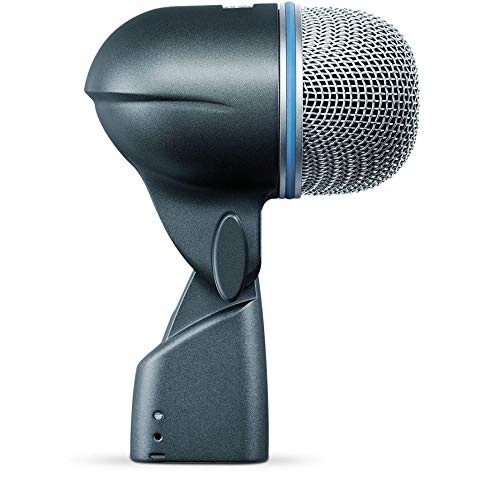
Shure BETA 52A Kick Drum Microphone - Supercardioid Dynamic Mic with High Output Neodymium Element, Locking Stand Adapter, Durabl Steel Mesh Grille and Shock Mount
$219.00A dedicated kick drum microphone with a shaped low end and enough headroom that it never complains, in a supercardioid pattern that keeps the hi-hat out of the channel. This is the single upgrade that changes a church drum mix most.
Best for: Kick drum, and a bass cabinet at a push
Check price on Amazon
Shure BETA 56A Snare and Tom Microphone - Supercardioid Swivel-Mount Dynamic Drum Mic for Close Miking, Equipped with Shock Mount for Sound Isolation, Dynamic Locking Stand Adapter, Steel Mesh Grille
$189.00A compact swivel-mount supercardioid small enough to position properly in a crowded kit, with a shock mount that keeps the drum shell vibration out of the signal. Full size microphones simply do not fit where these go.
Best for: Toms and snare where a full size microphone will not fit
Check price on AmazonWho should not buy this tier: Churches with a sixteen channel console and a full band, where seven drum inputs leaves nothing for the vocals.
Large room or broadcast: control on every drum
In a large room with a streamed service the drum channels are doing two jobs at once, and the broadcast mix is far less forgiving than the room. Boundary and compact capsules earn their place here because they remove stands from a crowded platform, which matters on camera as well as underfoot. See church livestream audio setup for how these channels differ from the room mix.

Shure BETA 91A Half-Cardioid Condenser Kick Drum Microphone
$269.00A boundary condenser that lies inside the kick drum, so there is no stand on a crowded platform and no chance of a volunteer knocking it out of position between services. It also works on a piano lid, which makes it a genuinely dual-purpose purchase.
Best for: Kick drum on a tight platform, or a grand piano lid
Check price on Amazon
AUDIX i5 Dynamic Instrument Microphone: Pro Snare Mic/Guitar Amp Microphone
$105.00An instrument dynamic with a flatter response than the standard alternative, which needs less equalisation on snare. Less equalisation means less phase shift and a cleaner broadcast channel, which is where the difference shows.
Best for: Snare in a mix that will be streamed as well as heard in the room
Check price on Amazon
Audio-Technica PRO 35 Cardioid Condenser Clip-on Instrument Microphone
$159.00A clip-on cardioid condenser that mounts to the rim of a drum or a cajon, removing another stand from the platform. Useful for the percussion position that appears once a month and has nowhere to put a stand.
Best for: Cajon, congas and occasional percussion
Check price on AmazonWho should not buy this tier: Do not buy this tier for a church that is not already controlling stage volume. Seven finely chosen drum channels in a room where the acoustic kit is already too loud gives an engineer control over a signal the congregation is barely hearing from the loudspeakers anyway. Shield the kit or move to an electronic kit first, then buy capsules.
The drum microphones compared
| Model | Price | Microphone type | Needs phantom power | Quantity | Polar pattern |
|---|---|---|---|---|---|
| Shure PG ALTA 5-Piece Drum Microphone Kit for Performing and Recording Drummers - Includes Mics, Mounts and Cables with Options for Kick Drum, Snare and Tom (PGADRUMKIT5) | $359.00 | Mixed dynamic and condenser | Yes | 5 | - |
| Shure PG ALTA 7-Piece Drum Microphone Kit for Performing and Recording Drummers - Includes Mics, Mounts and Cables with options for Kick Drums, Snare, Rack/Floor Toms, Congas and Cymbals (PGADRUMKIT7) | $659.00 | Mixed dynamic and condenser | Yes | 7 | - |
| Shure BETA 52A Kick Drum Microphone - Supercardioid Dynamic Mic with High Output Neodymium Element, Locking Stand Adapter, Durabl Steel Mesh Grille and Shock Mount | $219.00 | Dynamic | No | - | Supercardioid |
| Shure BETA 91A Half-Cardioid Condenser Kick Drum Microphone | $269.00 | Condenser | Yes | - | Half-cardioid |
How we chose
We did not test these products in person and we never claim to. Picks are researched from manufacturer specification sheets and operator manuals, FCC rules where spectrum is involved, published standards, warranty terms, and the recurring themes in verified owner reviews. Every pick is matched to a real room size, seat count or input list rather than to a price bracket, and it is placed in the tier where its capability actually belongs. Where a product is wrong for most churches we say so on the page.
Sources
- Manufacturer published specifications for each microphone and kit listed
- Consensus of verified owner reviews across major retailers
Frequently asked questions
How many microphones do you need on a church drum kit?
Four is the working standard: kick, snare and a stereo overhead pair. That gives control of the two loudest elements plus the cymbals and the kit as a whole. Seven channels adds individual tom control, which matters for a busy player in a large room and adds setup time every week. Below four, a single overhead plus a kick microphone is a reasonable small church answer.
Is a drum microphone kit better than buying microphones separately?
For most churches, yes. A kit includes rim mounts, clips and short cables that would cost as much again bought separately, and the compact capsules physically fit in a crowded kit where full size microphones do not. Individual microphones win on the kick and the snare, which are the two channels carrying most of what the congregation hears and the first worth upgrading.
Do church drums need microphones at all?
Often not. In a room under about 250 seats an acoustic kit is usually already louder than the mix needs, and adding microphones increases the level rather than controlling it. The reason to mike a kit is control once the kit is shielded or the room is large. If the complaint is that the drums are too loud, microphones are not the purchase you need.
What microphone should we use on the kick drum?
A dedicated kick microphone with a shaped low end response and high headroom, rather than a general purpose dynamic. A supercardioid pattern keeps the hi-hat out of the channel. The boundary condenser option lies inside the drum with no stand at all, which is worth the difference on a crowded church platform where somebody kicks a stand every other week.
Do drum overhead microphones need phantom power?
Yes. Overheads are condensers and need 48 volt phantom power from the console, which every modern digital mixer supplies on every channel. Older analog consoles sometimes provide phantom power in blocks or not at all, so check before buying. The dynamic microphones on kick, snare and toms need no power and are unaffected by having phantom power on.
Should we use a drum shield?
In most church rooms, yes, and it is more effective than any microphone choice. A shield reduces what the congregation hears directly from the kit, which is what lets the engineer control the drums through the system rather than competing with them. A full enclosure with a lid does far more than a partial screen, and it needs proper bracing so it cannot fall.
Researched, not professional advice. This page is compiled from published manufacturer specifications, operator manuals, FCC rules, published standards and owner-review consensus, not hands-on testing. Sound system design, rigging loudspeakers overhead, and any electrical work are jobs for a qualified professional: have flown loudspeakers and their attachment points signed off by a structural engineer or a certified rigger, and have all wiring done by a licensed electrician to your local code. Wireless microphone rules change, so confirm the current FCC position before buying. As an Amazon Associate we earn from qualifying purchases.