Installed sanctuary systems
1,000 Seat Church Sound System
Quick answer
The equipment for a 1,000 seat church auditorium comes to about $41,605, and the loudspeakers are deliberately not on that list. At this size the main system should be a line array designed with prediction software by an integrator, not chosen from a catalogue. Everything else is specified here.
This build is honest about a limit. A 1,000 seat auditorium is roughly 7,000 square feet with a throw well past 100 feet, and at that distance a point-source loudspeaker cannot keep the front and back rows within a sane level of each other. The main loudspeaker system belongs to a designer with prediction software and a measurement rig, and no shopping list substitutes for that. Budget $40,000 to $120,000 for the main system and its rigging on top of the figure below.
What this list does give you is everything else, specified properly: the console, the stage box, the wireless plan, the full band and choir microphone complement, the monitoring system, the racks and the accessibility provision. That is the part a committee can price without an engineer.
The complete build: $41,605
Console, processing and stage boxes
The main loudspeaker system is NOT in this list and must be designed, not chosen. See the note above.
| Item | Why this one | Qty | Price | Buy |
|---|---|---|---|---|
 Behringer WING 48-Channel, 28-Bus Full Stereo Digital Mixing Console Behringer WING 48-Channel, 28-Bus Full Stereo Digital Mixing Console | Forty-eight stereo channels, a large multi-touch surface and a custom control section, which is what a 40-plus input list needs to stay reachable under one hand. | 1 | $3,499.00 | Price |
 Behringer S32 32-Channel Stage Box Behringer S32 32-Channel Stage Box | Sixty-four preamps across two stage boxes, so the platform and the choir loft each have their own local I/O. | 2 | $1,339.98 | Price |
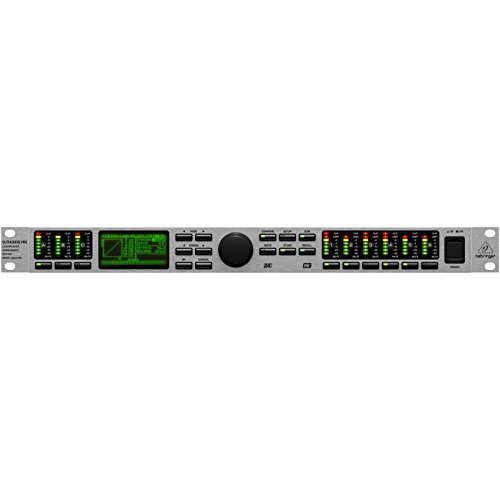 Behringer Ultradrive Pro Dcx2496 Ultra High-Precision Digital 24-Bit/96 Khz Loudspeaker Management System Behringer Ultradrive Pro Dcx2496 Ultra High-Precision Digital 24-Bit/96 Khz Loudspeaker Management System | Loudspeaker management with delay on every output, for the fills and the under-balcony system. The main array will have its own processing. | 2 | $678.00 | Price |
 Cable Matters 10Gbps Snagless Shielded Cat 6A Ethernet Cable, 100ft Cable Matters 10Gbps Snagless Shielded Cat 6A Ethernet Cable, 100ft | Shielded runs for two stage boxes and the control network. | 4 | $119.96 | Price |
 Radial Pro DI Passive Direct Box Radial Pro DI Passive Direct Box | Passive direct boxes for acoustic instruments and bass. | 4 | $539.96 | Price |
 Radial ProD2 Passive 2 Channel Direct Box Radial ProD2 Passive 2 Channel Direct Box | Stereo direct boxes for keyboards, tracks and playback. | 3 | $629.97 | Price |
 Behringer DI4000 V2 4-channel Active Direct Box Behringer DI4000 V2 4-channel Active Direct Box | Four active direct channels in one rack unit, which gets boxes off the platform floor entirely. | 1 | $159.00 | Price |
| Console, processing and stage boxes subtotal | $6,965.87 | |||
Fill and delay loudspeakers
These supplement a designed main array; they are not the main system. Everything overhead needs structural sign-off.
| Item | Why this one | Qty | Price | Buy |
|---|---|---|---|---|
 QSC K8.2 Active 8" Powered 2000 Watt Loudspeaker QSC K8.2 Active 8" Powered 2000 Watt Loudspeaker | Front fills for the rows sitting under the array coverage, which otherwise hear almost no direct sound. | 4 | $2,999.96 | Price |
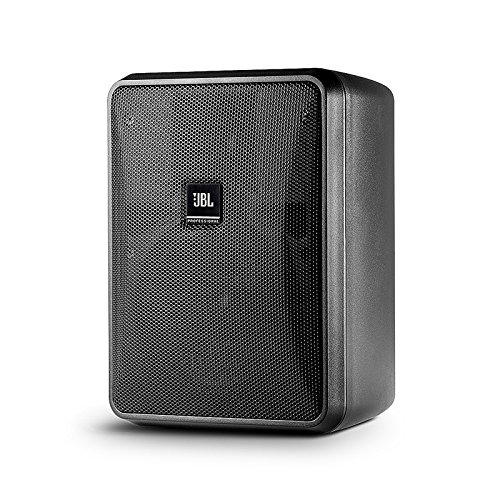 JBL Professional Control 25-1 Compact Indoor/Outdoor Background/Foreground Speaker, Black, Sold as Pair JBL Professional Control 25-1 Compact Indoor/Outdoor Background/Foreground Speaker, Black, Sold as Pair | Surface-mount fills for under-balcony and side aisle seating, delayed to the mains so the reader localises the platform rather than the fill. | 3 | $1,373.94 | Price |
 JBL Professional Control 47HC High Ceiling Loudspeaker, Sold as Pair JBL Professional Control 47HC High Ceiling Loudspeaker, Sold as Pair | High-ceiling coaxial speakers with a narrower 75 degree pattern for the foyer and overflow, where a wide speaker from that height covers too much too thinly. | 2 | $1,588.00 | Price |
| Fill and delay loudspeakers subtotal | $5,961.90 | |||
Wireless microphones
Eight digital channels. At this density, coordination is a job rather than a setting: scan the spectrum at the building before committing to bands.
| Item | Why this one | Qty | Price | Buy |
|---|---|---|---|---|
 Shure SLXD24D/SM58 Dual Wireless Vocal System - H55 Band Shure SLXD24D/SM58 Dual Wireless Vocal System - H55 Band | Four digital handheld channels in two rack units, with the receivers coordinating their own frequencies. | 2 | $3,298.00 | Price |
 Sennheiser EW-D ME3 Dynamic Headset SET (R1-6) Sennheiser EW-D ME3 Dynamic Headset SET (R1-6) | Two digital headworn systems with cardioid capsules, for the preaching position and a second speaker. | 2 | $1,339.72 | Price |
 Sennheiser EW-D ME2 Lavalier SET (R4-9) Sennheiser EW-D ME2 Lavalier SET (R4-9) | A digital lapel channel for guests and drama, on the same platform as the headworn systems. | 1 | $737.40 | Price |
 Shure BLX188/CVL Dual Wireless Lavalier System - H9 Band Shure BLX188/CVL Dual Wireless Lavalier System - H9 Band | Two analog lapel channels held in reserve for overflow use, kept in a different band from the digital systems. | 1 | $689.00 | Price |
 Shure Centraverse CVL Lavalier Condenser Microphone Shure Centraverse CVL Lavalier Condenser Microphone | Spare capsules. One spare per four channels in service is the convention that keeps a service running. | 2 | $108.00 | Price |
| Wireless microphones subtotal | $6,172.12 | |||
Wired microphones and stands




Monitoring
| Item | Why this one | Qty | Price | Buy |
|---|---|---|---|---|
 Behringer Powerplay P16-HQ 16-Channel Digital Personal Monitoring Mixer Behringer Powerplay P16-HQ 16-Channel Digital Personal Monitoring Mixer | Twelve personal mix positions, which is what a full band plus an orchestra section needs without using any radio spectrum. | 12 | $2,447.88 | Price |
 Behringer POWERPLAY P16-D 16 Channel Digital ULTRANET Distributor Behringer POWERPLAY P16-D 16 Channel Digital ULTRANET Distributor | Two distribution hubs, since each one feeds eight positions. | 2 | $278.00 | Price |
 Shure SE215 PRO Wired Earbuds - Professional Sound Isolating Earphones, Clear Sound & Deep Bass, Single Dynamic MicroDriver, Secure Fit In Ear Monitor, plus Carrying Case & Fit Kit - Clear (SE215-CL) Shure SE215 PRO Wired Earbuds - Professional Sound Isolating Earphones, Clear Sound & Deep Bass, Single Dynamic MicroDriver, Secure Fit In Ear Monitor, plus Carrying Case & Fit Kit - Clear (SE215-CL) | Isolating earphones at every position. | 12 | $1,428.00 | Price |
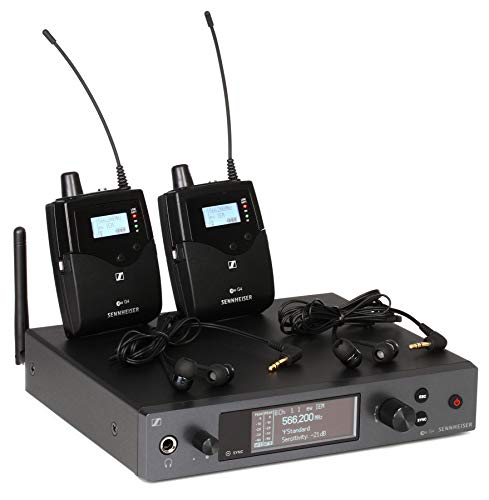 Sennheiser Pro Audio Sennheiser ew IEM G4-Twin-G in Ear Monitor System w/ 2 Belt Packs Range (566-608Mhz), Dual Beltpack Sennheiser Pro Audio Sennheiser ew IEM G4-Twin-G in Ear Monitor System w/ 2 Belt Packs Range (566-608Mhz), Dual Beltpack | Two wireless in-ear channels with a proper limiter in the bodypack, for the worship leader and one other person who must move. | 1 | $1,649.00 | Price |
 Sennheiser HD 280 Pro Headphone Sennheiser HD 280 Pro Headphone | Closed-back headphones at the mix, broadcast and monitor positions. | 3 | $256.47 | Price |
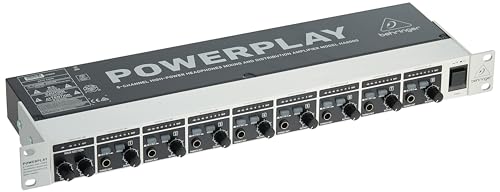 Behringer HA8000 V2 8-Channel High-Power Headphone Mixing and Distribution Amplifier Behringer HA8000 V2 8-Channel High-Power Headphone Mixing and Distribution Amplifier | Eight headphone outputs for a rehearsal room or a wired listening position. | 1 | $189.00 | Price |
| Monitoring subtotal | $6,248.35 | |||
Racks, power and recording
| Item | Why this one | Qty | Price | Buy |
|---|---|---|---|---|
 Gator Cases Pro Series 12U Rack Case, Standard 19" Depth (G-PRO-12U-19) Gator Cases Pro Series 12U Rack Case, Standard 19" Depth (G-PRO-12U-19) | Three racks: mix position, amplifier room and platform. Two spare units in each. | 3 | $989.97 | Price |
 Furman PL-8C Classic 15A Power Conditioner, 9 Outlets & LED Rack Lights Furman PL-8C Classic 15A Power Conditioner, 9 Outlets & LED Rack Lights | Filtered power with rack lights at the top of each rack. | 3 | $764.91 | Price |
 Furman Power Conditioner, Black (M-8S) Furman Power Conditioner, Black (M-8S) | Power sequencing, so the amplifiers come up last and shut down first and nothing thumps through the array. | 2 | $831.90 | Price |
 Focusrite Scarlett 18i16 4th Gen USB-C Audio Interface Focusrite Scarlett 18i16 4th Gen USB-C Audio Interface | Multitrack recording of every service, which is what lets the broadcast mix be built properly rather than being whatever the room heard. | 1 | $569.99 | Price |
 Pig Hog PHM50 Series 50' XLR Microphone Cables 2-Pack Pig Hog PHM50 Series 50' XLR Microphone Cables 2-Pack | Heavy-jacket cable throughout. | 10 | $539.90 | Price |
 Amazon Basics XLR Microphone Cable for Speaker or PA System, Recording Studio, All Copper Conductors, 6MM PVC Jacket, 50 Foot Amazon Basics XLR Microphone Cable for Speaker or PA System, Recording Studio, All Copper Conductors, 6MM PVC Jacket, 50 Foot | Fixed runs and a real spares drawer. | 10 | $197.30 | Price |
| Racks, power and recording subtotal | $3,893.97 | |||
Accessibility
The 2010 ADA table calls for 36 receivers at 1,000 seats, of which at least 9 must be hearing-aid compatible. Note the table steps: 36 at exactly 1,000 seats, and the next row restarts at 35 for 1,001.


This total EXCLUDES the main loudspeaker system, which at this size must be designed with prediction software rather than chosen from a list. Budget a further $40,000 to $120,000 for a line array, its amplification and its rigging, plus structural engineering, conduit, electrical work, a professional tuning and commissioning. The full project at this scale is a six-figure exercise and belongs with an integrator from the first meeting.
- Room size
- About 7,000 sq ft
- Throw to back row
- Over 100 ft
- Main system
- Line array, designed not chosen
- Console channels used
- 44 of 48 stereo
- Wireless channels
- 8 digital plus 2 analog reserve
- Monitor mixes
- 12 personal plus 2 wireless
- ADA receivers
- 36, 9 hearing-aid compatible
- Circuits needed
- 4 or more dedicated 20 A
Prices were accurate when this list was compiled and change often, so confirm each one before the committee votes. Quantities are multiplied into the total. This total covers equipment only: it does not include installation labor, rigging, conduit, electrical work or permits, which on an installed system commonly add 30 to 60 percent.
Why the loudspeakers are deliberately missing from this list
Every other build on this site names the loudspeakers, because in a room under about 700 seats a well-chosen point-source pair or trio genuinely works and the choice is a specification exercise. Past that, it is not.
A 1,000 seat auditorium has seats at 25 feet and seats at 110 feet from the platform. Under the inverse square law those two positions are about 13 dB apart from a single point source, and no amount of amplifier closes that gap. A line array trades differently: within its near field the level falls at roughly 3 dB per doubling rather than 6, which is exactly the behaviour a deep room needs. But an array only does that when its box count, splay angles and rigging height have been solved against your actual room geometry in prediction software.
Recommending a specific array from a catalogue would be selling you something we cannot know is right, and that is worse than selling you nothing. Engage an integrator, ask for the coverage prediction as a deliverable, and use the RFP questions to judge the proposals you get back.
What the full project costs, not just this list
The equipment on this page is roughly a quarter of a 1,000 seat audio project: the main array, its rigging and the installation are the larger share.
| Line | Typical range | In this list? |
|---|---|---|
| Main line array and amplification | $40,000 to $120,000 | No, must be designed |
| Rigging, motors and structural engineering | $8,000 to $30,000 | No |
| Console, stage boxes and processing | $8,000 to $20,000 | Yes |
| Wireless and microphones | $10,000 to $25,000 | Yes |
| Monitoring | $5,000 to $15,000 | Yes |
| Racks, power, cable and infrastructure | $4,000 to $12,000 | Yes |
| Accessibility | $4,000 to $9,000 | Yes |
| Installation labor, conduit, electrical | $20,000 to $60,000 | No |
| Acoustic treatment | $10,000 to $80,000 | No |
| Commissioning and tuning | $3,000 to $10,000 | No |
Ranges are what churches at this scale commonly report. The spread on acoustic treatment is the widest because it depends entirely on what the building already is.
What you can skip
Skip choosing your own main loudspeakers. This is the one place where a shopping list actively causes harm. A 1,000 seat room needs a coverage prediction, not a catalogue.
Skip twelve wireless in-ear channels. Two is right. Everything else goes on the wired personal mixer system, which costs less, never drops out and leaves the spectrum for the microphones that have no alternative.
Skip the second console for broadcast, at first. A dedicated broadcast desk is genuinely better, but a church that has not yet solved the room, the array and the volunteer rota should not add a second mix position to the list of things that can go wrong on a Sunday.
What to upgrade first
The room, then the array, then everything here. At 7,000 square feet the acoustic environment dominates every other decision, and a measurement by an acoustician is the first purchase. Then the array design. Only then does the list above matter.
Then the broadcast path. A 1,000 seat church almost certainly streams, and the single biggest quality gap in church livestreaming is audio taken from the house mix rather than mixed for headphones. The multitrack interface in this build is what makes a separate broadcast mix possible. See how to mix for livestream.
Frequently asked questions
How much does a sound system for a 1,000 seat church cost?
The equipment on this list is about $41,605, and that deliberately excludes the main loudspeaker array. A complete project including a designed line array, rigging, structural engineering, installation, electrical work, acoustic treatment and commissioning commonly runs $150,000 to $400,000. Anyone quoting a 1,000 seat room from a parts list alone has not done the design.
Why can you not just recommend a loudspeaker for a 1,000 seat room?
Because the answer depends on the room geometry, not the seat count. An array that covers a wide fan-shaped 1,000 seat room evenly will be wrong for a long narrow one with a balcony, and the difference is box count, splay angles and trim height rather than model. That has to be solved in prediction software against your actual drawings, which is what an integrator delivers.
Do we need two consoles, one for the room and one for broadcast?
Eventually yes, because a mix that sounds right in a large room is not the mix that sounds right in headphones. The interim step, and the one in this build, is a multitrack interface recording every channel, so the broadcast mix can be built separately without a second desk and a second volunteer on Sunday morning.
How many ADA assistive listening receivers does a 1,000 seat church need?
Thirty-six under the 2010 ADA Standards, of which at least nine must be hearing-aid compatible, which in practice means supplied with a neck loop. Houses of worship are exempt from ADA Title III, but the exemption does not extend to a church that rents its auditorium to the public or operates a school, and at this size most churches meet the table regardless.
Should a multi-campus church standardise on one console platform?
Yes, and it is one of the highest-value decisions available. A common platform means a volunteer trained at one campus is useful at another, scene files and channel layouts transfer, spares are shared, and a failure at one site can be covered from another. The specific platform matters far less than the fact that it is the same one everywhere.
Researched, not professional advice. This page is compiled from published manufacturer specifications, operator manuals, FCC rules, published standards and owner-review consensus, not hands-on testing. Sound system design, rigging loudspeakers overhead, and any electrical work are jobs for a qualified professional: have flown loudspeakers and their attachment points signed off by a structural engineer or a certified rigger, and have all wiring done by a licensed electrician to your local code. Wireless microphone rules change, so confirm the current FCC position before buying. As an Amazon Associate we earn from qualifying purchases.