Instruments
Microphones for Orchestra and Strings
Quick answer
Mic an orchestra by section rather than by player. Use one hanging or overhead condenser per two to four string players, and clip-on condensers only for soloists. Individual microphones on every stand costs gain before feedback and buys nothing a congregation hears.
Church orchestras appear at festivals, in cantatas and in traditional services, and they are usually approached with the assumption that more microphones means more control. The opposite is true. An orchestra balances itself: that is what the arrangement, the conductor and three hundred years of orchestration practice are for. Your job is to capture the balance that already exists and lift it enough to be heard, not to rebuild it at the console. That reframing usually cuts the channel count by half and improves the result. Strings are the exception that needs attention, because they are quiet and sit next to instruments that are not.
On this page
How many microphones per section
Section miking means one microphone covering several players, positioned above and in front of them. The counts below are what produce even coverage without an unmanageable channel list, and they follow the same logic as choir miking: cover width, not individuals.
A typical church orchestra needs about six to eight microphones in total, not one per player.
| Section | Microphones | Placement | Why |
|---|---|---|---|
| Violins, first and second | 1 per 2 to 4 players | 3 to 4 feet above, angled down at the section | Quiet, and the section that most needs help |
| Violas and cellos | 1 per 2 to 3 players | 2 to 3 feet above and in front | Quieter still, and easily buried under brass |
| Double bass | 1, or a pickup | Close, aimed at the f-hole | Often better taken with a pickup on a loud platform |
| Woodwinds | 1 per 2 to 3 players | 2 to 3 feet above the section | Balance within the section is already handled by the players |
| Brass | 1 per section, or none | In front, off the bell axis | Frequently needs no reinforcement at all |
| Percussion and timpani | 1 overhead | Above the section | One channel covers a table of instruments |
Add a conductor talkback or a pair of room microphones only if the service is being recorded or streamed, where they give the mix an acoustic context the close microphones cannot.
What to buy
Orchestral capture is condenser work. Hanging and overhead condensers cover sections, and clip-on condensers handle soloists and the instruments that need to move.

Audio-Technica U853R Cardioid Condenser Hanging Microphone 250 Ohms, Low Profile Design
$229.00A low-profile hanging cardioid available in black or white, so a permanent orchestral rig disappears against the ceiling rather than dominating the sightlines of a traditional sanctuary.
Best for: Permanent section coverage over an orchestra or choir
Check price on Amazon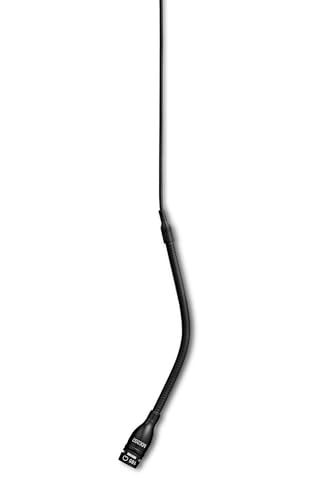
Shure MX202 Overhead Microphone - Black, Cardioid Condenser Mic with 3 Pin XLR Connector, Preamp Included (MX202B/C)
$270.00A hanging overhead condenser with the preamp in line, designed for exactly this job. Hung correctly it covers a wide section, and the mounting hardware suits a permanent install.
Best for: Large sections hung from a ceiling or truss
Check price on Amazon
Audio-Technica PRO 35 Cardioid Condenser Clip-on Instrument Microphone
$159.00A clip-on condenser that mounts directly to an instrument, which fixes the working distance and follows a player who moves. The right tool for a soloist who needs to come forward in the mix.
Best for: String and wind soloists, and instruments that move
Check price on Amazon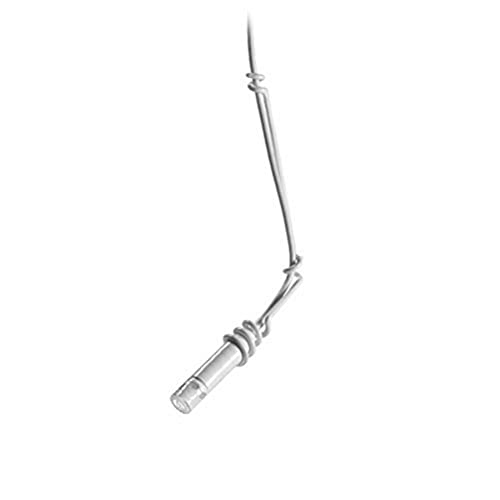
Audio-Technica PRO 45W ProPoint Cardioid Condenser Hanging Microphone
$109.00The affordable hanging condenser in white. Several of these over an orchestra is a real system for the price of one premium capsule, and placement matters far more than the capsule does.
Best for: A church orchestra on a sensible budget
Check price on AmazonWhy strings are the hard part
A violin produces far less sound than a trumpet, and in a church orchestra they are frequently seated within twenty feet of each other. The string microphones therefore need considerable gain, and all of that gain is also applied to the brass arriving from behind. This is the central difficulty of orchestral reinforcement in a church and it is a seating problem before it is a microphone problem.
The fixes are physical. Put the strings at the front and the brass at the back, which is standard orchestral seating and exists for exactly this reason. Raise the brass on risers so they project over the strings rather than into the string microphones. Use directional hanging microphones angled down at the strings so the null points back toward the brass. And accept that the string channels will always carry some brass, which is acceptable because the brass belongs in the sound anyway. What is not acceptable is pushing the string microphones so hard that the brass bleed becomes the dominant sound in those channels.
Channel setup
Orchestral channels are distant microphones, so they share the choir problem: everything they pick up includes a good deal of room, and the processing is mostly about controlling that.
High pass string sections at 100 Hz and keep compression very light, because orchestral dynamics are the point of the arrangement.
| Section | High pass | Compression | Notes |
|---|---|---|---|
| Violins | 100 Hz | Very light or none | Cut 2 to 4 kHz if the section sounds scratchy |
| Violas and cellos | 80 Hz | Very light | The section most often lost. Give it room in the mix. |
| Double bass | 40 Hz | About 3:1 | Treat like a bass guitar channel |
| Woodwinds | 100 Hz | Light | Watch for key noise on close microphones |
| Brass | 80 Hz | About 4:1 on peaks | Engage the input pad if close miked |
| Room microphones | 80 Hz | None | For stream and recording context, not for the house |
Resist heavy compression across orchestral channels. The dynamic range from a quiet string passage to a full tutti is the musical content, and flattening it produces a loud, lifeless wash that no congregation enjoys.
What usually goes wrong
A microphone per player, producing thirty channels nobody can mix and a phase mess from every instrument arriving at several capsules. String microphones pushed so hard that they mostly reproduce the brass section behind them. Heavy compression flattening the dynamics the arrangement was written around. And seating that puts brass in front of or level with the strings, which no microphone technique recovers from.
The other common error is treating an orchestra like a band, with every section pushed forward and present. An orchestra in a church usually needs a gentle lift rather than full reinforcement, and in a room with reasonable acoustics the strings may need help while the brass and percussion need none at all. Start with the microphones down, bring up only what is genuinely inaudible, and check the result from the middle of the congregation rather than from the console. See the choir position, which shares most of the geometry.
How we chose
We did not test these products in person and we never claim to. Picks are researched from manufacturer specification sheets and operator manuals, FCC rules where spectrum is involved, published standards, warranty terms, and the recurring themes in verified owner reviews. Every pick is matched to a real room size, seat count or input list rather than to a price bracket, and it is placed in the tier where its capability actually belongs. Where a product is wrong for most churches we say so on the page.
Sources
Frequently asked questions
How many microphones does a church orchestra need?
About six to eight in total for a typical church orchestra, covering sections rather than players. Roughly one microphone per two to four string players, one per two to three woodwinds, one for percussion and often none at all for brass. Counting by player produces a channel list nobody can mix.
Should each orchestra player have their own microphone?
No. An orchestra balances itself, which is what the arrangement and the conductor are for, and individual microphones mean rebuilding that balance at the console while adding phase problems from every instrument arriving at several capsules. Use individual microphones only for soloists who need to come forward.
Why can we never hear the strings?
Usually seating rather than microphones. A violin is far quieter than a trumpet, and if the brass sits level with or in front of the strings, the string microphones mostly reproduce brass. Put strings at the front and brass at the back on risers, which is standard orchestral seating and exists for exactly this reason.
Hanging microphones or clip-on for strings?
Hanging or overhead condensers for sections, clip-on condensers for soloists. Section coverage suits an overhead because it captures the blend of several players the way the audience hears it. A clip-on fixes the working distance and follows a player, which is what a soloist needs and a section does not.
Should we compress orchestral channels?
Very lightly or not at all. The dynamic range from a quiet passage to a full tutti is the musical content of an orchestral arrangement, and compressing it heavily produces a loud, lifeless wash. Light compression on the double bass and on close miked brass is reasonable, since both have sharp peaks.
Do we need room microphones for an orchestra?
For the house, no. For a recording or a livestream, a pair of room microphones adds acoustic context that close section microphones cannot provide, and it makes the stream mix sound like a room rather than a collection of channels. Keep them out of the house mix, where they would only add feedback risk.
Researched, not professional advice. This page is compiled from published manufacturer specifications, operator manuals, FCC rules, published standards and owner-review consensus, not hands-on testing. Sound system design, rigging loudspeakers overhead, and any electrical work are jobs for a qualified professional: have flown loudspeakers and their attachment points signed off by a structural engineer or a certified rigger, and have all wiring done by a licensed electrician to your local code. Wireless microphone rules change, so confirm the current FCC position before buying. As an Amazon Associate we earn from qualifying purchases.