Singing positions
Microphones for a Choir
Quick answer
Hang one cardioid condenser per 8 to 10 feet of riser width, about 2 to 3 feet in front of and above the front row, angled down at the back row. Coverage is decided by hanging height and angle, not by which microphone model you buy.
Almost every choir problem a church has is a geometry problem being treated as a shopping problem. The microphones are hung too high, too far back, or there are three of them covering a section that needed two, and the response is to buy better capsules. It does not help, because a hanging cardioid condenser from any reputable manufacturer will do this job and the difference between them is small next to the difference between hanging one at four feet and hanging it at ten. Read how to mic a choir alongside this page, and settle the rigging before the shortlist.
On this page
How many microphones, and where they hang
A hanging cardioid covers a section of riser rather than individual singers, and the coverage width it achieves is set by how far it is from the front row. The working figures below are the ones that consistently produce even coverage without an excessive channel count.
Plan one microphone per 8 to 10 feet of riser width, hung 2 to 3 feet in front of and above the front row.
| Riser width | Microphones | Height above front row | Distance in front of front row |
|---|---|---|---|
| Up to 10 feet | 1 | 2 to 3 feet | 2 feet |
| 10 to 20 feet | 2 | 2 to 3 feet | 2 to 3 feet |
| 20 to 30 feet | 3 | 3 feet | 2 to 3 feet |
| 30 to 40 feet | 4 | 3 to 4 feet | 3 feet |
| Over 40 feet | 1 per 10 feet | 3 to 4 feet | 3 feet |
Height is measured above the heads of the front row, not above the floor. A riser that steps up behind the front row needs the microphone angled down more steeply rather than hung higher, because raising it costs level from everybody.
Why height and angle beat the model
Level falls with distance by the inverse square law: doubling the distance from the singers costs 6 dB. A microphone hung three feet above the front row and one hung six feet above are 6 dB apart before anything else happens, and that 6 dB is exactly the margin you need to get the choir above the room. It is also 6 dB more room reverberation relative to the voices, because the direct sound fell while the reflected sound did not.
Angle does the second half of the work. A cardioid aimed down at the back row reaches the singers furthest away, who are also the quietest at the capsule, while the front row is off axis and closer. That combination flattens the level difference between rows, which is the whole objective. Aiming straight down at the front row instead gives you a loud front row, an inaudible back row and a microphone that hears the ceiling. Every choir system that sounds distant and reverberant is hung too high, aimed wrong, or both.
What to buy
All three below are cardioid condensers designed to hang, all need phantom power, and all come in colours that disappear against a ceiling. Buy the same model across the whole choir so that one EQ approach works on every channel.
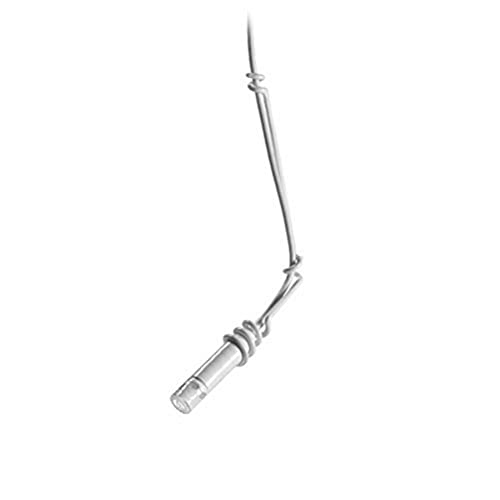
Audio-Technica PRO 45W ProPoint Cardioid Condenser Hanging Microphone
$109.00The budget hanging condenser in white. Three of these over the risers is a real choir system for the price of one premium capsule, and the difference in a church is far smaller than the difference hanging height makes.
Best for: A small to mid-size choir on a sensible budget
Check price on Amazon
Audio-Technica U853R Cardioid Condenser Hanging Microphone 250 Ohms, Low Profile Design
$229.00A low-profile hanging cardioid available in black or white, so it disappears against the ceiling it hangs from. Worth the step up where the sightline from the pews matters.
Best for: Choir coverage that must not be visible from the congregation
Check price on Amazon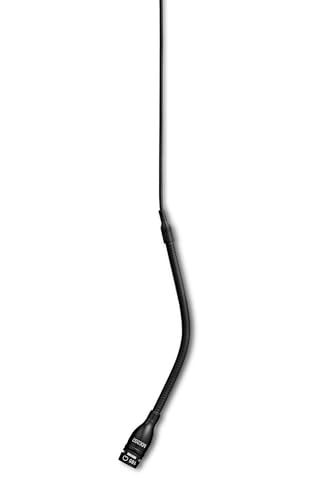
Shure MX202 Overhead Microphone - Black, Cardioid Condenser Mic with 3 Pin XLR Connector, Preamp Included (MX202B/C)
$270.00A hanging overhead condenser with the preamp in line, designed for exactly this job. Hung correctly it covers a wide section of risers, and the mounting hardware is built for a permanent install.
Best for: Choir and ensemble hung from a ceiling or truss in a large room
Check price on AmazonChannel setup for a choir
Choir channels are the most reverberant in the building because the microphones are further from their sources than any others. The processing is mostly about controlling what that distance brings with it.
A high pass at 100 to 150 Hz and a cut around 250 to 400 Hz control the room build-up that distance miking always produces.
| Setting | Starting point | Why |
|---|---|---|
| Phantom power | On, 48 volts | Every hanging condenser needs it |
| High pass filter | 100 to 150 Hz | Air handling rumble and room boom, which distance miking exaggerates |
| Low mid cut | 250 to 400 Hz | Where several distant microphones build up into mud |
| Compression | Light, about 2:1 | Choirs have wide dynamics on purpose. Do not flatten them. |
| Presence | 3 to 5 kHz, modest | Diction. Overdone, it brings the room forward with it. |
| Monitor sends | Off, or a dedicated choir foldback only | Choir microphones into a wedge in front of the choir is a guaranteed loop |
Mute choir channels when the choir is not singing. Three open condensers hanging over an empty riser contribute room, drums and loop gain to every other moment in the service.
The gain before feedback problem specific to this position
Choir microphones are the hardest feedback case in a church for one reason: they are far from their source and therefore need the most gain of any channel in the building. A vocal microphone is two inches from a mouth and a choir microphone is four feet from the nearest singer, which is a difference of roughly 27 dB in source level before you start. All of that has to be made up at the console, and every decibel of it is also applied to whatever else the capsule hears, including the loudspeakers.
This is why the usual advice to keep the choir out of the main loudspeaker coverage is not fussiness. The microphones must hang behind the loudspeakers, never in front of them, which in a room where the choir sits behind the platform is straightforward and in a room where the choir sits in a front side gallery is a genuine design problem. It is also why hanging them correctly matters so much: every decibel you gain by hanging lower and aiming better is a decibel you do not have to ask the console for. And it is why handheld microphones never work for a choir, since pointing a handheld up at singers means pointing it at the ceiling and at whatever the ceiling reflects.
What usually goes wrong
Hung too high, almost always, because the rigging point was convenient rather than correct. Aimed at the front row instead of down at the back row. Too many microphones, adding open channels and loop gain without adding coverage, when the riser needed one per ten feet rather than one per four singers. Left open when the choir is not singing. And a choir positioned in front of the loudspeakers, which no amount of equipment solves.
The other common mistake is expecting a choir system to sound like a close miked vocal. It will not and should not: a choir is a blended, distant sound and a system that makes it sound close has usually been pushed so hard that the room came with it. Judge it on whether the words are intelligible at the back and whether the back row of the choir is audible at all, which are the two things the congregation actually notices. For the alternative approaches see hanging choir mics versus handheld.
How we chose
We did not test these products in person and we never claim to. Picks are researched from manufacturer specification sheets and operator manuals, FCC rules where spectrum is involved, published standards, warranty terms, and the recurring themes in verified owner reviews. Every pick is matched to a real room size, seat count or input list rather than to a price bracket, and it is placed in the tier where its capability actually belongs. Where a product is wrong for most churches we say so on the page.
Sources
Frequently asked questions
How many microphones does a church choir need?
One per 8 to 10 feet of riser width, so a 20 foot riser needs two and a 30 foot riser needs three. Counting by singers rather than by width is the common error and leads to too many open channels, which costs gain before feedback without adding coverage. Width is what the microphones actually have to cover.
How high should choir microphones hang?
Two to three feet above the heads of the front row and two to three feet in front of them, angled down toward the back row. Height is measured above heads, not above the floor. Every doubling of distance from the singers costs 6 dB of level and brings the room forward, so hanging high is the most common cause of a distant, reverberant choir sound.
Which way should choir microphones point?
Down and back, at the rear row rather than at the front row. The back row is furthest from the capsule and therefore quietest, so aiming at them evens out the level across the rows while the front row stays loud enough by being close. Aiming at the front row gives a loud front, an inaudible back and a lot of ceiling.
Can we use handheld microphones on stands for the choir?
It does not work well. Pointing a handheld up at standing singers means pointing it at the ceiling and at whatever reflects off it, and you need far more of them to cover the same width. Hanging condensers exist for this job because the geometry of a choir on risers suits an overhead cardioid and nothing else.
Why does our choir sound distant and reverberant?
The microphones are too high, aimed wrong, or both, and the console is making up the difference with gain that amplifies the room along with the voices. Lower them to two or three feet above the front row and angle them down at the back row. That usually fixes more than any EQ change or microphone upgrade.
Do choir microphones need phantom power?
Yes. Hanging choir microphones are condensers and require 48 volt phantom power from the console or an inline supply. Check that the channels you plan to use actually provide it, since some analog consoles switch phantom power in banks rather than individually, and a condenser without it produces nothing at all.
Researched, not professional advice. This page is compiled from published manufacturer specifications, operator manuals, FCC rules, published standards and owner-review consensus, not hands-on testing. Sound system design, rigging loudspeakers overhead, and any electrical work are jobs for a qualified professional: have flown loudspeakers and their attachment points signed off by a structural engineer or a certified rigger, and have all wiring done by a licensed electrician to your local code. Wireless microphone rules change, so confirm the current FCC position before buying. As an Amazon Associate we earn from qualifying purchases.