Instruments
Microphones for a Grand Piano
Quick answer
Use two boundary condensers inside the lid, one over the bass strings and one over the treble, six to ten inches above the strings. Lid position is the gain control: on the short stick the piano is loud and hard to isolate, closed it is quiet and dull.
A grand piano is the most rewarding instrument in a church to get right and one of the most awkward, because it is physically enormous, it produces 85 to 100 dBA at three feet, and it is a giant open resonator sitting on a platform surrounded by loudspeakers. The recording studio approach of two condensers on stands over an open lid is close to unusable in a live church, because the lid is up and the microphones are exposed to everything else in the room. Boundary microphones inside the lid solve most of that at once, which is why they are the standard church answer.
On this page
Where the microphones go inside the lid
Two microphones, one covering the lower strings and one the upper, placed so their coverage overlaps in the middle of the instrument. Mounted to the underside of the lid or resting on the frame, they move with the piano, cannot be knocked over and pick up far less of the room than anything on a stand.
Place the two capsules over the bass and treble halves of the string plate, six to ten inches above the strings, about a third and two thirds along the instrument.
| Microphone | Position along the piano | Height above strings | Covers |
|---|---|---|---|
| Bass side capsule | About one third from the keyboard end | 6 to 10 inches | Low strings and the fundamental weight |
| Treble side capsule | About two thirds from the keyboard end | 6 to 10 inches | Upper strings, attack and clarity |
| Too close to the hammers | At the keyboard end | Any | Mechanical noise, hammer clatter, very bright |
| Too far toward the tail | At the far end | Any | Boomy, indistinct, poor note definition |
Attach them to the lid rather than resting them loose on the frame if the piano is ever moved. A boundary microphone that slides down the string plate mid-service is a memorable noise.
What to buy
Two of the same microphone, so the two halves of the instrument match. Both need phantom power, which is worth confirming on the channels you intend to use.

Shure BETA 91A Half-Cardioid Condenser Kick Drum Microphone
$269.00A boundary condenser designed to lie inside an instrument, which means no stand on a crowded platform and no chance of a volunteer knocking it out of position. Two of these inside the lid is the standard church piano system.
Best for: Grand piano, and kick drum on a tight platform
Check price on Amazon
Audio-Technica PRO 35 Cardioid Condenser Clip-on Instrument Microphone
$159.00A clip-on condenser that mounts to the piano frame, useful where boundary microphones are not practical or where one instrument has to be covered with a single channel.
Best for: A tight budget, or an upright rather than a grand
Check price on Amazon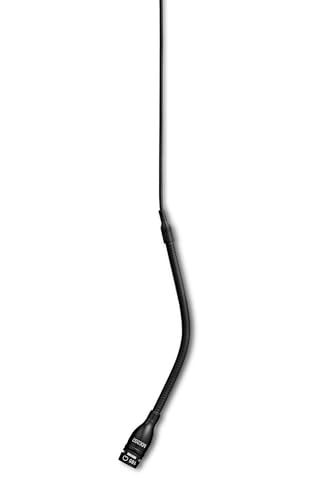
Shure MX202 Overhead Microphone - Black, Cardioid Condenser Mic with 3 Pin XLR Connector, Preamp Included (MX202B/C)
$270.00A hanging condenser, which can work above an open piano in a room with no drums and no wedges. It hears the room as readily as the instrument, so it suits traditional services only.
Best for: A piano in a traditional service with a quiet platform
Check price on AmazonThe lid is your gain control
This is the single most useful thing to understand about a church piano. The lid position sets how much acoustic energy leaves the instrument and how much isolation the microphones get, and it is a far more powerful control than anything on the console. On the long stick the piano is at its loudest and its most beautiful, and it is also wide open to every wedge and loudspeaker in the room. Closed, it is quiet and isolated and sounds dull and boxy.
The short stick is the position most churches settle on, because it lets the instrument breathe while keeping the lid angled as a partial shield. In a contemporary service with a full band, a fully closed lid with boundary microphones inside is a legitimate choice and sounds far better than it has any right to, because the microphones are inside the resonant space rather than outside it. Which position suits you is decided by how loud the platform is, so settle stage volume first and then choose the lid.
Channel setup and the feedback problem here
A piano with the lid up is a large sympathetic resonator. Every wedge and every loudspeaker in the room excites the strings, which the microphones dutifully pick up, so a church piano rings in a way that a studio piano never does.
A high pass at 60 Hz and a narrow cut in the low mids handles most of what a boundary microphone inside a lid picks up.
| Setting | Starting point | Why |
|---|---|---|
| Phantom power | On, 48 volts | Boundary condensers need it |
| High pass filter | 60 Hz | Below the useful range for a reinforced piano in a mix |
| Low mid cut | 200 to 400 Hz | Boundary microphones inside a lid build up here |
| Presence | 3 to 6 kHz, gentle | Note attack and definition against a band |
| Compression | About 3:1, light | Piano dynamics are the point. Do not flatten them. |
| Pan | Both channels to centre in most churches | A congregation seat hears no stereo image. Stereo mainly complicates the stream. |
The sustain pedal is the hidden variable. A pianist holding the pedal down leaves every string free to resonate, which raises both the sound and the feedback risk considerably.
What usually goes wrong
Microphones on stands over an open lid in a contemporary service, which picks up the entire platform and rings. Capsules too close to the hammers, producing mechanical clatter that no EQ removes. Both channels panned hard left and right for a stereo image that nobody in the congregation is positioned to hear, and which makes the livestream mix harder. A lid on the long stick in a room that could never support it.
The subtler problem is sympathetic resonance with the wedges, which produces a ringing that sounds like feedback but is really the piano strings being driven by the monitors. It appears and disappears with the sustain pedal, which is the diagnostic. The fix is to lower the wedge level near the piano, close the lid a stage, or move the pianist to in-ear monitoring, and it is another reason reducing stage volume pays for itself across the whole system.
How we chose
We did not test these products in person and we never claim to. Picks are researched from manufacturer specification sheets and operator manuals, FCC rules where spectrum is involved, published standards, warranty terms, and the recurring themes in verified owner reviews. Every pick is matched to a real room size, seat count or input list rather than to a price bracket, and it is placed in the tier where its capability actually belongs. Where a product is wrong for most churches we say so on the page.
Sources
- Shure published specifications for the Beta 91A boundary condenser microphone
- Audio-Technica published specifications for the PRO 35 clip-on condenser microphone
Frequently asked questions
What is the best way to mic a grand piano in church?
Two boundary condensers inside the lid, one over the bass strings about a third along the instrument and one over the treble about two thirds along, six to ten inches above the strings. They cannot be knocked over, they move with the piano and they pick up far less of the room than microphones on stands.
Should the piano lid be open or closed?
The short stick suits most churches. It lets the instrument breathe while the lid acts as a partial shield against the room. In a loud contemporary service a fully closed lid with boundary microphones inside is a legitimate choice and sounds much better than expected, because the capsules are inside the resonant space rather than outside it.
Why does our piano ring or feed back?
Often it is sympathetic resonance rather than true feedback. Wedges and loudspeakers excite the piano strings, which the microphones then pick up. The diagnostic is the sustain pedal: if the ringing appears when the pedal goes down, this is the cause. Lower the wedge level near the piano or close the lid a stage.
Should a church piano be in stereo?
Usually not. Pan both channels to centre. No congregation seat is positioned to hear a stereo piano image the way a listener between two studio monitors would, and stereo complicates the livestream mix and the mono compatibility of the whole system. Keep the two microphones for coverage of the instrument, not for width.
Can we use a hanging microphone over the piano instead?
Only in a quiet room with no drums and no wedges, such as a traditional service. A hanging condenser hears the room as readily as the instrument, so it works where there is little else to hear and fails as soon as a band starts. Boundary microphones inside the lid are the more robust church answer.
What about an upright piano rather than a grand?
An upright is harder, because there is no lid to work inside. The usual approach is two microphones over the open top, angled down toward the strings, or clip-on condensers mounted to the frame. Pulling the instrument away from the wall helps considerably, since an upright against a hard wall loses definition and gains boom.
Researched, not professional advice. This page is compiled from published manufacturer specifications, operator manuals, FCC rules, published standards and owner-review consensus, not hands-on testing. Sound system design, rigging loudspeakers overhead, and any electrical work are jobs for a qualified professional: have flown loudspeakers and their attachment points signed off by a structural engineer or a certified rigger, and have all wiring done by a licensed electrician to your local code. Wireless microphone rules change, so confirm the current FCC position before buying. As an Amazon Associate we earn from qualifying purchases.