Special positions
Microphones for a Baptistry and Communion Table
Quick answer
Keep every mains powered item away from the water and put the microphone on a boom stand well clear of the baptistry. A wired dynamic on a long boom is the right answer. Electrical work near water needs a licensed electrician to local code.
This page is about safety before it is about audio, and the order matters. A baptistry is a large volume of water with people standing in it, in a building that also contains loudspeakers, lighting and power. The audio question is genuinely easy: a dynamic microphone on a long boom, well back, picks up a baptism perfectly well. The safety question is the one that deserves attention, and the rule is simple and absolute: nothing that plugs into the mains goes anywhere near the water. Read electrical planning for church AV alongside this, and involve a licensed electrician in anything that touches the building wiring.
On this page
What to use and where to put it
The microphone needs to reach over the baptistry without the stand being anywhere near it, which means a long boom with a weighted base placed well back and angled in. A dynamic rather than a condenser, because condensation and splashing are certainties and a dynamic tolerates both far better.
A dynamic on a long boom stand placed well clear of the water is the correct baptistry solution, with the base at least several feet back.
| Position | Microphone | Mounting | Key point |
|---|---|---|---|
| Baptistry | Wired dynamic, cardioid | Long boom, weighted base, well back | Nothing mains powered near the water. Nothing on a stand in reach of it. |
| Baptistry, permanent install | Hanging cardioid condenser above | Ceiling mounted, well clear | Fixed, out of reach, no stand on a wet floor |
| Communion table | Gooseneck condenser | Flange mounted into the table | Fixed working distance, shock mounted against knocks |
| Communion table, temporary | Wired dynamic on a short boom | Boom stand behind the table | Easy to remove, nothing drilled into furniture |
| Baptistry, wireless on the pastor | Avoid | A transmitter on a person entering water is a poor idea for the transmitter |
The last row is worth stating plainly. A wireless body pack worn by someone stepping into a baptistry will get wet, and while the risk to the person is not electrical, the risk to the equipment is total. Use a boom microphone for the words spoken over the water.
What to buy
Nothing exotic is required here. A robust dynamic, a stand that will not tip, and for a communion table a gooseneck that fixes the working distance. Spend the money on the stand rather than on the capsule.

Shure SM58 Pro XLR Dynamic Vocal Microphone
$109.00A dynamic that survives being dropped, splashed and breathed on, with a cardioid pattern that rejects the room behind it. There is no reason to use anything more delicate over water.
Best for: A baptistry on a boom, and any position where robustness matters most
Check price on Amazon
On-Stage MS9701B+ Heavy-Duty Euro-Boom Mic Stand (Setup for Vocal and Instrument Microphones, Adjustable Height, Portable, Folding, Tripod Base, Rubber Feet, Steel and Zinc, 5/8″-27 Threading, Black)
$85.95A heavy-duty boom stand with the reach and the base weight to hold a microphone over a baptistry from several feet back without any risk of tipping toward the water.
Best for: Reaching over a baptistry from a safe distance
Check price on Amazon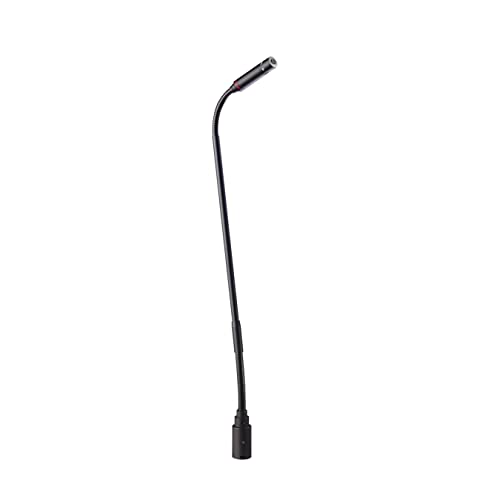
Audio-Technica PRO49QL Propoint Gooseneck Microphone
$129.00An affordable quick-mount gooseneck that unplugs from its base, so it can be removed and locked away between services without unbolting anything from the furniture.
Best for: A communion table or a shared reading position
Check price on Amazon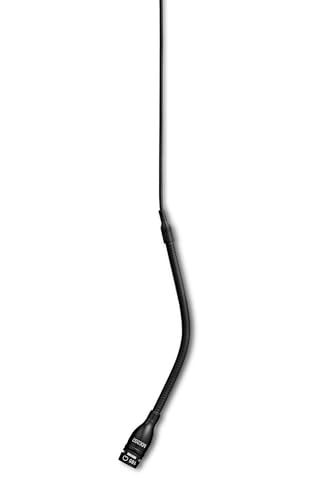
Shure MX202 Overhead Microphone - Black, Cardioid Condenser Mic with 3 Pin XLR Connector, Preamp Included (MX202B/C)
$270.00A hanging cardioid condenser, which in a permanent baptistry install puts the microphone above and out of reach with no stand on a floor that will be wet.
Best for: A permanently installed baptistry in a larger church
Check price on AmazonChannel setup for a difficult acoustic
A baptistry is a hard, reflective, often tiled alcove containing water, which is close to the worst small room acoustic in the building. The microphone is also further from the speaker than any other speaking position, so the channel needs more gain than usual and picks up more room with it.
A high pass at 120 Hz and a narrow cut in the low mids controls the tiled alcove boom that makes baptistry audio unintelligible.
| Setting | Starting point | Why |
|---|---|---|
| High pass filter | 120 Hz | Tiled alcoves boom badly. Nothing useful for speech lives below this. |
| Low mid cut | 250 to 500 Hz | Where a small hard room builds up and swallows consonants |
| Presence | 2 to 4 kHz, modest | Intelligibility, which is the only thing that matters here |
| Compression | About 4:1 | Distance varies as people move, and the words matter |
| Monitor sends | Off | A wet alcove and a wedge is a feedback loop with a captive audience |
| Mute by default | Yes, unmuted for the baptism only | An open channel over a tiled alcove contributes room to everything else |
Ring this channel out before the service with someone standing where the pastor will stand. A baptistry is used rarely enough that nobody remembers the settings, so write them down or save a scene.
The gain before feedback problem specific to this position
Two things make this harder than it looks. The microphone has to be far from the speaker for safety reasons, which means it needs a lot of gain, and the baptistry is often at the front of the platform inside the coverage of the main loudspeakers. That combination is the classic recipe for ringing, and it arrives at the worst possible moment.
The workable answers are geometric. Place the boom so the microphone is above and angled down, with its rejection null pointing at the nearest loudspeaker. Check the loudspeaker aiming, since a system aimed at the platform rather than at the seats makes every front of platform position harder, which is covered in how to aim and place church speakers. And ring the channel out in advance, because a baptism is not a moment to be adjusting EQ. If the room genuinely cannot support it, a second option is to mute the baptistry microphone for the immersion itself and rely on the pastor headworn channel for the words spoken beforehand, from a position further back.
What usually goes wrong
A stand too close to the water, which is a safety problem rather than an audio one. A wireless body pack worn into the water, which destroys the transmitter. A channel nobody set up because baptisms happen a few times a year and the settings were never saved. Feedback at the moment everyone is paying attention. And a condenser microphone used over water, which condensation eventually kills.
The communion table has a different and simpler failure: a microphone that picks up everything on the table, including the handling of vessels, because a gooseneck was mounted without a shock mount. Fit the shock mount that comes with it, high pass at 120 Hz, and the handling noise disappears. Save both as a console scene so that the volunteer on the desk in six months does not have to rediscover any of it, which is the habit set out in the Sunday checklist.
How we chose
We did not test these products in person and we never claim to. Picks are researched from manufacturer specification sheets and operator manuals, FCC rules where spectrum is involved, published standards, warranty terms, and the recurring themes in verified owner reviews. Every pick is matched to a real room size, seat count or input list rather than to a price bracket, and it is placed in the tier where its capability actually belongs. Where a product is wrong for most churches we say so on the page.
Sources
Frequently asked questions
What microphone should we use for a baptistry?
A wired dynamic on a long boom stand placed well back from the water, or a hanging cardioid condenser mounted overhead in a permanent install. A dynamic tolerates condensation and splashing far better than a condenser, and a boom lets you keep the stand base several feet clear of the baptistry.
Is it safe to use a microphone near a baptistry?
A microphone on a boom carries no mains voltage and is safe. What is not safe is mains powered equipment near the water: no powered loudspeaker on the platform edge, no lighting on a stand beside it, no extension lead across the floor. Receptacles near water need ground fault protection and a licensed electrician to local code.
Can the pastor wear a wireless microphone into the baptistry?
It is a poor idea, because the transmitter will get wet and is unlikely to survive. Use a boom microphone over the water for the words spoken during the baptism, and if the pastor speaks beforehand from a drier position, their normal headworn channel covers that part perfectly well.
Why does our baptistry microphone feed back?
Because it needs a lot of gain, being far from the speaker for safety, and it often sits at the front of the platform inside the main loudspeaker coverage. Angle the boom so the microphone rejection points at the nearest speaker, check the loudspeaker aiming, and ring the channel out in advance rather than during the baptism.
What microphone suits a communion table?
A gooseneck condenser flange mounted into the table, with its shock mount fitted. The shock mount is the important part, because a rigidly mounted capsule picks up every vessel placed on the table as a thump. A quick-mount version that unplugs lets you remove and store it between services.
How do we get intelligible speech in a tiled baptistry alcove?
High pass at 120 Hz and cut the low mids between 250 and 500 Hz, which is where a small hard room builds up and swallows consonants. Add a modest lift around 2 to 4 kHz for intelligibility. Save the result as a console scene, since baptisms are infrequent enough that nobody remembers the settings.
Researched, not professional advice. This page is compiled from published manufacturer specifications, operator manuals, FCC rules, published standards and owner-review consensus, not hands-on testing. Sound system design, rigging loudspeakers overhead, and any electrical work are jobs for a qualified professional: have flown loudspeakers and their attachment points signed off by a structural engineer or a certified rigger, and have all wiring done by a licensed electrician to your local code. Wireless microphone rules change, so confirm the current FCC position before buying. As an Amazon Associate we earn from qualifying purchases.