Infrastructure
Best Microphone Stands for Churches
Quick answer
A typical worship platform needs six microphone stands: three vocal booms, one for the guitar amplifier, one for the snare and one spare. A basic tripod boom costs about $31.95, and long boom positions such as a piano need a counterweighted heavy duty stand instead.
Stands are the cheapest thing in a church audio system and the most reliably annoying. A boom that droops through the second song, a tripod that a singer leans on, a stand that will not stay at the right height: all of these are weekly problems that a volunteer team absorbs and nobody ever budgets to fix. Sixty dollars spent correctly removes them for a decade.
Count what the platform actually needs against the input list first, using the input list template and the mixer channel calculator. Then note which positions should not have a stand at all: a lectern wants a gooseneck, a choir wants hanging capsules, and a horn player wants a clip-on. Those are covered in pulpit and lectern microphones and choir microphones.
On this page
How many stands does a platform need?
Platform positions, what each one needs, and where a stand is the wrong answer entirely.
A typical worship platform needs six stands, and three common church positions, the lectern, the choir and the horn section, are better served with no stand at all.
| Position | What it needs | Why | Typical count |
|---|---|---|---|
| Lead and backing vocals | Tripod boom | Adjustable for standing singers of different heights | 3 |
| Guitar amplifier | Tripod boom, low | Short boom to reach the grille cloth | 1 |
| Snare and hi-hat | Tripod boom, low | Must reach over the kit without a wide base underfoot | 1 |
| Drum overheads | Heavy duty counterweighted boom | A long boom with a microphone on the end will droop | 2 |
| Grand piano | Heavy duty counterweighted boom | Long reach over the lid, or a boundary capsule instead | 1 or none |
| Lectern or pulpit | No stand, use a gooseneck | A gooseneck mounts to the lectern and cannot be moved wrongly | None |
| Choir | No stand, hang the capsules | Stands in front of risers are a trip hazard and move weekly | None |
| Brass and saxophone | No stand, use a clip-on | A clip-on sits inches from the bell and travels with the player | None |
| Spare | Tripod boom | Something always breaks or a guest always appears | 1 |
The counts assume the acoustic guitar, bass and keyboards are on direct boxes rather than microphones, which is the correct arrangement for a worship platform and removes three stands along with three open channels.
When a heavy base is worth paying for
Two things make a stand fail. The first is a boom extended a long way with a microphone on the end, where the leverage overwhelms the clutch and the boom slowly sags through the service. The fix is a counterweight, which is what separates a heavy duty stand from a basic one, and it matters on exactly two positions in most churches: drum overheads and a grand piano.
The second is weight distribution. A singer who leans on a lightweight tripod tips it, and a tripod base with a microphone cable running under it is a trip hazard on a dark platform. Round base stands avoid the trip hazard and take up more floor area, which on a crowded platform is a real trade rather than an obvious win.
Everywhere else, the basic tripod boom is the right purchase and paying more buys nothing a congregation will ever notice. The money saved belongs in the microphone on top of it, or in the spare that stops a Sunday morning problem becoming a Sunday morning crisis.
Small church: buy six, buy the cheap ones
A small church equipping a platform from nothing should buy quantity. Six working stands beat two excellent ones and four positions improvised with whatever was in the cupboard. For a portable church that sets up and packs down weekly, the packaged set with a bag is also the thing that stops stands being lost one at a time.

On-Stage MS7701B Euro Boom Mic Stand (For Vocal and Instrument Microphones
$31.95The standard tripod boom stand at a price that lets a church buy six, and sturdy enough for every ordinary vocal and instrument position. This is the stand nearly every church should own most of.
Best for: Vocal positions, and the spare that lives behind the drum riser
Check price on Amazon
On-Stage MSP7706 Euro Boom 6 Mic Stands w/Travel Bag (For Vocal and Instrument Microphones, Height-Adjustable, Rugged, Lightweight, Steel, Standard Threading, Folding Tripod, Durable, Black)
$174.22Six boom stands and a travel bag in one purchase, which is how a portable church actually buys stands. The bag is the point: stands that live loose in a van get lost, bent and left behind at the school gymnasium.
Best for: Portable churches and anyone equipping a platform from nothing
Check price on AmazonWho should not buy this tier: Long boom positions over a piano or a drum kit, which need a counterweighted stand.
Mid-size: heavy duty where the leverage is
A mid-size church with a full band has two or three positions where a basic stand genuinely fails: the drum overheads and anything reaching over a piano lid. Those positions want a heavier base and a counterweighted boom. The other useful upgrade at this size is removing the lectern from the stand count entirely, because a gooseneck mounted to the lectern cannot be repositioned wrongly by whoever speaks next.

On-Stage MS9701B+ Heavy-Duty Euro-Boom Mic Stand (Setup for Vocal and Instrument Microphones, Adjustable Height, Portable, Folding, Tripod Base, Rubber Feet, Steel and Zinc, 5/8″-27 Threading, Black)
$85.95A heavier base and a proper counterweighted boom, which is what stops a long boom over a piano or a drum kit from drooping through the service. Buy two or three of these rather than replacing the whole inventory.
Best for: Long boom positions: piano, drum overheads, choir
Check price on Amazon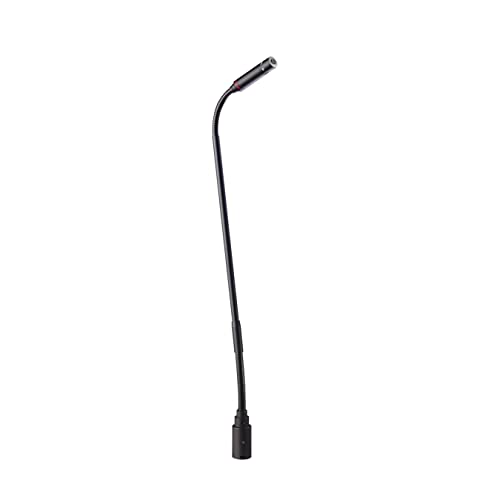
Audio-Technica PRO49QL Propoint Gooseneck Microphone
$129.00An affordable quick-mount gooseneck that fixes to the lectern and unplugs from its base, which is a genuine upgrade over a handheld on a stand. It cannot be knocked out of position, and it stays where the last speaker did not leave it.
Best for: A first proper lectern microphone
Check price on AmazonWho should not buy this tier: Positions where the stand itself is the problem, such as a crowded chancel or a horn section.
Large room or broadcast: get the stands out of shot
On a streamed platform, stands are visual clutter and they are also inconsistent: a slightly different position every week means a slightly different channel every week. Large churches solve both by moving positions off stands entirely, onto installed goosenecks, hanging capsules and clip-on microphones that travel with the player. Fewer stands also means fewer cables across a platform, which is the other weekly source of failure.

Shure MX418/C Cardioid Condenser Gooseneck Microphone
$296.00 Specs and sizingAn 18 inch gooseneck with the preamp in the base and a proper shock mount, so page turns and lectern knocks do not arrive in the house. Installed once and never adjusted, which is exactly what a broadcast channel wants.
Best for: A fixed pulpit or lectern where the preacher stays put
Check price on Amazon
Audio-Technica U853R Cardioid Condenser Hanging Microphone 250 Ohms, Low Profile Design
$229.00A low profile hanging cardioid that covers a section of singers or players from above, removing a row of stands from the chancel. Hanging capsules are set once and stay correct, which a stand never does on a volunteer rota.
Best for: Choir coverage where microphones must not be visible from the pews
Check price on Amazon
Audio-Technica PRO 35 Cardioid Condenser Clip-on Instrument Microphone
$159.00A clip-on condenser that mounts to a horn bell, a drum rim or a music stand, putting the capsule inches from the source and removing a stand from the platform. It also needs less gain than a stand-mounted capsule three feet away.
Best for: Brass, saxophone and percussion in a crowded platform
Check price on AmazonWho should not buy this tier: Do not buy this tier for a portable church. Installed goosenecks and hanging capsules assume a building that stays the same from week to week, and a team setting up in a school hall needs stands that fold into a bag, not hardware bolted to furniture that belongs to somebody else.
The stands and alternatives compared
| Model | Price | Material |
|---|---|---|
| On-Stage MS7701B Euro Boom Mic Stand (For Vocal and Instrument Microphones | $31.95 | Steel tripod, euro boom |
| On-Stage MS9701B+ Heavy-Duty Euro-Boom Mic Stand (Setup for Vocal and Instrument Microphones, Adjustable Height, Portable, Folding, Tripod Base, Rubber Feet, Steel and Zinc, 5/8″-27 Threading, Black) | $85.95 | Heavy-duty steel, euro boom |
| On-Stage MSP7706 Euro Boom 6 Mic Stands w/Travel Bag (For Vocal and Instrument Microphones, Height-Adjustable, Rugged, Lightweight, Steel, Standard Threading, Folding Tripod, Durable, Black) | $174.22 | Steel tripod, euro boom |
| Audio-Technica PRO49QL Propoint Gooseneck Microphone | $129.00 | - |
How we chose
We did not test these products in person and we never claim to. Picks are researched from manufacturer specification sheets and operator manuals, FCC rules where spectrum is involved, published standards, warranty terms, and the recurring themes in verified owner reviews. Every pick is matched to a real room size, seat count or input list rather than to a price bracket, and it is placed in the tier where its capability actually belongs. Where a product is wrong for most churches we say so on the page.
Sources
- Manufacturer published construction details for each stand listed
- Consensus of verified owner reviews across major retailers
Frequently asked questions
How many microphone stands does a church need?
Six covers a typical worship platform: three vocals, a guitar amplifier, a snare and a spare. Add two heavy duty stands if the drum kit is miked with overheads. Positions like the lectern, the choir and the horn section are better served by goosenecks, hanging capsules and clip-ons, which take three or four positions out of the stand count entirely.
What is the difference between a tripod and a round base stand?
A tripod is lighter, folds flat and costs less, and its legs stick out into walkways where people trip on them. A round base takes up a fixed circle of floor, does not fold, and is more stable when a singer leans on it. Churches with tight platforms and volunteers moving in low light often prefer round bases for that reason alone.
Why does our boom stand keep drooping?
Because the boom is extended too far for the clutch to hold the weight, which is leverage rather than a fault. A counterweighted heavy duty stand solves it, and so does shortening the boom and moving the base closer. Tightening the clutch harder eventually strips it, so the correct fix is a stand designed for that reach.
Should the lectern have a microphone stand?
No. A gooseneck mounted to the lectern stays where it was set, cannot be repositioned wrongly by whoever speaks next, and removes a stand from the walkway. A quick-mount version unplugs so the microphone can be locked away between services. A handheld on a stand at a lectern is the arrangement that produces the most complaints about level in a church.
How long do microphone stands last?
Ten years or more with ordinary care, and the parts that fail are the clutch and the plastic thread adapter rather than the stand itself. Both are cheap to replace. What kills stands early is being thrown into a van loose, which bends booms, and being over-tightened, which strips the clutch. A bag for a portable set prevents most of that.
Do we need a shock mount on church microphones?
On a lectern or a pulpit, yes, because knocks and page turns travel straight up a rigid mount into the house system. On handheld vocal microphones on stands, no: the capsule already has internal isolation and the singer holds or stands back from the stand. Gooseneck microphones sold for lecterns usually include the shock mount for exactly this reason.
Researched, not professional advice. This page is compiled from published manufacturer specifications, operator manuals, FCC rules, published standards and owner-review consensus, not hands-on testing. Sound system design, rigging loudspeakers overhead, and any electrical work are jobs for a qualified professional: have flown loudspeakers and their attachment points signed off by a structural engineer or a certified rigger, and have all wiring done by a licensed electrician to your local code. Wireless microphone rules change, so confirm the current FCC position before buying. As an Amazon Associate we earn from qualifying purchases.