Microphones
Handheld vs Lavalier vs Headset Microphones
Quick answer
Distance from the mouth decides this. A headworn capsule sits about an inch away and a lapel sits eight to ten inches away, which is why churches typically recover 6 to 10 dB of gain before feedback by switching a preacher from a lavalier to a headset. Handhelds win where the microphone is passed around.

Shure BLX24/SM58 Wireless Microphone System - 14-Hour Battery Life, 300 ft Range, UHF
$389.00 Specs and sizingThe most gain before feedback of any option when held properly, the capsule every guest already knows, and the only one that can be handed to somebody mid-service.
Best for: Worship vocals and a roaming handheld in a 100 to 500 seat room
Check price on Amazon
Shure BLX14/P31 Wireless Headset Microphone System - H10 Band
$379.00 Specs and sizingA cardioid headworn capsule at a fixed distance from the mouth, which is the most feedback-resistant hands-free option a church can buy at this price.
Best for: Preaching, especially in a live room or where the lapel keeps feeding back
Check price on AmazonThese are three tools for three jobs, and a church of any size ends up owning all three. The handheld is for anything passed between people: announcements, testimonies, a visiting speaker, a roaming question. The headset is for anybody preaching or leading who needs their hands. The lavalier exists because some people will not wear anything visible on their face, and that is a legitimate reason even though it costs you gain.
The physics is simple and it decides almost everything. Halving the distance from the mouth to the capsule raises the level of the voice without raising the level of the room, so every inch closer is gain before feedback you do not have to fight for. Work through the feedback guide if your room is already at its limit, and see the preaching pastor page for the full channel setup.
The three systems side by side
| Model | Price | Frequency band | Transmitter type | Microphone type | Polar pattern | Rated range | Battery life |
|---|---|---|---|---|---|---|---|
| Shure BLX24/SM58 Wireless Microphone System - 14-Hour Battery Life, 300 ft Range, UHF | $389.00 | UHF | Handheld | Dynamic | Cardioid | 300 ft | 14 hours |
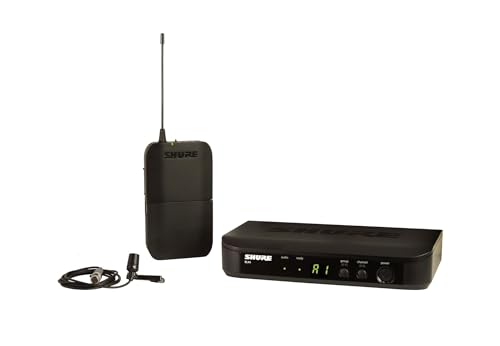 Shure BLX14/CVL Lavalier Audio System H9 Band (512–542 MHz) – BLX4 Receiver, BLX1 Bodypack & CVL Clip-On Lavalier Mic, Up to 14 Hr Battery, 300 ft Range Shure BLX14/CVL Lavalier Audio System H9 Band (512–542 MHz) – BLX4 Receiver, BLX1 Bodypack & CVL Clip-On Lavalier Mic, Up to 14 Hr Battery, 300 ft Range | $359.00 | UHF | Bodypack | Condenser lavalier | Omnidirectional | 300 ft | 14 hours |
| Shure BLX14/P31 Wireless Headset Microphone System - H10 Band | $379.00 | UHF | Bodypack | Condenser headworn | Cardioid | 300 ft | 14 hours |
What each position costs you in gain before feedback
Everything else follows from the first two columns. The rest of the table is what a church actually argues about in the meeting.
A headworn capsule sits about an inch from the mouth against eight to ten inches for a lapel, and churches typically recover 6 to 10 dB of gain before feedback by switching between them.
| Type | Mouth distance | Relative gain before feedback | Hands free | Visible on camera |
|---|---|---|---|---|
| Handheld, held correctly | 1 to 2 in | Highest | No | Yes, and the congregation expects it |
| Handheld on a stand | 6 to 12 in | Moderate, and it drops if they step back | Yes, if they stay put | Yes |
| Headworn or earset | Half an inch to 1 in | Highest, and hands free | Yes | Barely, and less in beige |
| Lavalier on a lapel | 8 to 10 in | Lowest of the four | Yes | Barely |
| Gooseneck at a lectern | 8 to 14 in | Low to moderate | Yes | Yes, and it looks formal |
Distances are typical working positions rather than specifications. The gain column is relative because the absolute figure depends on the room, the loudspeaker positions and how much the speaker moves, which is exactly why two churches get different results from the same microphone.
Choose a handheld for anything that gets passed around
A handheld is the only one of the three that can be handed to a person who has never used a microphone, and the only one that survives a rota of guest speakers, testimonies and children. A BLX24/SM58 at $389.00 gives a capsule every visiting musician recognises, and the same receiver takes the cheaper PG58 version at $329.00 if the budget is tight.
It is also the most forgiving choice acoustically. Held an inch from the mouth, a cardioid dynamic gives more gain before feedback than anything else on this page and rejects the wedge behind it. The cost is that somebody has to hold it correctly, which in practice means somebody has to be told to hold it correctly, repeatedly. See the roaming handheld page for how to brief people in ten seconds.
Where it fails: a worship leader who plays guitar, a preacher who gestures, and anyone who puts it down on the pulpit halfway through a sentence.
Choose a headset for preaching and a lavalier only when appearance rules
For anybody speaking for twenty minutes with their hands free, a headset is the correct answer and it is barely more expensive. The BLX14/P31 at $379.00 sits within about twenty dollars of the lavalier BLX14/CVL at $359.00, and the capsule stays a fixed distance from the mouth no matter which way the head turns. That fixed distance is the whole benefit: the level does not change when the preacher looks at the other side of the room.
A lavalier is the right choice in exactly one situation, which is when nothing may be visible on the face. It is a real constraint in some traditions and on some broadcasts, and it deserves a straight answer rather than a lecture. If that is your constraint, accept that you are working with the least gain of any option, put the capsule as high on the chest as the clothing allows, and expect to spend more time on ringing out the room.
Two upgrades are worth knowing about. The Countryman E6 directional earset at $511.13 is nearly invisible on camera and is the most feedback-resistant thing you can put on a preacher. And a church that already owns a BLX bodypack can convert a lapel system to headworn by buying the PGA31 capsule alone at $54.00, which is the cheapest real upgrade in church audio.
How we chose
We did not test these products in person and we never claim to. Picks are researched from manufacturer specification sheets and operator manuals, FCC rules where spectrum is involved, published standards, warranty terms, and the recurring themes in verified owner reviews. Every pick is matched to a real room size, seat count or input list rather than to a price bracket, and it is placed in the tier where its capability actually belongs. Where a product is wrong for most churches we say so on the page.
Sources
- Shure published BLX series specifications
- Countryman published E6 specifications
Frequently asked questions
Why does our lapel microphone feed back when the handheld does not?
Distance. The lapel sits eight to ten inches from the mouth and the handheld sits one, so the lapel channel needs far more gain to reach the same level, and all of that extra gain is applied to the room as well as to the voice. An omnidirectional lavalier also picks up the loudspeakers from every direction, which the cardioid handheld does not.
Can a headset microphone work for a worship leader who sings?
Yes, but choose a capsule built for singing rather than for speech. A performance headworn such as the Shure SM35 handles the level and the plosives of a singing voice without distorting, where a speech capsule can sound thin and overload on loud phrases. Our worship leader page covers the channel setup and the monitor implications.
Should the preaching microphone be its own dedicated channel?
Always, and it should keep the same channel every week. The preaching channel usually wants different equalisation, a gentle compressor and its own place in the scene recall, and moving it around the console is how churches end up with a sermon that sounds different every Sunday. Record it on your input list so nobody reassigns it.
How much does a headset really buy over a lavalier?
Churches typically recover 6 to 10 dB of usable gain before feedback when they switch, because the capsule moves from about nine inches to about one and the pattern is cardioid rather than omnidirectional. In a live room with hard surfaces that is often the difference between a sermon you can hear at the back and one you cannot.
What about a gooseneck on the pulpit instead of any of these?
A gooseneck is excellent when the speaker genuinely stays at the lectern, which some traditions guarantee and others do not. It needs no batteries, nothing worn and nothing charged, and a shock mounted model keeps page turns out of the house. It fails the moment the preacher walks away from it, so match it to the person rather than the furniture.
Researched, not professional advice. This page is compiled from published manufacturer specifications, operator manuals, FCC rules, published standards and owner-review consensus, not hands-on testing. Sound system design, rigging loudspeakers overhead, and any electrical work are jobs for a qualified professional: have flown loudspeakers and their attachment points signed off by a structural engineer or a certified rigger, and have all wiring done by a licensed electrician to your local code. Wireless microphone rules change, so confirm the current FCC position before buying. As an Amazon Associate we earn from qualifying purchases.