Microphones
Lavalier vs Headset Microphone for Preaching
Quick answer
Buy the headset. The BLX14/P31 at $379.00 and the BLX14/CVL at $359.00 are about twenty dollars apart, and the headset is worth 6 to 10 dB of gain before feedback. Choose the lavalier only when nothing may be visible on the face.
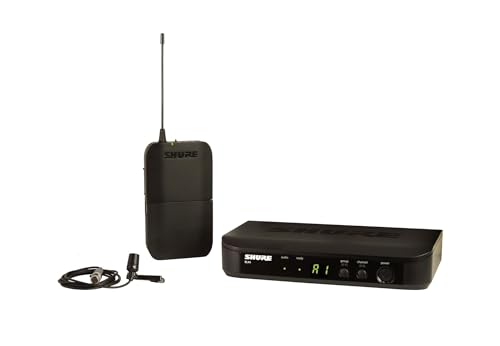
Shure BLX14/CVL Lavalier Audio System H9 Band (512–542 MHz) – BLX4 Receiver, BLX1 Bodypack & CVL Clip-On Lavalier Mic, Up to 14 Hr Battery, 300 ft Range
$359.00 Specs and sizingThe standard church lapel system. An omnidirectional capsule is forgiving of head movement and unforgiving of feedback, which is the whole trade.
Best for: A preacher who wants nothing visible on the face
Check price on Amazon
Shure BLX14/P31 Wireless Headset Microphone System - H10 Band
$379.00 Specs and sizingThe same receiver and bodypack with a cardioid headworn capsule that stays a fixed distance from the mouth, worth roughly 6 to 10 dB of usable gain.
Best for: Preaching, especially in a live room or where the lapel keeps feeding back
Check price on AmazonThese two systems share a receiver, a bodypack, a battery and a price bracket. The only difference is where the capsule sits, and that difference is worth more than anything else you could spend twenty dollars on in a church sound system. Buy the headset unless somebody with authority has told you that nothing may appear on the preacher's face.
That constraint is real in some traditions and on some broadcasts, so this page takes it seriously rather than pretending it does not exist. If you are buying the lapel, there are specific things to do that recover part of the gap. Start with how to mic a pulpit and the gain structure guide.
Side by side
| Model | Price | Frequency band | Transmitter type | Microphone type | Polar pattern | Rated range | Battery life |
|---|---|---|---|---|---|---|---|
| Shure BLX14/CVL Lavalier Audio System H9 Band (512–542 MHz) – BLX4 Receiver, BLX1 Bodypack & CVL Clip-On Lavalier Mic, Up to 14 Hr Battery, 300 ft Range | $359.00 | UHF | Bodypack | Condenser lavalier | Omnidirectional | 300 ft | 14 hours |
| Shure BLX14/P31 Wireless Headset Microphone System - H10 Band | $379.00 | UHF | Bodypack | Condenser headworn | Cardioid | 300 ft | 14 hours |
What the twenty dollars between them actually buys
Two systems, one receiver design, one bodypack, and one decision that changes how the sermon sounds at the back of the room.
The headset costs about twenty dollars more and moves the capsule from roughly nine inches to about one inch from the mouth, which is worth 6 to 10 dB of gain before feedback.
| Property | BLX14/CVL lavalier | BLX14/P31 headset | Effect in the room |
|---|---|---|---|
| Price | $359.00 | $379.00 | About twenty dollars |
| Capsule position | Chest, 8 to 10 in | Corner of the mouth, about 1 in | The entire argument |
| Polar pattern | Omnidirectional | Cardioid | The headset rejects the loudspeakers behind it |
| Level when the head turns | Drops noticeably | Unchanged | A preacher who addresses both sides |
| Clothing noise | Yes, and jewellery too | None | Rustle during a quiet moment |
| Visibility | Barely visible | Visible but slim | The only column where the lapel wins |
| Usable gain before feedback | Lowest of any option | Highest hands free option | 6 to 10 dB |
Both systems use the same BLX4 receiver and BLX1 bodypack, so range, battery life and frequency coordination are identical. The capsule is the only variable.
Choose the headset for every room that has ever fed back
A cardioid capsule an inch from the mouth is the most feedback-resistant hands-free microphone a church can buy at this price, and it solves the two complaints churches actually make about preaching audio. The first is that the sermon is too quiet at the back, which is a gain problem. The second is that the level rises and falls as the preacher turns, which is a distance problem. The headset fixes both at once.
It matters most in the rooms that need the most help: high ceilings, hard plaster, a stone floor and loudspeakers that have to be loud enough to reach the back. If your reverberation time is over about two seconds, a lapel is fighting the building. See reverberation time for churches.
Two step-ups are worth pricing. The Countryman E6 directional earset at $511.13 is nearly invisible on camera and directional, which is the combination televised platforms use. The Sennheiser EW-D ME3 set at $669.86 puts a cardioid headworn capsule on a digital system with no gain control to set wrong.
Choose the lavalier when appearance is genuinely non-negotiable
If the decision has been made that nothing may be visible on the face, take it seriously and get the most out of the lapel. Mount the capsule as high on the chest as the clothing allows, ideally on the sternum rather than off to one side, so the level does not drop every time the head turns away from it. Use the supplied clip and dress the cable so it cannot rub against a jacket.
Then fix the room rather than the microphone. Move the loudspeakers so the preacher is behind them, not in front, ring out the system properly, and accept that a feedback suppressor such as the dbx AFS2 at $485.00 buys a few decibels of headroom and does not fix a microphone standing in front of a speaker. That distinction is the most useful thing on this page.
Keep a spare. A spare CVL capsule at $54.00 is the single cheapest piece of insurance in church audio, because a dead lavalier capsule is the most common wireless failure there is. And if the appearance rule is ever relaxed, converting to headworn costs $54.00 for the PGA31 capsule on the bodypack you already own.
Sources
- Shure published BLX14 series specifications
- Countryman published E6 directional specifications
Frequently asked questions
Will a headset microphone pick up breathing and mouth noise?
Only if it is positioned in front of the mouth rather than at the corner of it. The correct position is at the side of the cheek, roughly level with the corner of the lips and about an inch out, which keeps the capsule out of the breath stream. Fitted that way, breathing is not audible and plosives are far milder than on a handheld.
Can one bodypack serve both a lapel and a headset?
Yes, and this is the cheapest flexibility in church audio. The Shure BLX1 bodypack takes the CVL lavalier capsule or the PGA31 headworn capsule on the same connector, so a church can own both and fit whichever the speaker prefers that week. Keep each capsule in its own bag so the cables do not tangle.
Why does our lapel sound thin and boxy compared to the handheld?
A lapel on the chest is hearing a voice reflected off the sternum and filtered by clothing, not the voice as it leaves the mouth. Most of that is fixed with a gentle presence lift around 3 to 5 kHz and a high pass filter to remove the chest boom, which is a channel setup job rather than a reason to buy something else.
Do we need a feedback eliminator if we use a lapel?
It will help, and it is worth saying plainly what it does. A feedback suppressor finds a ringing frequency and notches it, which buys a few decibels of headroom. It does not fix a microphone pointed at a loudspeaker, and it cannot recover the 6 to 10 dB a headset would have given you for twenty dollars.
Is a wired lavalier ever the right answer?
Rarely, because the whole point of a lapel is that the person is not tethered. If the speaker genuinely stays in one place, a gooseneck at the lectern gives better sound than any lavalier, needs no batteries and cannot be left switched off. Our pulpit and lectern roundup covers the models worth considering.
Researched, not professional advice. This page is compiled from published manufacturer specifications, operator manuals, FCC rules, published standards and owner-review consensus, not hands-on testing. Sound system design, rigging loudspeakers overhead, and any electrical work are jobs for a qualified professional: have flown loudspeakers and their attachment points signed off by a structural engineer or a certified rigger, and have all wiring done by a licensed electrician to your local code. Wireless microphone rules change, so confirm the current FCC position before buying. As an Amazon Associate we earn from qualifying purchases.