System design
AV Budget Allocator
Quick answer
Loudspeakers and their amplification should take about 44 percent of a church audio budget, the console about 16 percent, wireless 15 percent, monitoring 9 percent, wired microphones 6 percent and infrastructure 10 percent. On a $20,000 budget that is $8,800 on speakers and amps.
These proportions are not a survey result. They come from the way the decisions constrain each other: loudspeakers set the ceiling on what the rest of the system can achieve, so they get the largest share and they get bought first. A beautiful console feeding inadequate speakers is the single most common way a church wastes a building fund, and it happens because the console is the part everybody can see.
Enter your total below. The split is the starting point for a committee conversation, not a rule, and the notes flag where your particular situation should push it around.
AV budget allocator
Loudspeakers and amplification
Gear in the price bands your budget supports
Top matches update when you change your numbers.

QSC CP12 12-Inch Compact Powered Loudspeaker
$649.99 Specs and sizingA lighter, shallower 1,000 watt cabinet with QSC processing. Thirty pounds is the number that matters for a volunteer team that sets up and tears down every week.
Best for: Portable church plants and school or rented venues
Check price on Amazon
Electro-Voice ZLX-12P-G2 12in. 2-Way Powered Loudspeaker with Bluetooth
$549.00 Specs and sizingElectro-Voice horn design and a 1,000 watt amplifier at the bottom of the serious-speaker price range, with app control and a proper 90 by 60 waveguide rather than a nominal one.
Best for: The first real upgrade from consumer or unbranded PA speakers
Check price on Amazon
QSC K12.2 Active 12" Powered 2000 Watt Loudspeaker
$899.99 Specs and sizingThe default answer for a church main speaker, and the one most rental companies own. A 2,000 watt class D amplifier, a 75 degree conical pattern that throws evenly to the back, and preset voicings that get a volunteer close on the first try.
Best for: A 150 to 400 seat sanctuary on stands or flown, for almost any service style
Check price on Amazon
JBL Professional PRX912 Next-Generation 12-Inch Powered Portable 2-Way Loudspeaker with DSP, 12-band parametric EQ, and Built-in Effects
$999.00 Specs and sizingA 2,000 watt class D cabinet with a full DSP suite and fly points, built to be installed and left alone rather than moved weekly.
Best for: A permanent flown install in a 300 to 600 seat room
Check price on Amazon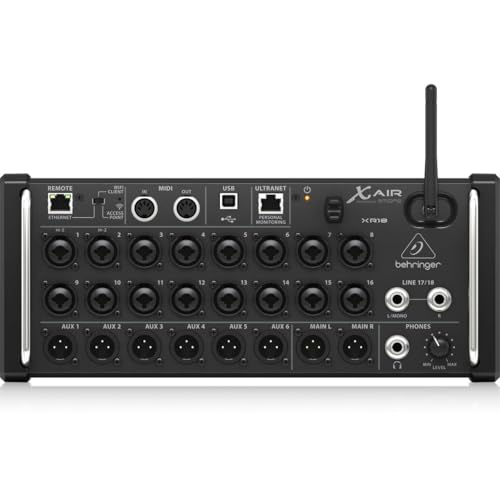
Behringer X AIR XR18 18-Channel, 12-Bus Digital Mixer for iPad/Android Tablets with 16 Programmable Midas Preamps, Integrated Wifi Module and Multi-Channel USB Audio Interface
$509.00 Specs and sizingSixteen programmable Midas preamps and six aux sends for monitors, controlled entirely from a tablet, with 18 track USB recording built in. No console surface at all, which is the trade.
Best for: A church plant or a 100 to 250 seat room where the mixer can stand in the congregation
Check price on Amazon
Allen & Heath CQ-18T Digital Mixer with 7" Touchscreen WiFi and Bluetooth Connectivity
$1,199.99 Specs and sizingSixteen preamps, a seven inch touchscreen on the unit itself and built-in Wi-Fi. The onboard screen matters more than it sounds: the service still runs when a volunteer forgets the tablet.
Best for: A 150 to 400 seat room that wants digital recall without depending on a tablet
Check price on Amazon
Behringer 32 40-Input 25-Bus Digital Mixing Console, Black (X32)
$1,999.00 Specs and sizingThe console most churches actually end up with, and for good reason: 32 Midas-designed preamps, 25 motorized faders, full scene recall and an AES50 port that carries a 32 channel stage box on one cable.
Best for: A 250 to 800 seat room with a band, where volunteers rotate weekly and scene recall saves the service
Check price on Amazon
Allen & Heath SQ-5 Digital Mixer, 48 Input Channels, 7" Capacitive Touchscreen, Automatic Mic Mixing, 32×32 USB Audio Interface
$3,999.00 Specs and sizingA 96 kHz console with under a millisecond of latency, 48 input channels and 36 buses, plus an automatic microphone mixer that is genuinely useful for a panel or a reading rota.
Best for: A 500 seat and up sanctuary with a paid or highly skilled operator, or a multi-campus standard
Check price on Amazon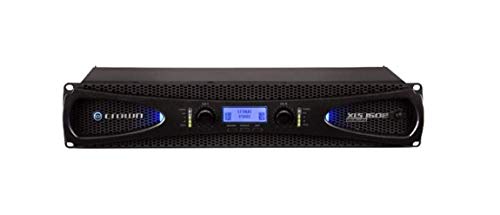
Crown XLS1502 2-Channel Class D DriveCore Professional Power Amplifier with DSP, Band Pass Filters & Peak Limiters. XLR/RCA Inputs, 525W at 4 Ohm, PureBand Crossover System. Black
$579.99 Specs and sizingThe amplifier most often specified for a pair of passive church mains: enough headroom for a band, onboard crossover and limiting, and one rack unit.
Best for: A 150 to 400 seat room with passive mains and no separate DSP
Check price on Amazon
Behringer NX3000D Ultra-Lightweight 3000 Watt Class-D Power Amplifier with DSP Control and SmartSense Loudspeaker Impedance Compensation
$339.00 Specs and sizingAdds onboard DSP with crossovers, delay and EQ to the NX platform, which covers the processing a simple two-way system needs.
Best for: A passive main and subwoofer system with no separate loudspeaker processor
Check price on Amazon
Shure BLX24/SM58 Wireless Microphone System - 14-Hour Battery Life, 300 ft Range, UHF
$389.00 Specs and sizingThe SM58 capsule on a BLX transmitter, which is the wireless most churches settle on. Up to twelve compatible channels per band, and the capsule is the one every singer already knows how to use.
Best for: Worship vocals and a roaming handheld in a 100 to 500 seat room
Check price on Amazon
Shure SLXD24/SM58 Digital Wireless Microphone System - Includes SLXD2 Handheld Transmitter with SM58 Vocal Mic Capsule and SLXD4 Single Channel Rack Mount Receiver
$769.00 Specs and sizingDigital transmission with 24 bit audio and far tighter channel spacing than analog, so many more systems fit in the shrinking legal spectrum. That density is the reason to pay the difference.
Best for: Churches running more than about six wireless channels at once
Check price on Amazon
Behringer Powerplay P16-HQ 16-Channel Digital Personal Monitoring Mixer
$203.99The current revision of the P16-M with a better headphone amplifier, which is the part of a personal mixer musicians actually complain about.
Best for: A new personal-mixer system, over the older P16-M
Check price on Amazon
Shure PSM300 P3TRA215CL Pro Wireless in-Ear Personal Monitoring System with SE215-CL Earphones
$989.00 Specs and sizingThe same system with SE215 earphones, whose roughly 37 dB of isolation is the actual point of in-ears: it lets the whole platform get quieter.
Best for: A musician who needs real isolation, especially the drummer
Check price on Amazon
Furman PL-8C Classic 15A Power Conditioner, 9 Outlets & LED Rack Lights
$254.97Nine filtered outlets with series mode surge protection and pull-out rack lights. The lights matter: a volunteer patching in a dark booth is how cables get pulled out.
Best for: The top of every equipment rack
Check price on Amazon
Gator Cases Pro Series 12U Rack Case, Standard 19" Depth (G-PRO-12U-19)
$329.99Twelve rack units at standard depth. Leave two of them empty and one vented above each amplifier: a rack packed solid is the reason amplifiers fail early.
Best for: A permanent equipment rack in the booth or a closet
Check price on AmazonHow should a church AV budget be split?
The seven lines that appear on a real quote, at five common budget levels. Find your total and read down.
On a $20,000 church audio budget, loudspeakers take about $6,400 and amplification and processing about $2,400, which together is roughly 44 percent of the total.
| Budget line | Share | $5,000 | $10,000 | $20,000 | $40,000 | $80,000 |
|---|---|---|---|---|---|---|
| Loudspeakers and subwoofers | 32% | $1,600 | $3,200 | $6,400 | $12,800 | $25,600 |
| Amplification and processing | 12% | $600 | $1,200 | $2,400 | $4,800 | $9,600 |
| Mixing console | 16% | $800 | $1,600 | $3,200 | $6,400 | $12,800 |
| Wireless microphones and antennas | 15% | $750 | $1,500 | $3,000 | $6,000 | $12,000 |
| Wired microphones and direct boxes | 6% | $300 | $600 | $1,200 | $2,400 | $4,800 |
| Monitoring, wedges or in-ears | 9% | $450 | $900 | $1,800 | $3,600 | $7,200 |
| Cable, racks, power and rigging | 10% | $500 | $1,000 | $2,000 | $4,000 | $8,000 |
These are equipment proportions. Installation labor, rigging, conduit, electrical work and permits sit on top and commonly add 30 to 60 percent on an installed system.
What order should we buy in?
The order matters more than the pace, because buying out of sequence means living with the wrong thing for years. This is the sequence that leaves the fewest regrets.
Buy the room first if it needs treating, then loudspeakers and amplification, then the console, and leave monitoring and infrastructure until last only if you have to.
| Priority | Share of budget | Why it sits here |
|---|---|---|
| 1. Acoustic treatment, if the room needs it | Before anything | No equipment purchase fixes a room that rings. Measure first. |
| 2. Loudspeakers and amplification | About 44% | They set the ceiling on everything else and are hardest to change later. |
| 3. Mixing console and stage box | About 16% | Channel count decides how many inputs you can ever have. |
| 4. Wired microphones and direct boxes | About 6% | Cheap, durable, and the thing most often missing. |
| 5. Wireless microphones | About 15% | Only for positions that genuinely cannot be wired. |
| 6. Monitoring | About 9% | Easy to postpone, expensive to skip: stage volume is a house mix problem. |
| 7. Cable, racks, power | About 10% | Always under-budgeted, never optional. |
The sequence most churches accidentally choose is console first, loudspeakers later, which means years of the wrong coverage attached to a desk that cannot fix it.
When to move the proportions
Push toward loudspeakers if the room is large, deep, or has a balcony. Coverage problems are geometry problems and no console solves them.
Push toward the console if the input list is genuinely large, if several people mix on rotation and need scene recall, or if the church records or streams and wants a separate broadcast mix.
Push toward wireless if the platform moves constantly, drama is part of the service, or there are several speaking positions. Push away from it if positions could simply be wired: a Shure SM58 Pro XLR Dynamic Vocal Microphone at $109.00 has no battery, no frequency and nothing to coordinate.
Push toward monitoring if the band is loud on the platform, which is far more common than churches realise. The house mix cannot win against stage volume, so a personal mixer system like the Behringer Powerplay P16-HQ 16-Channel Digital Personal Monitoring Mixer often does more for what the congregation hears than an equivalent spend on speakers.
Never push away from infrastructure. Cable, racks and power conditioning are the least interesting line and the reason a system either lasts a decade or becomes unreliable in year two.
Frequently asked questions
How should a church split its AV budget?
Roughly 32 percent on loudspeakers, 12 percent on amplification and processing, 16 percent on the console, 15 percent on wireless, 6 percent on wired microphones, 9 percent on monitoring and 10 percent on cable, racks and power. Loudspeakers and amplification together take about 44 percent because they set the ceiling on what everything else can achieve.
What should a church buy first?
Treat the room first if it needs it, because no equipment purchase fixes a sanctuary that rings. Then loudspeakers and amplification, because they set the ceiling and are the hardest to change later, especially if they are flown. The console comes third. Buying the console first and the speakers later is the sequence most churches accidentally choose and regret.
Is it worth spending more on the mixing console?
Only after the loudspeakers are right. A console cannot create coverage that the speakers do not provide, and a large desk feeding inadequate speakers is the most visible way to waste a building fund. Where extra console spend does pay is scene recall on a rotating volunteer team, and enough channels and buses to carry the input list plus a separate broadcast mix.
How much should we set aside for installation?
For an installed system with flown loudspeakers, conduit and dedicated circuits, budget 30 to 60 percent of the equipment cost on top, toward the upper end in an older building or one with difficult access. A system on stands in a room that already has adequate power can cost almost nothing to install, which is a genuine financial advantage of staying semi-portable.
Can we skip monitoring to afford better speakers?
It is the most tempting cut and often the wrong one. If the band is loud on the platform, the congregation hears the platform as much as the loudspeakers, and better speakers make that worse rather than better. A wired personal mixer system is inexpensive, uses no radio spectrum and is frequently what lets the whole room get quieter and clearer.
Should video come out of the same budget?
Plan them together and budget them separately. Planning together means camera positions, screen position and loudspeaker positions do not fight each other, which is expensive to fix afterwards. Budgeting separately means the audio, which is the harder problem and the one a congregation notices first, does not get squeezed by a camera line item.
Researched, not professional advice. This page is compiled from published manufacturer specifications, operator manuals, FCC rules, published standards and owner-review consensus, not hands-on testing. Sound system design, rigging loudspeakers overhead, and any electrical work are jobs for a qualified professional: have flown loudspeakers and their attachment points signed off by a structural engineer or a certified rigger, and have all wiring done by a licensed electrician to your local code. Wireless microphone rules change, so confirm the current FCC position before buying. As an Amazon Associate we earn from qualifying purchases.