Budget gifts
Gifts Under $100 for Church Tech
Quick answer
Under $100, the best gift for a church tech volunteer is a pair of closed-back studio headphones at about $85, because the booth pair is shared and worn out. A capture card at about $90 is the best video pick, and a passive direct box at $79 never fails.
One hundred dollars is the band where church AV gifts stop being spares and start being possessions. It covers the headphones a volunteer will keep for a decade, the capture card that upgrades a whole livestream, and the direct box that still works when somebody has switched phantom power off.
It is also the band with the widest choice, which makes it the easiest to get wrong. The organising question is whether the recipient runs sound, runs video, or does both, because the best pick differs sharply. If your budget is tighter, see gifts under $50.
On this page
Which gift suits which volunteer?
The under $100 band rewards matching the gift to the role. A capture card is transformative for a media volunteer and useless to someone who only mixes sound, and the reverse is true of a direct box.
For a sound volunteer the best pick under $100 is closed-back headphones at about $85, while for a media volunteer it is a capture card at about $90.
| Role | Best pick | Price | Why it suits them |
|---|---|---|---|
| Sound volunteer | Closed-back studio headphones | About $85 | The booth pair is shared, worn and never where it should be. |
| Media and livestream volunteer | Capture card | About $90 | Turns any HDMI camera into a proper stream source. |
| Livestream audio | USB audio interface | About $87 | Replaces camera microphone audio with a clean console feed. |
| Musician who also serves | Personal in-ear amplifier | About $56 | A personal mix with a limiter, usable on any system. |
| Anyone who troubleshoots | Passive direct box | About $79 | No power needed, so it cannot fail when phantom is off. |
| Kids ministry and drama | Headworn condenser microphone | About $54 | Headsets survive children. Handhelds do not survive the drop. |
| Vocalist on the platform | Dynamic vocal microphone | About $99 | A hypercardioid capsule for a loud platform. |
| The room itself | Acoustic panels | About $59 | Honest about scale: solves flutter echo, not room decay. |
The one item on this list to be careful with is the acoustic panel pack. Two panels will address a specific slap echo on a rear wall and will not measurably change a sanctuary’s reverberation time, which needs treatment across 8 to 15 percent of the room surface. Give it as a targeted fix, not as a room treatment.
Under $40: spares and mounts
The bottom of this band overlaps with the under $50 guide, and these items remain the most used things in any booth. Give several rather than one.

Amazon Basics XLR Microphone Cable for Speaker or PA System, Recording Studio, All Copper Conductors, 6MM PVC Jacket, 50 Foot
$19.73A known-good balanced cable removes one unknown from every fault-finding session. Cheap enough to give several at once.
Best for: Any volunteer.
Check price on Amazon
Cable Matters 10Gbps Snagless Shielded Cat 6A Ethernet Cable, 100ft
$29.99Shielded Cat6A for a digital snake or a network camera, replacing office patch leads that drop out under lighting load.
Best for: Churches with digital snakes or network video.
Check price on Amazon
On-Stage MS7701B Euro Boom Mic Stand (For Vocal and Instrument Microphones
$31.95A boom stand churches are perpetually one short of, discovered minutes before a service.
Best for: Churches with regular guests.
Check price on Amazon
Behringer P2 Ultra-Compact Personal In-Ear Monitor Amplifier
$39.90A pocket in-ear amplifier that turns any spare aux send into a personal monitor mix.
Best for: Volunteers who also play or sing.
Check price on AmazonWho should not buy this tier: A well stocked booth with recent cabling, where these become spares rather than upgrades.
$40 to $70: microphones, monitoring and a bit of treatment
This band opens up small microphones and personal monitoring. It is also where the first genuinely useful acoustic items appear, with the important caveat that two panels fix a specific reflection rather than a whole room.

Behringer Ultra-DI DI100 1-Channel Active Microphone/Instrument Direct Box
$45.90An active direct box that converts a laptop or phone output to a balanced feed at the correct level, which no passive adapter achieves.
Best for: Churches with a different playback device every week.
Check price on Amazon
Shure Centraverse CVL Lavalier Condenser Microphone
$54.00An omnidirectional condenser lavalier for seated interviews and panel discussions, where feedback is not the primary concern and discretion is.
Best for: Churches recording interviews or seated teaching.
Check price on Amazon
Shure PGA31-TQG Wireless Headworn Condenser Microphone
$54.00A headworn condenser for drama and kids ministry. Headsets stay in position and survive being worn by children, which handhelds emphatically do not.
Best for: Kids ministry and drama teams.
Check price on Amazon
Behringer POWERPLAY P1 Personal In-Ear Monitor Amplifier
$55.90A personal in-ear amplifier with a built-in limiter, which catches a dropped microphone or feedback squeal before it arrives at full level in a sealed earphone.
Best for: Anyone using wired in-ear monitoring.
Check price on Amazon
Auralex Studiofoam Wedge Panels, 2-Inch by 24-Inch by 24-Inch, Pack of 2
$58.99Two foam panels to kill a specific flutter echo or slap off a hard rear wall. Honest scale: this addresses one reflection, not a sanctuary’s reverberation time.
Best for: A booth or small room with an obvious slap echo.
Check price on Amazon
AtlasIED 8" Dual Cone in-Ceiling Speaker with 25V/70V 5-Watt Transformer and 62-8 Baffle with Volume Control
$61.74A ceiling loudspeaker with a 70 volt transformer for an overflow space, corridor or nursery that currently has no audio at all.
Best for: Churches extending paging into an untreated space.
Check price on AmazonWho should not buy this tier: A church whose platform microphones and monitoring are already complete and standardised.
$70 to $100: the headphones, the capture card and the interface
The top of this band contains the three purchases that most improve a volunteer’s week. Headphones for the person mixing, a capture card for the person streaming, and an audio interface for the feed between them. Each is the best item available at its price in church AV.

Sennheiser HD 280 Pro Headphone
$85.49Strong isolation and a flat response, with replaceable parts so they last. The right tool for checking a soloed channel in a booth that sits inside the room being mixed.
Best for: Any sound volunteer.
Check price on Amazon
Elgato Cam Link 4K Capture Card for DSLR, Camcorder, Action Cam, USB-A Connector, USB 3.0 Hardware Interface, Black, Windows 10/11 and macOS
$89.99Presents any camera with a clean HDMI output to streaming software as a webcam. The single step that moves a church from a laptop camera to a real one.
Best for: Churches streaming from a laptop with an unused camera.
Check price on Amazon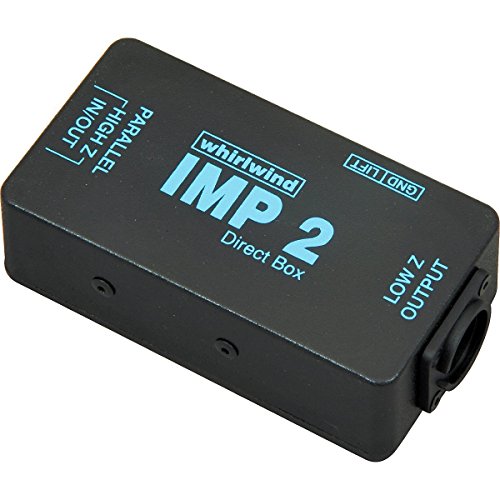
Whirlwind IMP 2 1-Channel Passive Instrument Direct Box
$79.00A passive transformer direct box with no power requirement, so it works when phantom is off and keeps working for decades.
Best for: A volunteer who values reliability above all.
Check price on Amazon
Behringer UMC202HD Audiophile 2x2, 24-Bit/192 kHz USB Audio Interface with Midas Mic Preamplifiers
$86.90Takes a balanced console feed into the streaming computer, replacing camera microphone audio, which is the commonest reason a church stream sounds distant and hollow.
Best for: Churches whose stream audio comes from a camera.
Check price on Amazon
Behringer UMC204HD Audiophile 2x4, 24-Bit/192 kHz USB Audio/MIDI Interface with Midas Mic Preamplifiers
$97.98The same idea with extra outputs, giving the volunteer a way to hear what is actually going out rather than trusting it.
Best for: A volunteer who wants to monitor the stream mix.
Check price on Amazon
On-Stage MS9701B+ Heavy-Duty Euro-Boom Mic Stand (Setup for Vocal and Instrument Microphones, Adjustable Height, Portable, Folding, Tripod Base, Rubber Feet, Steel and Zinc, 5/8″-27 Threading, Black)
$85.95A heavy duty boom that does not droop through the second song under the weight of a microphone and clip. A permanent fix to a small weekly irritation.
Best for: Churches tired of adjusting sagging booms.
Check price on Amazon
Audix OM2 Dynamic Vocal Microphone
$99.00A hypercardioid dynamic vocal microphone with tighter rejection than the usual default, which is worth real gain before feedback on a loud platform.
Best for: Backing vocalists on a contemporary platform.
Check price on AmazonWho should not buy this tier: A church that already owns studio headphones for every volunteer and a dedicated streaming setup with a console audio feed, where these duplicate existing equipment. Also be careful with the capture card if the church has no camera with a clean HDMI output, since some consumer cameras overlay menus on their HDMI feed and cannot be used this way.
Why headphones are the safest $100 in church AV
Almost every church has one pair of headphones in the booth. They are shared by four volunteers, they live under the console, the left side crackles, and everyone has learned to work around it. Replacing them is on a list somewhere and never reaches the top, because headphones are not exciting and the system technically works without them.
That makes them the ideal gift. It is an item the volunteer uses every single week, that they would never buy themselves out of church funds, and that meaningfully improves their ability to do the job. Soloing a channel to find a buzz is impossible on a crackling headphone, and a volunteer who cannot trust their monitoring cannot diagnose anything.
Closed-back is the only correct choice. A church booth sits inside the room being mixed, often within thirty feet of the loudspeakers. Open-back headphones leak outward and let the house sound in, which defeats the entire purpose. Every recommendation on this page is closed-back for that reason.
Isolation matters more than fidelity here. A volunteer is not evaluating a mastering chain, they are trying to determine whether channel 12 has a hum. What they need is enough isolation to hear only what they soloed, and a response flat enough not to hide a problem. Both of those are available well under $100, which is why this band is such good value.
What to avoid in this band
Under $100 is wide enough to contain some genuinely poor choices, mostly things that look like professional equipment and are not.
The commonest waste under $100 is a wireless microphone system, which at this price is either poor quality or operating in a band that may not be legal.
| Avoid | Why | Buy instead |
|---|---|---|
| A wireless microphone system | At this price the quality is poor and the frequency band may not be legal or may clash with the church plan. | A wired dynamic microphone. |
| Open-back headphones | They leak sound and let the room in, which is the opposite of a booth requirement. | Closed-back studio headphones. |
| A large pack of thin acoustic foam | Thin foam does almost nothing below 250 Hz and will not change reverberation time. | Two panels for a specific slap echo, or save toward proper treatment. |
| A cheap condenser for a loud source | Condensers distort at the capsule on guitar cabinets and snare drums, which no gain adjustment fixes. | A dynamic instrument microphone. |
| Long passive HDMI cable | Over about 25 feet it fails completely and intermittently. | A shielded network cable and a proper extender path. |
| A tripod with a photo head | A photo head cannot pan smoothly and will ruin every camera move. | A capture card, which improves the camera they have. |
The pattern is that items which look professional at this price usually achieved it by compromising the one property that mattered. Wireless compromises the band, cheap condensers compromise maximum level, and thin foam compromises thickness, which is the only thing that determines low frequency absorption.
How we chose
We did not test these products in person and we never claim to. Picks are researched from manufacturer specification sheets and operator manuals, FCC rules where spectrum is involved, published standards, warranty terms, and the recurring themes in verified owner reviews. Every pick is matched to a real room size, seat count or input list rather than to a price bracket, and it is placed in the tier where its capability actually belongs. Where a product is wrong for most churches we say so on the page.
Sources
- Current catalog pricing and manufacturer specifications for every product recommended
- Absorption coefficient and panel quantity figures referenced from this site’s absorption coefficient and RT60 reference charts
- Polar pattern and gain before feedback figures from this site’s microphone polar pattern chart
Frequently asked questions
What is the best church tech gift under $100?
Closed-back studio headphones at about $85 for a sound volunteer, or a capture card at about $90 for a media volunteer. The headphones replace a shared booth pair that usually crackles, and the capture card turns any camera with a clean HDMI output into a proper livestream source rather than a laptop webcam.
Should church booth headphones be open or closed back?
Closed-back, without exception. A church booth sits inside the room being mixed, often within thirty feet of the loudspeakers. Open-back headphones leak sound outward and let the house sound in, so a volunteer trying to solo a channel and find a buzz hears the room instead. Isolation matters more than fidelity for this job.
Can I buy a decent wireless microphone for under $100?
No. At that price the quality is poor and, more importantly, the frequency band may not be legal to operate in the United States or may clash with the church’s existing coordination plan. Wireless has to match what the church already runs. Buy a wired dynamic microphone instead, which works in any church with no compatibility question.
Will two acoustic panels improve our sanctuary?
They will address one specific slap echo off a hard surface and will not measurably change the room’s reverberation time. Changing a sanctuary needs treatment across roughly 8 to 15 percent of the surface area, which is dozens or hundreds of panels. Give a small pack as a targeted fix for a booth or a rear wall, not as room treatment.
What is the best microphone under $100?
A hypercardioid dynamic vocal microphone at about $99. The tighter polar pattern rejects more from the sides than the usual cardioid default, which is worth real gain before feedback on a loud platform. Avoid cheap condensers for loud sources such as guitar cabinets, because they distort at the capsule and no gain change fixes that.
Does a capture card work with any camera?
With any camera that outputs a clean HDMI signal, meaning one without menus and focus boxes overlaid. Most dedicated video cameras and many mirrorless cameras do this, but some consumer models always overlay their interface and cannot be used this way. Check the camera model before buying if you are giving it for a specific one.
Researched, not professional advice. This page is compiled from published manufacturer specifications, operator manuals, FCC rules, published standards and owner-review consensus, not hands-on testing. Sound system design, rigging loudspeakers overhead, and any electrical work are jobs for a qualified professional: have flown loudspeakers and their attachment points signed off by a structural engineer or a certified rigger, and have all wiring done by a licensed electrician to your local code. Wireless microphone rules change, so confirm the current FCC position before buying. As an Amazon Associate we earn from qualifying purchases.