Volunteers
Gifts for Church Media Volunteers
Quick answer
The best gift for a church media volunteer is a capture card, around $90 for the Elgato Cam Link 4K, because it turns any camera with an HDMI output into a proper livestream source. Under $50, a long shielded network cable solves more problems than it should.
Church media volunteers run projection, cameras and the livestream, usually from a laptop balanced on a shelf, and they inherit whatever hardware the church accumulated. The useful gifts in this area are the ones that remove a weak link: a proper capture path instead of a webcam, a shielded cable instead of an office patch lead, a mount instead of a stack of hymn books.
One honest note before the list. The single biggest improvement to most church streams is audio, not video, because viewers tolerate a soft picture and leave immediately over bad sound. That is why audio interfaces appear in a video gift guide. For the sound side of the booth, see gifts for church sound volunteers.
On this page
What each budget band fixes
Media gifts are unusually well matched to budget bands, because the weak links in a church stream fail in a predictable order: cables, then capture, then switching.
Around $90 buys the capture card that upgrades a church from a laptop webcam to a real camera, which is the largest single video improvement available at any price.
| Budget | What it buys | The weak link it removes |
|---|---|---|
| Under $40 | Shielded network cable, a projector mount or tray | Dropouts and a projector sitting on a stack of books. |
| $40 to $100 | A capture card, a basic audio interface | A laptop webcam and a camera microphone. |
| $100 to $250 | A better audio interface, monitoring headphones | Stream audio taken off a camera rather than the console. |
| $250 to $600 | A multi-camera switcher, a high end capture card | One fixed camera angle for the whole service. |
| Over $600 | A multi-input switcher with isolated recording | No way to re-edit the service afterwards. |
Work up this table in order rather than jumping to the bottom. A church with a switcher and three cameras but stream audio taken from a camera microphone has spent its money in the wrong sequence, and the result sounds worse than a single static camera with a clean console feed.
Under $50: cables and mounts
Unglamorous and disproportionately useful. Digital video and audio networking fail completely rather than gracefully, so a marginal cable produces a black screen or a dropped stream rather than a warning. Replacing the improvised parts of a media setup is a real gift.

Cable Matters 10Gbps Snagless Shielded Cat 6A Ethernet Cable, 100ft
$29.99A long shielded network cable for a camera, a network device or an encoder. Office grade unshielded leads drop out under lighting load, and a hundred feet of shielded Cat6A reaches almost anywhere in a sanctuary.
Best for: Any church running network video or a remote encoder.
Check price on Amazon
WALI Universal Projector Ceiling Wall Mount with Hidden Cable Management
$37.99A universal ceiling mount with cable management, which replaces the shelf, the stack of books or the upturned crate currently holding the projector at roughly the right angle.
Best for: Churches with a projector that is not properly mounted.
Check price on Amazon
VIVO Universal Ceiling Extending Projector Tray Mount, Height Adjustable Projection, No Hole Installation, Hidden Cable Routing, Black, MOUNT-VP08B
$39.99An adjustable extending tray for situations where a standard mount will not reach or the ceiling height is wrong. Solves the projector placement problems a mount alone cannot.
Best for: High ceilings and rooms where the projector sits well off centre.
Check price on Amazon
Amazon Basics XLR Microphone Cable for Speaker or PA System, Recording Studio, All Copper Conductors, 6MM PVC Jacket, 50 Foot
$19.73The cable that carries a proper console feed to the streaming position. Most church streams still take audio from a camera microphone, and this is the first component of fixing that.
Best for: Any church whose stream audio comes off a camera.
Check price on AmazonWho should not buy this tier: A church whose media setup is already properly installed, where these become spares rather than upgrades.
$50 to $250: capture and audio
This band contains the two changes that improve a church stream most. A capture card replaces the laptop webcam with a real camera, and an audio interface replaces the camera microphone with a clean feed from the console. Doing both costs less than most single camera upgrades and improves the result far more.

Elgato Cam Link 4K Capture Card for DSLR, Camcorder, Action Cam, USB-A Connector, USB 3.0 Hardware Interface, Black, Windows 10/11 and macOS
$89.99Takes a clean HDMI output from almost any camera and presents it to streaming software as a webcam, with no drivers to fight. The single highest impact purchase in church video.
Best for: A church streaming from a laptop with a camera it is not using properly.
Check price on Amazon
Behringer UMC202HD Audiophile 2x2, 24-Bit/192 kHz USB Audio Interface with Midas Mic Preamplifiers
$86.90A two input audio interface that takes a balanced feed from the console into the streaming computer. Replaces camera microphone audio, which is the commonest reason a church stream sounds distant and hollow.
Best for: A church whose stream audio is currently a camera microphone.
Check price on Amazon
Behringer UMC204HD Audiophile 2x4, 24-Bit/192 kHz USB Audio/MIDI Interface with Midas Mic Preamplifiers
$97.98The same idea with additional outputs, which gives the media volunteer a way to monitor what is going out rather than trusting it. Monitoring the stream feed is the step most churches skip.
Best for: A volunteer who wants to hear the stream mix, not just send it.
Check price on Amazon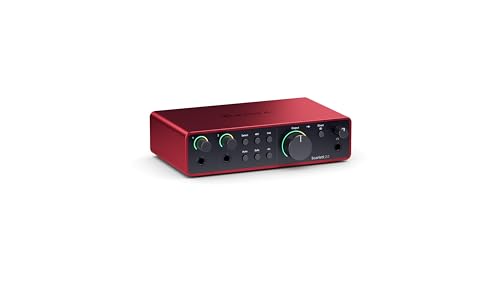
Focusrite Scarlett 2i2 4th Gen USB-C Audio Interface
$224.99 Specs and sizingBetter preamps and converters than the budget options, with reliable drivers and a long track record. Worth the difference if the stream is the main way people experience the church.
Best for: A church whose online audience is larger than its room.
Check price on Amazon
Sony MDR7506 Professional Large Diaphragm Headphone
$113.00A media volunteer needs to hear what is being broadcast, not what is in the room. Closed-back headphones on the streaming position catch a dead channel or a hum long before a viewer comments.
Best for: Any volunteer running a stream without monitoring it.
Check price on AmazonWho should not buy this tier: A church already running a dedicated switcher with a console audio feed, where these duplicate existing equipment.
$250 and up: switching and multi-camera
Above $250 the gift becomes church infrastructure. A switcher is the step from one fixed angle to a produced service, and it is the point at which a church needs a second media volunteer as well. Buy at this level only when the basics below it are already solid.

Elgato 4K X Capture Card, HDMI 2.1, 4K144 Ultra-Low Latency
$249.99A capture card for churches running a higher resolution camera or needing very low latency for confidence monitors. The step up from the Cam Link where the camera justifies it.
Best for: A church with a good camera that is being bottlenecked by capture.
Check price on Amazon
Blackmagic Design ATEM Mini Pro HDMI Live Stream Switcher
$349.00 Specs and sizingFour HDMI inputs, built-in streaming and recording, and a hardware control surface so the volunteer is pressing a button rather than hunting a menu. The standard first switcher for churches.
Best for: A church moving from one camera to three or four.
Check price on Amazon
Focusrite Scarlett 4i4 4th Gen USB-C Audio Interface
$299.99 Specs and sizingFour inputs lets a church take a stereo console feed plus ambience microphones, which is what makes a stream sound like a room with people in it rather than a close-miked broadcast.
Best for: A church adding ambience microphones to its stream mix.
Check price on Amazon
Blackmagic Design ATEM Mini Pro ISO HDMI Switcher
$585.00Records each input separately as well as the programme output, so a service can be re-edited afterwards rather than being locked to the live cut. Valuable for churches producing clips during the week.
Best for: Churches repurposing service footage for social media.
Check price on Amazon
Focusrite Scarlett 18i16 4th Gen USB-C Audio Interface
$569.99 Specs and sizingEnough inputs to record the service multitrack for later mixing, which is how a church produces a properly balanced archive rather than a live mix with mistakes baked in.
Best for: A church producing a podcast or edited audio from services.
Check price on AmazonWho should not buy this tier: A church streaming one camera to one platform, or one with a single media volunteer. A switcher needs somebody operating it live, and a church without a second trained volunteer will end up with an expensive box left on a static wide shot. Fix audio and capture first, and add switching when there are people to run it.
Audio is the video upgrade nobody buys
Ask any church with a livestream what people comment on and it is the sound. Viewers will watch a soft, slightly dark picture for an hour without complaint and will close the tab within thirty seconds of struggling to hear the sermon. Despite that, church video budgets go to cameras first and audio last, almost universally.
The commonest fault is camera microphone audio. A microphone on a camera at the back of a sanctuary hears the room, which means it hears reverberation, air handling, the congregation and a distant preacher, in roughly that order. No amount of processing recovers a clean voice from that. The fix is a feed from the console, which costs an interface and a cable.
The second commonest fault is sending the house mix unchanged. A house mix is built for a room that already contains the drums, the congregation and the natural acoustic level of the platform. The stream hears only the microphones, so a direct copy sounds thin and lacks everything the room was supplying. A separate stream mix, with the sources the room was covering brought up, is the fix. See how to mix for livestream.
Ambience microphones are the cheap secret. Two microphones facing the congregation, routed only to the stream, capture the singing that makes a service feel populated. Without them a stream sounds like a rehearsal in an empty room. They must never be routed to the house loudspeakers, for the obvious feedback reason.
What not to give a media volunteer
Media gifts fail in a specific way: they are bought for a workflow the church does not have, and they sit in a cupboard.
The commonest mistake is buying a camera before fixing capture and audio, which upgrades the least limiting part of the chain.
| Avoid | Why it misses | Give instead |
|---|---|---|
| A camera, unless asked | Rarely the limiting factor, and it must match mounts, capture and control. | A capture card, which upgrades the camera they already own. |
| A 4K camera for a 1080p stream | Most church streams are watched on phones where 4K is invisible. | Better lighting or a clean audio feed. |
| Consumer HDMI cables over 25 feet | Long passive HDMI fails completely and intermittently. | A shielded network cable and a proper extender path. |
| Software subscriptions | Usually tied to a computer the church does not own, and they lapse. | Hardware the church keeps. |
| A green screen | Needs even lighting and space most churches do not have. | Lighting for the platform, which helps every shot. |
| A tripod without checking the head | A photo head cannot pan smoothly for video and will ruin every move. | A capture card or an audio interface. |
The ordering test is simple. Ask the volunteer which part of the chain they would fix first if they could fix one thing. It is almost never the camera, and the answer tells you exactly what to buy.
How we chose
We did not test these products in person and we never claim to. Picks are researched from manufacturer specification sheets and operator manuals, FCC rules where spectrum is involved, published standards, warranty terms, and the recurring themes in verified owner reviews. Every pick is matched to a real room size, seat count or input list rather than to a price bracket, and it is placed in the tier where its capability actually belongs. Where a product is wrong for most churches we say so on the page.
Sources
- Current catalog pricing and manufacturer specifications for every product recommended
- Streaming bitrate and upload requirements referenced from this site’s livestream bitrate reference chart
Frequently asked questions
What is the best gift for a church media volunteer?
A capture card, around $90 for the Elgato Cam Link 4K. It takes a clean HDMI output from almost any camera and presents it to streaming software as a webcam, which is the single step that moves a church from a laptop camera to a real one. It costs less than a microphone and improves the stream more than a camera upgrade.
Should I buy a camera for the church livestream?
Not without asking first. The camera is rarely the limiting factor, and any camera has to match the mounts, capture path and control scheme already in use. Most church streams are bottlenecked by capture, audio or lighting instead. A capture card upgrades the camera the church already owns for a fraction of the cost.
Why does a video gift guide recommend audio interfaces?
Because audio is what viewers leave over. People will watch a soft, slightly dark picture for an hour and close the tab within thirty seconds of struggling to hear the sermon. Most church streams still take audio from a camera microphone, which hears mainly room reverberation. An interface and a cable fix that for under $100.
Does a church need a 4K camera for streaming?
Almost never. The realistic audience watches on a phone, tablet or laptop, frequently in a small window inside a social feed, where 1080p is indistinguishable from 4K. Meanwhile 4K needs over three times the upload bandwidth and three times the data. Lighting the platform properly improves the picture far more than resolution does.
When is a video switcher the right gift?
When the church already has clean capture and a console audio feed, and has more than one trained media volunteer. A switcher needs somebody operating it live, so a church with a single volunteer usually ends up with an expensive box sitting on a static wide shot. Fix audio and capture first.
What are ambience microphones and why do they matter for streaming?
Two microphones facing the congregation, routed only to the stream, that capture congregational singing. Without them a stream hears only the platform microphones and sounds like a rehearsal in an empty room. They must never be routed to the house loudspeakers, because a microphone and a loudspeaker both facing the congregation is a feedback loop.
Researched, not professional advice. This page is compiled from published manufacturer specifications, operator manuals, FCC rules, published standards and owner-review consensus, not hands-on testing. Sound system design, rigging loudspeakers overhead, and any electrical work are jobs for a qualified professional: have flown loudspeakers and their attachment points signed off by a structural engineer or a certified rigger, and have all wiring done by a licensed electrician to your local code. Wireless microphone rules change, so confirm the current FCC position before buying. As an Amazon Associate we earn from qualifying purchases.