Loudspeakers
Delay Speaker Timing Calculator
Quick answer
Delay equals the path difference in feet times 0.889 milliseconds, plus a Haas offset of 10 to 15 ms. A fill 30 feet from a listener who is 100 feet from the mains needs about 74 ms of delay, including a 12 ms offset.
A delay speaker exists to give the back rows and the under-balcony seats direct sound they would otherwise never receive. Done correctly, the listener does not know it is there and still hears the preacher as coming from the platform. Done with the delay set to zero, the fill becomes its own source and the reader localises the sound at a loudspeaker above their head, which is worse than having no fill at all.
Two numbers make it work: the path difference, and a deliberate extra offset. Enter yours below.
Delay speaker timing calculator
Delay to set on the fill
Processors and fill speakers for a delayed system
Top matches update when you change your numbers.
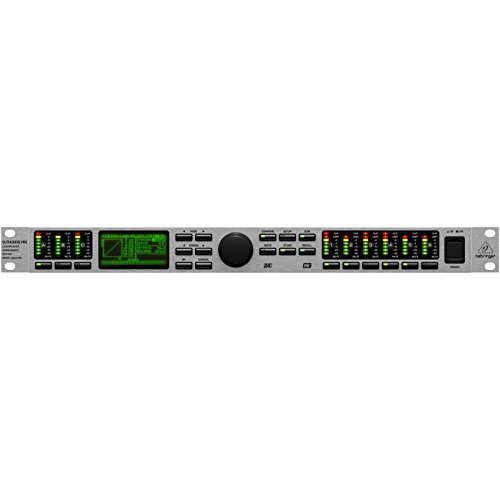
Behringer Ultradrive Pro Dcx2496 Ultra High-Precision Digital 24-Bit/96 Khz Loudspeaker Management System
$339.00 Specs and sizingA three in, six out digital loudspeaker manager with crossovers, delay and limiting on every output, which is what a delay-speaker system needs.
Best for: Systems with under-balcony or mid-room delay speakers to time-align
Check price on Amazon
dbx DriveRack PA2 2x6 PA Complete Professional Loudspeaker Management System, Rack Mountable with Android and iOS Control. Black
$426.00 Specs and sizingCrossover, EQ, limiting, feedback suppression and an automatic room-tuning wizard in one rack unit. The wizard is the reason this is on nearly every church rack: it gets a volunteer to a defensible starting point.
Best for: Any passive system, and any room that has never been tuned
Check price on Amazon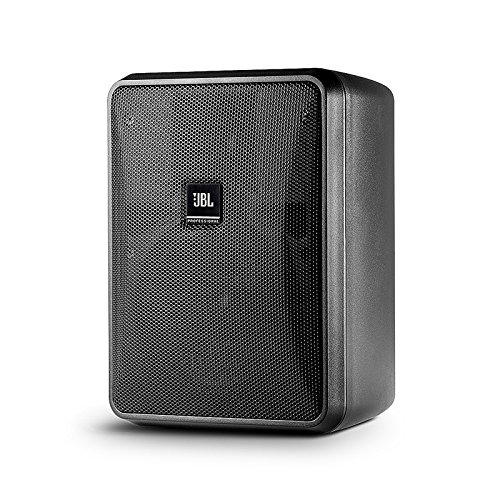
JBL Professional Control 25-1 Compact Indoor/Outdoor Background/Foreground Speaker, Black, Sold as Pair
$457.98 Specs and sizingThe default surface-mount install speaker: 8 ohm or 70V, indoor or outdoor rated, with a bracket that aims it properly. Sold as a pair.
Best for: Under-balcony fills, foyers, cry rooms and side aisles
Check price on Amazon
QSC K8.2 Active 8" Powered 2000 Watt Loudspeaker
$749.99 Specs and sizingA very wide 105 degree pattern in a small box, with the same amplifier as its larger siblings. Works as a main in a small room and as a front fill or a wedge in a large one.
Best for: Small chapels, front fills for the first two rows, and side fills
Check price on Amazon
QSC CP8 8" Compact Powered Loudspeaker
$549.99 Specs and sizingThe smallest QSC that still sounds like a QSC. Honest about its limits: it will not carry a band in a large room and does not pretend to.
Best for: Overflow rooms, nurseries, foyers and portable speech systems
Check price on Amazon
JBL Professional Control 47HC High Ceiling Loudspeaker, Sold as Pair
$794.00 Specs and sizingThe high-ceiling version, with a narrower 75 degree pattern so the coverage circle does not become uselessly large from twenty feet up.
Best for: Ceilings above about sixteen feet, where a 90 degree speaker covers too much and too thinly
Check price on AmazonHow is delay speaker timing calculated?
Sound travels at about 1,125 feet per second at 68 degrees, which is 0.889 milliseconds per foot. So:
delay ms = (distance from main to listener - distance from fill to listener) x 0.889 + Haas offset
The Haas offset of 10 to 15 milliseconds is the part people leave out and it is the reason the technique works at all. The precedence effect means the ear localises a sound at whichever source reaches it first, provided the second arrival is within roughly 30 milliseconds and not dramatically louder. By deliberately arriving slightly late, the fill speaker hands localisation back to the main system up front, and the listener perceives the preacher as being on the platform while hearing the intelligibility the fill provides.
Setting the delay to the exact path difference makes both arrive together, and the fill becomes audible as its own source. Setting it short makes the fill arrive first, which is the worst outcome: the listener localises the ceiling.
Delay time by path difference
Find the difference between the two distances and read across. The two Haas columns cover the usual range.
A path difference of 70 feet needs about 62 milliseconds of raw delay, or 74 milliseconds once a 12 millisecond Haas offset is added.
| Path difference | Raw delay | Plus 10 ms Haas | Plus 15 ms Haas |
|---|---|---|---|
| 10 ft | 8.9 ms | 18.9 ms | 23.9 ms |
| 20 ft | 17.8 ms | 27.8 ms | 32.8 ms |
| 30 ft | 26.7 ms | 36.7 ms | 41.7 ms |
| 40 ft | 35.6 ms | 45.6 ms | 50.6 ms |
| 50 ft | 44.4 ms | 54.4 ms | 59.4 ms |
| 60 ft | 53.3 ms | 63.3 ms | 68.3 ms |
| 80 ft | 71.1 ms | 81.1 ms | 86.1 ms |
| 100 ft | 88.9 ms | 98.9 ms | 103.9 ms |
| 120 ft | 106.7 ms | 116.7 ms | 121.7 ms |
Measure both distances to the same listening position, ideally a seat in the middle of the area the fill covers rather than the seat directly under it.
Does temperature really change the answer?
Yes, and by more than people expect. The speed of sound rises with temperature, so a room that is cold when you set the delay and warm when it is full will drift.
Between a 50 degree empty room and an 85 degree full one, the required delay for a 70 foot path difference changes by about 4 milliseconds, which is small enough to ignore in a church.
| Temperature | Speed of sound | Per foot | Delay for a 70 ft difference |
|---|---|---|---|
| 50 F | 1107 ft/s | 0.904 ms | 75.3 ms |
| 60 F | 1118 ft/s | 0.895 ms | 74.6 ms |
| 68 F | 1126 ft/s | 0.888 ms | 74.2 ms |
| 75 F | 1134 ft/s | 0.882 ms | 73.8 ms |
| 85 F | 1144 ft/s | 0.874 ms | 73.2 ms |
Four milliseconds is well inside the Haas window, so set the delay with the room at its normal service temperature and do not chase it. This matters far more in a large outdoor system than in a sanctuary.
When does a church need delay speakers?
Three situations, and the first is by far the most common.
Under a balcony. Seats under an overhang receive almost no direct sound from a flown main system, because the balcony is in the way. They hear only reflections, which is exactly the condition in which speech becomes unintelligible. This is the classic case and it is why almost every church with a balcony needs fills.
A deep room. Past roughly 80 to 100 feet, a point-source system cannot keep the front and back rows within a reasonable level of each other. A delayed mid-room fill lets the mains be turned down, which is better for everybody in front of it.
Under a low ceiling at the back. A room that narrows or drops at the rear shadows the last few rows the same way a balcony does.
Timing a fill needs a processor with delay on each output, such as the Behringer Ultradrive Pro Dcx2496 Ultra High-Precision Digital 24-Bit/96 Khz Loudspeaker Management System or the dbx DriveRack PA2 2x6 PA Complete Professional Loudspeaker Management System, Rack Mountable with Android and iOS Control. Black. The fills themselves are usually compact cabinets: JBL Professional Control 25-1 Compact Indoor/Outdoor Background/Foreground Speaker, Black, Sold as Pair for surface mounting or QSC K8.2 Active 8" Powered 2000 Watt Loudspeaker where more output is needed.
Frequently asked questions
How do I calculate delay for a fill speaker?
Take the distance from the main loudspeaker to a listener under the fill, subtract the distance from the fill to that same listener, multiply by 0.889 milliseconds per foot, then add a Haas offset of 10 to 15 milliseconds. A listener 100 feet from the mains and 30 feet from the fill needs about 74 milliseconds including a 12 millisecond offset.
What is the Haas effect and why add extra delay?
The precedence effect means the ear localises a sound at whichever source reaches it first, as long as the second arrival is within about 30 milliseconds and not much louder. Adding 10 to 15 milliseconds on top of the path difference makes the fill arrive deliberately late, so the listener localises the platform and the fill effectively disappears while still providing clarity.
What happens if the delay is set wrong?
Too short and the fill arrives first, so the listener localises a speaker above their head, which is disorienting and worse than no fill. Set to exactly the path difference, both arrive together and the fill is audible as a separate source. Too long, past about 30 milliseconds beyond the path difference, and it is heard as a distinct echo.
Do under-balcony speakers always need delay?
Yes, if they are more than a few feet closer to the listener than the mains, which under a balcony they always are. Without delay the listener hears the fill first and localises the ceiling rather than the platform. The delay is what turns a fill from an obvious second sound source into something nobody notices.
Does temperature affect delay settings in a church?
Slightly. Between a cold empty room and a warm full one the required delay for a 70 foot path difference changes about 4 milliseconds, which is well inside the Haas window and not worth chasing. Set it with the room at normal service temperature. Temperature matters far more in a large outdoor system than indoors.
How loud should a delay speaker be?
Just loud enough to add clarity, not level. The precedence effect fails if the delayed speaker is dramatically louder than the main arrival, so a hot fill pulls localisation to itself regardless of the timing. Sit underneath it and switch it in and out: it should change how clear the speech is, not how loud it is.
Researched, not professional advice. This page is compiled from published manufacturer specifications, operator manuals, FCC rules, published standards and owner-review consensus, not hands-on testing. Sound system design, rigging loudspeakers overhead, and any electrical work are jobs for a qualified professional: have flown loudspeakers and their attachment points signed off by a structural engineer or a certified rigger, and have all wiring done by a licensed electrician to your local code. Wireless microphone rules change, so confirm the current FCC position before buying. As an Amazon Associate we earn from qualifying purchases.